Appliance & electronics support
Find your model numberAbout our sources
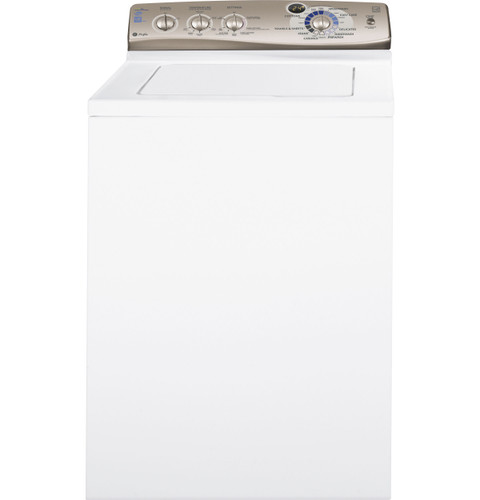
GE Profile PTWN6250M washer — manufacturer product image
Photo: PTWN6250MWT white variant. Shared source photo. Photo source
Manufacturer sources

GE Profile PTWN6250M

All topics for your model

Washing machine · US market · 48 owner topics

Owner help

Help with your PTWN6250M

GE Profile’s PTWN6250M is a 3.6 cu. ft. high-efficiency top-loader with HydroWave/Infusor wash action, PreciseFill load sensing, and a 700 RPM maximum spin. Find cycle choices, fill/drain/spin troubleshooting, cleaning, installation measurements, parts, and ownership advice below. These articles cover PTWN6250M and the white PTWN6250MWT listed by GE.

DOE capacity
3.6 cu ft
Configuration
Top-Loading high-efficiency
Overall width
27 in
Voltage
120 V
48 detailed family articles0 short family notes0 shared guides

Detailed articles use sources for the named brand and product family. Short notes add family details to shared guidance. Owner guides cover the product category and recorded design, with this model’s measurements and brand details shown separately. Exact controls and part fitment require a matching manufacturer source.

Product & documents

Detailed family article

Model number & identification

The GE Profile specification sheet is titled PTWN6250M and identifies the white retail model PTWN6250MWT. The owner manual describes this PTWN6250M control and Infusor washer family. For this profile, those are the supported identities;...

  • Read the lid label carefully
  • Choose the document for the question
  • When the label is hard to read
Read model number & identification
Detailed family article

Specifications

The GE Profile PTWN6250M is listed as a 3.6 DOE cu. ft. high-efficiency top-load washer with a stainless-steel basket, HydroWave system and Infusor wash action. The specification sheet lists 700 RPM spin and PreciseFill automatic load...

  • Capacity and basket
  • HydroWave, Infusor and low-water expectations
  • PreciseFill and cycle timing
Read specifications
Detailed family article

Manuals & documents

The GE product record includes two distinct owner documents: Use and Care Manual and Installation Instructions. Use the owner manual for cycle selection, temperature, settings, loading, care, the two-minute control reset and...

  • Choose the document by the task
  • Use the quick reference for normal HE behavior
  • Check panel presence for optional controls
Read manuals & documents

Installation & connections

Detailed family article

Dimensions & fit

The GE Profile quick specification sheet lists 27 inches wide, 42 inches high and 25 1/2 inches deep. Measure the delivery route and final location, not only the laundry alcove. The installation guide requires working room at the right...

  • Plan the route and opening
  • Apply closet clearances conditionally
  • Allow shipping-bar and outlet access
Read dimensions & fit
Detailed family article

Installation planning

GE’s installation sheet covers this washer’s floor, water supply, drain, grounding, leveling and shipping bar. It says not to place the unit on a rug or expose it to weather. Keep the supplied installation instructions because they...

  • Prepare location and removal clearance
  • Connect hot and cold hoses
  • Attach and secure the drain hose
Read installation planning
Detailed family article

Electrical requirements

The PTWN6250M spec sheet lists 120 V, 60 Hz, 10 A. Its installation sheet requires an individual, properly grounded branch circuit and three-prong outlet protected by a 15- or 20-amp breaker or time-delay fuse. Use both statements as...

  • Check rating and circuit
  • Preserve grounding and cord integrity
  • Respond to power symptoms safely
Read electrical requirements
Detailed family article

Water supply & connections

Installation instructions identify rear fittings H (hot) and C (cold), require both household shutoff valves and specify pressure from 10 to 150 psi. For hot wash, they call for water delivered at the washer at 120–150°F. Low pressure...

  • Identify and attach each supply
  • Check supply conditions before diagnosing fill
  • Understand PerfecTemp and TAP COLD
Read water supply & connections
Detailed family article

Drainage & water removal

The installation sheet permits drainage to a standpipe or set tub and requires an open standpipe at least 1 1/2 inches in diameter. Discharge height is no lower than 30 inches and no higher than eight feet above the washer base. Routing...

  • Secure hose at the washer outlet
  • Keep drain height and standpipe within limits
  • Use the anti-siphon clip when required
Read drainage & water removal
Detailed family article

Delivery & moving

The installation instructions include a removable shipping bar and tub packing that stabilize the washer for transport. During initial installation, the yellow-handled bar is pulled out and saved; before a later move, the guide says it...

  • Disconnect and drain safely
  • Reinstall the shipping bar and tub packing
  • Protect cabinet and route
Read delivery & moving

Controls & operation

Detailed family article

First use & setup

This HE top-loader uses HydroWave with Infusor wash action and automatic load sensing. The first fill can be lower than expected and quiet while the machine senses the load. GE’s quick reference explains these behaviors; do not add...

  • Load and add detergent
  • Choose cycle, temperature and available options
  • Close the lid and begin
Read first use & setup
Detailed family article

Controls & settings

The panel separates Signal, Temperature, Settings, Cycle Selector, estimated-time display and Start/Stop-Pause. Use the physical labels rather than modern GE menu instructions. PerfecTemp adjusts the incoming hot/cold mix, while several...

  • Use Signal and Temperature deliberately
  • Select only installed Settings options
  • Understand time and display messages
Read controls & settings
Detailed family article

Cycles & programs

The owner manual lists distinct wash actions and spin levels. Cottons is the general everyday cycle; Prewash removes surface dirt before a regular wash; Casuals and Easy Care handle wrinkle-free fabrics with different spin speeds;...

  • Choose a main wash cycle
  • Protect delicate and special-care pieces
  • Use quick cycles for the right load
Read cycles & programs
Detailed family article

Temperature settings

The PTWN6250M panel has a Temperature control for wash and rinse water. PerfecTemp senses the incoming water and adjusts the mix toward the selected wash temperature, so water may feel different from a simple hot/cold tap selection.

  • Understand the temperature selections
  • Check household hot-water delivery
  • Use detergent suited to the chosen temperature
Read temperature settings
Detailed family article

Restart & reset

This owner manual documents separate actions: turning the cycle selector after a cycle starts changes the selected cycle, and unplugging for two minutes is a troubleshooting reset for a washer that will not operate. Do not treat every...

  • Resume an ordinary pause
  • Change a cycle with the selector
  • Use the documented two-minute control reset
Read restart & reset

Care & consumables

Detailed family article

Cleaning & odor

GE’s care instructions focus on wiping the basket, lid and exterior and keeping the optional fabric-softener dispenser clear. That dispenser is described as self-cleaning and does not need regular internal cleaning, though its parts may...

  • Wipe basket, lid and exterior
  • Maintain the softener dispenser if fitted
  • Prevent residue and odor
Read cleaning & odor
Detailed family article

Preventive maintenance

Routine care for the PTWN6250M centers on secure hoses, an unobstructed drain, clean surfaces and protection from freezing. GE recommends replacing fill hoses every five years and shutting off faucets for long vacations. For...

  • Inspect fill hoses and shutoffs
  • Keep inlet screens and drain path clear
  • Protect basket and exterior
Read preventive maintenance
Detailed family article

Filters & consumables

This washer’s low-water Infusor design makes detergent choice, dose, and dispenser use especially relevant to clean rinsing.

  • Start with detergent for this low-water design
  • Use the fabric-softener dispenser only when fitted
  • Treat bleach as a separate product
Read filters & consumables
Detailed family article

Consumable replacement

Use the complete model identity and the washer’s actual dispenser configuration when sourcing replacement consumables or parts.

  • Replace water hoses on a schedule
  • Check dispenser configuration before ordering
  • Separate routine supplies from repair parts
Read consumable replacement
Detailed family article

Water quality & scale

The PTWN6250M manual gives cleaning and detergent guidance, but no model-specific chemical descaling recipe.

  • Identify the residue before choosing a cleaner
  • Prevent detergent film at the source
  • Inspect the water supply if deposits recur
Read water quality & scale
Detailed family article

Storage & seasonal care

A long idle period or move calls for water shutoff, drainage planning, and protection of the tub during transport.

  • Prepare it for an extended absence
  • Drain and protect it before a move
  • Reinstall using the original installation limits
Read storage & seasonal care

Troubleshooting

Detailed family article

Troubleshooting & repair

These GE Profile top-loaders use HydroWave wash action with an Infusor, automatic load sensing and PerfecTemp. Low water, quiet intervals, sensing pauses and a reversing motor sound can be normal for this design. Begin by noting whether...

  • Start with status and controls
  • If fill does not begin
  • If wash or drain seems interrupted
Read troubleshooting & repair
Detailed family article

Not draining

Water remaining after a cancelled cycle does not automatically mean a pump failure. GE directs owners to select Drain & Spin. If that cycle does not empty the tub, inspect visible hose routing and household plumbing. Never remove a...

  • Run Drain & Spin
  • Check the visible hose
  • Check household plumbing
Read not draining
Detailed family article

Not filling

Automatic load sensing and the Infusor intentionally use less water than a traditional top-loader. GE says the water may not cover the clothes; do not add water to imitate an older machine. A “Fill” display means the basket is filling,...

  • Close the lid and allow sensing
  • Open both faucets and confirm connections
  • Inspect visible restrictions
Read not filling
Detailed family article

Not spinning

This washer uses cycle-specific spin speeds. The owner manual describes Cottons, Speed, Drain & Spin, Quick Rinse, Towels & Sheets and Jeans as fast spin; Casuals and Delicates as slow; Hand Wash as extra-slow. The spec lists 700 RPM...

  • Check cycle and fabric
  • Respond to Balancing
  • Confirm drainage first
Read not spinning
Detailed family article

Error codes & indicators

The supplied owner manual describes scrolling messages, not a numbered error-code table. The panel is rotary-electronic and documents “Lid,” “Fill,” “Pause,” “Balancing” and “End.” Use each message as a status clue and avoid applying...

  • Lid and Pause
  • Fill and Balancing
  • End or unexplained display
Read error codes & indicators
Detailed family article

Noise & vibration

The HydroWave system with Infusor operates differently from a traditional agitator washer. GE’s quick reference says the machine may be very quiet during portions of a cycle, pause while sensing a load and make a “swoosh” or “zip” as...

  • Sensing and agitation
  • Spin and balance
  • Check floor and external contact
Read noise & vibration
Detailed family article

Leaks, moisture & condensation

The owner manual identifies detergent oversudsing, fill-hose connections, drain-hose seating, household drain blockage and constant supply pressure as possible leak causes. Determine when water first appears—fill, wash or drain—and...

  • During wash: check suds and dose
  • During fill: inspect supply connections
  • During drain: check the drain route
Read leaks, moisture & condensation
Detailed family article

Power on, cycle not starting

When the display is active, check the start conditions rather than treating the symptom as loss of power. This washer uses a rotary Cycle Selector and START/STOP-PAUSE button; status messages include Lid, Fill and Pause. Each points to...

  • Read status before changing settings
  • Use selector and START correctly
  • Check both supplies
Read power on, cycle not starting
Detailed family article

No power & starting

A dark control panel differs from a powered washer that will not begin a cycle. GE’s chart lists unplugged power, control setup, open lid, supply faucets, household circuit protection and an electronics reset as checks. Work only with...

  • Check display and plug safely
  • Confirm operating conditions
  • Set cycle and press START
Read no power & starting
Detailed family article

Poor performance

GE designed the HydroWave/Infusor washer to use less water than a traditional top-loader. Water need not cover the clothes. Cleaning depends on load size and placement, HE detergent amount, cycle choice and dispenser use. The...

  • Load loosely and sort
  • Dose HE detergent
  • Match cycle and options
Read poor performance

Parts & accessories

Detailed family article

Parts & components

The Owner Manual lists two fill hoses and the Installation Instructions list a drain extension. These external items are the only replacements with exact accessory numbers in the owner materials. The full model and serial label is under...

  • Supply hose numbers
  • Drain extension
  • Recognize when replacement is due
Read parts & components
Detailed family article

Component replacement planning

For this washer, replacement guidance in the owner materials centers on external fill hoses and the drain extension kit. The manual warns against repairing or replacing parts unless recommended in the Owner Manual or understood...

  • Replace fill hoses on schedule or when damaged
  • Treat drain-hose work as an installation task
  • Clean screens only by the manual’s procedure
Read component replacement planning
Detailed family article

Accessories & installation kits

The GE Owner Manual names two four-foot supply hoses, and the Installation Instructions name one drain-hose extension kit. Those are concrete references for the PTWN6250M-family documents; the broader product catalog also lists...

  • Supply hoses and setup
  • Drain extension
  • Cleaning products and dispensing accessories
Read accessories & installation kits
Detailed family article

Compatibility & substitutions

The available GE documents identify PTWN6250M and a PTWN6250MWT variant, with a 3.6-cubic-foot stainless-steel basket, HydroWave with Infusor, Adaptive Fill and a 700-RPM maximum spin specification. The corresponding owner and...

  • Confirm identity before applying a manual
  • Supply and drain fitment
  • Understand which control features are conditional
Read compatibility & substitutions
Detailed family article

Diagrams & wiring references

The Installation Instructions include diagrams for the drain-hose clamp, hot/cold rear fittings, shipping bar, electrical cord storage and clearances. These drawings help identify external installation points; they are not a service...

  • Read the shipping-bar illustration
  • Identify H and C connections
  • Follow the drain-hose restraint drawing
Read diagrams & wiring references

Ownership decisions

Detailed family article

Repair or replace?

Use a confirmed fault, written repair estimate, and actual replacement quote to make this decision.

  • Start with a confirmed fault
  • Get the numbers that change the decision
  • Decide whether the documented design still fits
Read repair or replace?
Detailed family article

Energy, water & efficiency

The PTWN6250M combines HE LoWater washing, PreciseFill, and a documented 700-RPM spin; efficient use depends on matching the load and cycle.

  • Use the design the washer actually has
  • Choose cycles for the load
  • Think in whole-laundry energy, not one label number
Read energy, water & efficiency
Detailed family article

Running cost calculator

The EnergyGuide is useful as a historical comparison, provided its test assumptions stay attached to the cost figures.

  • Read the label as a dated estimate
  • Update the electricity component transparently
  • Account for water heating separately
Read running cost calculator
Detailed family article

Warranty & official support

The owner manual contains the component-by-component terms needed to interpret broader warranty summaries.

  • Use the owner manual’s written schedule
  • Read “lifetime” narrowly
  • A product-page field is not a repair authorization
Read warranty & official support
Detailed family article

Recalls & safety notices

A reliable recall determination requires the exact model and serial number from the washer’s rating label.

  • Search by the complete appliance identity
  • Do not transfer another washer’s recall
  • Keep evidence for the lookup
Read recalls & safety notices
Detailed family article

Model age & history

The available documents show the washer’s documented features and dates, but they do not tell the production history of an individual unit.

  • Identify the model without inventing a release story
  • Build a source timeline carefully
  • Use specifications as the model’s documented baseline
Read model age & history
Detailed family article

Specification review

This is an assessment of published specifications and owner guidance, not a hands-on test or owner-rating summary.

  • What its published design does well
  • What an owner should consider
  • What the documents do not prove
Read specification review
Detailed family article

Compare similar models

A useful comparison weighs capacity basis, wash design, spin, energy assumptions, warranty, and installation requirements together.

  • Compare equivalent capacity figures
  • Compare extraction and cycle fit
  • Compare ownership documents, not slogans
Read compare similar models
Detailed family article

Price & availability

The supplied documents contain operating-cost estimates, not a current appliance selling price.

  • Separate appliance price from operating-cost label
  • Compare the full delivered cost
  • Account for maintenance and repair exposure
Read price & availability
Detailed family article

Professional service

Before arranging service, use the family’s documented owner checks: read the display message, confirm lid and cycle selection, verify both supply faucets, inspect visible hose routing, and check whether the issue appears during fill,...
  • Collect model and symptom details
  • Complete owner checks without unsafe access
  • Use GE’s listed support channels
Read professional service
Detailed family article

Recycling & disposal

Arrange appliance recovery before disconnecting the washer, and preserve the manufacturer’s lid-removal safety instruction.

  • Choose a real appliance recovery route
  • Disconnect it safely
  • Remove the lid before final disposal
Read recycling & disposal

Topics that need a feature match

Some topics apply to other categories or need a feature that this record has not established.

Venting & exhaust

Outside this product category.

Control lock & access

A control-lock feature has not been established.

Special modes

A special operating mode has not been established.

Wi-Fi & connectivity

Connected capability is absent or has not been established.

Software, drivers & firmware

Outside this product category.

Sources for PTWN6250M

GE Profile PTWN6250M — owner Observed Oct 27, 2026
GE Profile PTWN6250M — specs Observed Oct 27, 2026
Suggest a correction