Appliance & electronics support
Find your model numberAbout our sources
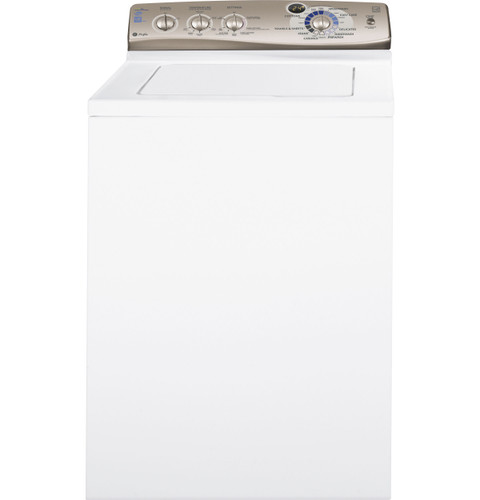
GE Profile PTWN6250M washer — manufacturer product image
Photo: PTWN6250MWT white variant. Shared source photo. Photo source
Manufacturer sources

GE Profile PTWN6250M

Water supply & connections

Washing machine · US market · 48 owner topics

GE Profile PTWN6250M / PTWN6250MWT HydroWave Infusor washer

Covers PTWN6250M and the manufacturer-listed models in this family.

GE Profile PTWN6250M / PTWN6250MWT HydroWave Infusor washer

Connect the washer to hot and cold household water

Installation instructions identify rear fittings H (hot) and C (cold), require both household shutoff valves and specify pressure from 10 to 150 psi. For hot wash, they call for water delivered at the washer at 120–150°F. Low pressure or reversed hoses can change fill time and temperature.

PerfecTemp adjusts incoming hot/cold water toward its selected range. GE notes a COLD wash can include warm water; TAP COLD disables that adjustment for its cold selection. Follow garment labels and distinguish control behavior from a household water-heater issue.

  1. Match H/C rear labels to the corresponding household shutoffs.
  2. Open both faucets and inspect hose couplings.
  3. Clean inlet screens only with supply off; close lid for sensing/fill.

Identify and attach each supply

Connect hot to the port marked H and cold to C. Identify the hot faucet instead of relying only on the usual left/right convention. Use the supplied rubber washers/screens, thread without cross-threading and tighten as the installation sheet directs.

Open both shutoffs and inspect couplings for drips. The owner manual recommends new hoses and replacement every five years. Close the valve before correcting leaks; do not stretch hoses tight or leave them kinked behind the cabinet.

Check supply conditions before diagnosing fill

The installation sheet lists 10–150 psi and requires hot and cold shutoffs. Fill duration affects the estimate; the owner manual says the timer learns how long filling takes. If there is no fill, check both faucets and close the lid for automatic sensing.

The troubleshooting guide allows checking inlet screens: turn off water, disconnect hoses, gently clean visible screens with a brush or toothpick, reconnect and reopen water. If a hose is corroded or water spills uncontrollably, have a plumber/service technician do the work.

Understand PerfecTemp and TAP COLD

PerfecTemp senses incoming water and mixes hot/cold toward the selected wash temperature. During COLD, some warm water may be added to help detergent dissolve. The manual says PerfecTemp does not activate during a cold rinse; that is expected.

TAP COLD uses household tap temperature for a cold wash and turns off PerfecTemp for that selection. On HOT, the washer may periodically add cold water to optimize results. Compare the panel selection and supply connections before deciding temperature control is wrong.

Know when a supply issue needs a plumber

If one faucet has no flow, a hose is damaged, or water continues leaking after connections are corrected, stop the cycle and close the shutoff. If household hot water does not reach the installation sheet’s specified temperature, check the heater with a qualified professional rather than raising washer settings.

Do not pull the washer forward with hoses under tension. Inspect for leaks after work and keep the drain hose secured. Persistent fill issues after open valves and clear screens need service; they do not prove the inlet valve failed.

Water feels warmer than tap on COLD.

PerfecTemp can add warm water to a cold selection.

Use TAP COLD if household tap temperature is intended.

Cold rinse does not adjust temperature.

PerfecTemp is documented as inactive during cold rinse.

Treat this as expected.

Hot wash gets no hot supply.

Reversed hoses, shutoff or household heater may be involved.

Check H/C, open valves and heater delivery; call plumber if needed.

Common questions

Does COLD always mean only cold tap water?

No. PerfecTemp may mix warm water during COLD; TAP COLD uses household tap temperature.

What water pressure is required?

The installation sheet lists 10 psi minimum and 150 psi maximum.

Specifications & model details

PTWN6250M: model-specific checks

Start with the source identity

GE Profile PTWN6250M is the exact code in this catalog record. This topic should be evaluated for that code and washers category. The original source record is linked below; unrecorded settings, dates and compatibility remain unknown.

Recorded model facts

Model details relevant to this topic

SpecificationRecorded valueEvidence
Branch circuitIndividual grounded circuit; 15 or 20 A breaker or time-delay fuse
Manufacturer
GE Profile PTWN6250M — specs

Exact-model manufacturer resource; Specification 260192, revised 4/11, pp. 1–2; explicit base and finish listing

GE specification 260192, revised 4/11, titles the base PTWN6250M and explicitly lists finish model PTWN6250MWT. Base/retail relationship is documented here; no other suffix or serial range is inferred. Specification 260192, revised 4/11, pp. 1–2; explicit base and finish listing

Observed Oct 27, 2026
Electrical rating120 V, 60 Hz, 10 A
Manufacturer
GE Profile PTWN6250M — specs

Exact-model manufacturer resource; Specification 260192, revised 4/11, pp. 1–2; explicit base and finish listing

GE specification 260192, revised 4/11, titles the base PTWN6250M and explicitly lists finish model PTWN6250MWT. Base/retail relationship is documented here; no other suffix or serial range is inferred. Specification 260192, revised 4/11, pp. 1–2; explicit base and finish listing

Observed Oct 27, 2026
Maximum drain outlet heightNeeds resolution
Manufacturer
GE Profile PTWN6250M — owner

Exact-model manufacturer resource; Owner manual 49-90400-1, 07/06/10; pp. 1, 4–7, 9

GE specification 260192, revised 4/11, titles the base PTWN6250M and explicitly lists finish model PTWN6250MWT. Base/retail relationship is documented here; no other suffix or serial range is inferred. Owner manual 49-90400-1, 07/06/10; pp. 1, 4–7, 9 Document difference: installation p. 1 permits up to 8 ft above base; owner p. 8 says outlet below 6 ft above floor. Confirm with GE for the full model/serial; no single upper limit is resolved.

Observed Oct 27, 2026

Other observations retained:

96 in — GE Profile PTWN6250M — installation; Exact-model manufacturer resource; Manufacturer-linked installation instructions, p. 1; plumbing requirements

Minimum discharge height above washer base30 in
Manufacturer
GE Profile PTWN6250M — installation

Exact-model manufacturer resource; Manufacturer-linked installation instructions, p. 1; plumbing requirements

GE specification 260192, revised 4/11, titles the base PTWN6250M and explicitly lists finish model PTWN6250MWT. Base/retail relationship is documented here; no other suffix or serial range is inferred. Manufacturer-linked installation instructions, p. 1; plumbing requirements

Observed Oct 27, 2026
Minimum standpipe inside diameter1 1/2 in
Manufacturer
GE Profile PTWN6250M — installation

Exact-model manufacturer resource; Manufacturer-linked installation instructions, p. 1; plumbing requirements

GE specification 260192, revised 4/11, titles the base PTWN6250M and explicitly lists finish model PTWN6250MWT. Base/retail relationship is documented here; no other suffix or serial range is inferred. Manufacturer-linked installation instructions, p. 1; plumbing requirements

Observed Oct 27, 2026
Supply water pressure10–150 psi
Manufacturer
GE Profile PTWN6250M — installation

Exact-model manufacturer resource; Manufacturer-linked installation instructions, p. 1; plumbing requirements

GE specification 260192, revised 4/11, titles the base PTWN6250M and explicitly lists finish model PTWN6250MWT. Base/retail relationship is documented here; no other suffix or serial range is inferred. Manufacturer-linked installation instructions, p. 1; plumbing requirements

Observed Oct 27, 2026
Voltage120 V
Manufacturer
GE Profile PTWN6250M — specs

Exact-model manufacturer resource; Specification 260192, revised 4/11, pp. 1–2; explicit base and finish listing

GE specification 260192, revised 4/11, titles the base PTWN6250M and explicitly lists finish model PTWN6250MWT. Base/retail relationship is documented here; no other suffix or serial range is inferred. Specification 260192, revised 4/11, pp. 1–2; explicit base and finish listing

Observed Oct 27, 2026
Cancel cycleHold Start for 3 seconds
Manufacturer
GE Profile PTWN6250M — owner

Exact-model manufacturer resource; Owner manual 49-90400-1, 07/06/10; pp. 1, 4–7, 9

GE specification 260192, revised 4/11, titles the base PTWN6250M and explicitly lists finish model PTWN6250MWT. Base/retail relationship is documented here; no other suffix or serial range is inferred. Owner manual 49-90400-1, 07/06/10; pp. 1, 4–7, 9

Observed Oct 27, 2026
Electronics restart wait2 minutes
Manufacturer
GE Profile PTWN6250M — owner

Exact-model manufacturer resource; Owner manual 49-90400-1, 07/06/10; pp. 1, 4–7, 9

GE specification 260192, revised 4/11, titles the base PTWN6250M and explicitly lists finish model PTWN6250MWT. Base/retail relationship is documented here; no other suffix or serial range is inferred. Owner manual 49-90400-1, 07/06/10; pp. 1, 4–7, 9

Observed Oct 27, 2026
Maximum spin speed700 RPM
Manufacturer
GE Profile PTWN6250M — specs

Exact-model manufacturer resource; Specification 260192, revised 4/11, pp. 1–2; explicit base and finish listing

GE specification 260192, revised 4/11, titles the base PTWN6250M and explicitly lists finish model PTWN6250MWT. Base/retail relationship is documented here; no other suffix or serial range is inferred. Specification 260192, revised 4/11, pp. 1–2; explicit base and finish listing

Observed Oct 27, 2026
Suds-saving capability in archiveFalse
Archive
California Energy Commission — Washing machines archive

cec-washers.xlsx; sheet ClothesWashers_12022025; row 4128

Regulatory archive observation; test standard and measurement context follow the original record.

Observed Oct 27, 2026
Temperature systemPerfecTemp; Tap Cold bypasses temperature regulation
Manufacturer
GE Profile PTWN6250M — owner

Exact-model manufacturer resource; Owner manual 49-90400-1, 07/06/10; pp. 1, 4–7, 9

GE specification 260192, revised 4/11, titles the base PTWN6250M and explicitly lists finish model PTWN6250MWT. Base/retail relationship is documented here; no other suffix or serial range is inferred. Owner manual 49-90400-1, 07/06/10; pp. 1, 4–7, 9

Observed Oct 27, 2026
More background: Connect and check washer water supplies

Category & symptom guidance

Connect and check washer water supplies

Identify the required supplies

Read the exact installation instructions to find out whether the washer requires hot and cold supplies and what pressure range applies. the named examples describe hot and cold inlet hoses, but do not assume every product has identical connections. Confirm which home shutoff is hot before attaching hoses; pipe position alone is not a reliable guarantee.

Front-load and top-load designs can both use sensing or temperature control, but their operating behavior and hookup details vary by model. A high-efficiency top-load washer may sense load size and use a lower visible water level than a conventional-fill top-load machine. That observation alone does not mean the supply is missing or incorrectly connected.

Choose and route hoses

Use new hoses of the type recommended by the washer manufacturer, with the correct fittings and intact seals. The LG WM4000H*A manual specifically cautions against reusing old hoses; GE’s PTWN6250M owner manual also recommends new supply hoses. These examples support a general replacement check, but hose type and connection details still belong to the exact manual.

Route the hoses without stretching, kinking, crushing, or trapping them behind the machine. Keep shutoff valves accessible, and do not force threaded fittings. Cross-threading or overtightening can damage a connection and cause a leak. If a fitting does not align or a shutoff is corroded or difficult to operate, stop and ask an installer or plumber to correct it.

Flush and check connections

Follow the installation instructions for seals, hose orientation, and connection sequence. Some manuals direct the installer to flush debris from the supply hoses before use. After hookup, open the shutoffs as directed and inspect both ends of every hose for drips. Check again during the first fill, since a connection can appear dry before water pressure is present.

If a leak appears, stop the installation and close the relevant shutoff if it can be done safely. Do not compensate for a leaking connection by forcing the nut tighter. A damaged seal, misaligned fitting, or worn valve may need replacement by an installer. Once the washer is in place, verify that movement has not pinched a hose.

Diagnose supply symptoms at the owner level

If the washer does not fill, check only accessible items: whether both required shutoffs are open, whether a hose is visibly kinked, and whether the display or manual indicates a paused or sensing stage. Some HE washers spend time sensing before filling. Whirlpool’s top-load sensing guidance explains that automatic sensing is a normal part of operation on applicable models; it does not establish behavior for every top-load washer.

If water temperature seems wrong, confirm the hot and cold lines were connected to the intended valves and compare the selected temperature with the manual’s guidance. If the supply pressure is outside the product’s stated limits, if screens appear obstructed, or if the problem persists, contact service or a plumber. Do not disassemble inlet valves or energized parts.

What to do with what you find

A hose drips at a fitting during filling or a hose is cracked, bulging, or damaged.

The water connection could fail and cause property damage.

Stop use, close the shutoff if safe, and replace or repair the connection.

An HE top-load washer pauses during sensing and then begins filling, with no leak or supply warning.

The behavior may be normal for an applicable sensing design.

Allow the model’s normal sensing period and consult its manual if filling does not follow.

Have these details ready

  • Exact model water pressure and connection instructions
  • Hose condition, valve status, and leak observations

Common questions

Is a low water level always a supply problem?

No. Some high-efficiency top-load washers use sensing and may not cover the load with water. Confirm the model’s behavior in its manual.

Can I reuse the hoses left by the previous washer?

Follow the current washer’s manual. the GE PTWN6250M and LG WM4000H*A owner documents recommend new hoses for installation.

General background sources

These sources support the shared guide. Exact model specifications and matched family procedures have their own sources above.

  1. media.us.lg.com/m/6d5d734b0871fbdf/original/WM4000_Owners-Manual.pdf
  2. producthelp.whirlpool.com/Laundry/Washers/Product_Info/Washer_Product_Assistance/Auto_Sensing_in_a_Top_Load_HE_Washer
  3. images.salsify.com/image/upload/s--4zVee-ir--/44e1044e71329cd6678e18edc3950e53c5694077.pdf
  4. images.salsify.com/image/upload/s--dBhUJ9s5--/3f58f84eaa9d207a6fdadfa3a955c70b28005ee2.pdf

Owner guidance by Specs & Parts, drafted with GPT-6 Luna. Sources and scope.

Sources for PTWN6250M

GE Profile PTWN6250M — owner Observed Oct 27, 2026
GE Profile PTWN6250M — specs Observed Oct 27, 2026
Suggest a correction