Appliance & electronics support
Find your model numberAbout our sources
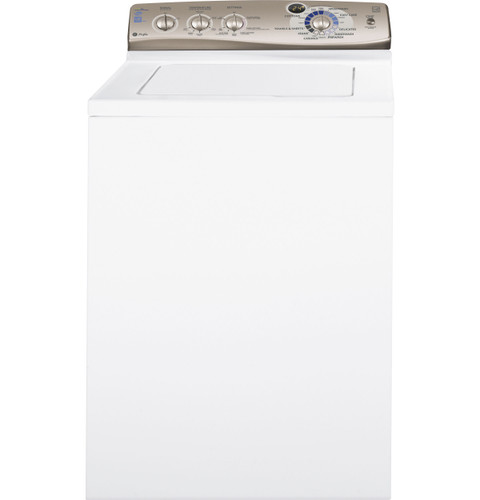
GE Profile PTWN6250M washer — manufacturer product image
Photo: PTWN6250MWT white variant. Shared source photo. Photo source
Manufacturer sources

GE Profile PTWN6250M

Running cost calculator

Washing machine · US market · 48 owner topics

GE Profile PTWN6250M / PTWN6250MWT HydroWave Infusor washer

Covers PTWN6250M and the manufacturer-listed models in this family.

GE Profile PTWN6250M / PTWN6250MWT HydroWave Infusor washer

Estimating washer running cost from the EnergyGuide

The EnergyGuide is useful as a historical comparison, provided its test assumptions stay attached to the cost figures.

Read the label as a dated estimate

The federal EnergyGuide for GE model PTWN6250M0WT declares 160 kWh of annual electricity use and estimated yearly operating costs of $17 with an electric water heater and $12 with a natural-gas water heater. It bases the estimates on eight wash loads per week and 2007 national-average prices: 10.65 cents per kWh electricity and $1.218 per therm natural gas. The label says actual cost depends on utility rates and use.

The specification sheet is headed PTWN6250M and lists PTWN6250MWT as the white model; the EnergyGuide prints PTWN6250M0WT. Keep the zero in the label’s model code when citing its 160-kWh declaration, and do not assume that one label figure applies to every suffix or revision. The GE documents identify related model strings, but a parts or serial lookup should use the rating plate and GE’s model-specific tools.

Update the electricity component transparently

To estimate electricity at your present tariff, multiply 160 kWh by your utility’s per-kWh rate. At a hypothetical rate of 30 cents/kWh, for example, the label’s annual electricity quantity would imply $48 for electricity. That arithmetic updates only the electricity component and assumes the same annual consumption as the historical label. It does not update hot-water cost, household use, or the label’s test assumptions. Replace the hypothetical rate with the rate on your bill.

For a different number of loads, a rough proportional estimate can be made by multiplying 160 kWh by actual weekly loads divided by eight, but this remains a rough estimate: the label’s tested cycle mix and your load temperatures may differ. Keep the assumptions beside the result so it is not mistaken for a measured bill.

Account for water heating separately

The EnergyGuide reports $17 using an electric water heater and $12 using natural gas, a five-dollar difference under its 2007 assumptions. It does not publish a separate hot-water volume in the supplied label text, so do not reverse-engineer a gallons-per-cycle figure from the cost difference. Your water-heating cost depends on the household heater’s efficiency, local fuel prices, temperature selection, and how much hot water the washer uses in your actual pattern.

The washer’s installation sheet says hot water at the washer should be 120–150°F when hot wash is selected. Do not lower the household heater below safe domestic requirements simply to match a washer estimate. If hot washes are unexpectedly expensive, check the utility bill and your household water-heating setup; the supplied label cannot identify which appliance uses the gas or electricity.

Compare models on equal assumptions

The EnergyGuide’s similar-model range is shown for standard-capacity washers and is a historical comparison, not a current market price range. Compare another washer’s label by annual kWh, water-heater fuel assumption, loads per week, capacity basis, and label year. The PTWN6250M spec sheet lists a 3.6 DOE-cubic-foot capacity and 700 RPM spin; a capacity number from a different measurement convention should not be treated as directly equal without checking its definition.

Use current local rates and your own load count for a household estimate, then compare the potential savings with the purchase and installation costs of another appliance. No supplied source establishes a current tariff, current appliance price, or guaranteed savings from replacement.

Specifications & model details

PTWN6250M: model-specific checks

Start with the source identity

GE Profile PTWN6250M is the exact code in this catalog record. This topic should be evaluated for that code and washers category. The original source record is linked below; unrecorded settings, dates and compatibility remain unknown.

Recorded model facts

Model details relevant to this topic

SpecificationRecorded valueEvidence
Legacy modified energy factor2.2
Archive
California Energy Commission — Washing machines archive

cec-washers.xlsx; sheet ClothesWashers_12022025; row 4128

Regulatory archive observation; test standard and measurement context follow the original record.

Observed Oct 27, 2026
Legacy modified energy factor (MEF)2.20
Manufacturer
GE Profile PTWN6250M — specs

Exact-model manufacturer resource; Specification 260192, revised 4/11, pp. 1–2; explicit base and finish listing

GE specification 260192, revised 4/11, titles the base PTWN6250M and explicitly lists finish model PTWN6250MWT. Base/retail relationship is documented here; no other suffix or serial range is inferred. Specification 260192, revised 4/11, pp. 1–2; explicit base and finish listing

Observed Oct 27, 2026
Legacy water factor4.5
Archive
California Energy Commission — Washing machines archive

cec-washers.xlsx; sheet ClothesWashers_12022025; row 4128

Regulatory archive observation; test standard and measurement context follow the original record.

Observed Oct 27, 2026
Legacy water factor (WF)4.50
Manufacturer
GE Profile PTWN6250M — specs

Exact-model manufacturer resource; Specification 260192, revised 4/11, pp. 1–2; explicit base and finish listing

GE specification 260192, revised 4/11, titles the base PTWN6250M and explicitly lists finish model PTWN6250MWT. Base/retail relationship is documented here; no other suffix or serial range is inferred. Specification 260192, revised 4/11, pp. 1–2; explicit base and finish listing

Observed Oct 27, 2026
Remaining moisture under source test41.8 %
Archive
California Energy Commission — Washing machines archive

cec-washers.xlsx; sheet ClothesWashers_12022025; row 4128

Regulatory archive observation; test standard and measurement context follow the original record.

Observed Oct 27, 2026

Estimate electricity cost

Use a source annual energy rating or your own measured usage. The rate below is an editable example, not a local tariff.

Your estimate will appear here.

Electricity only. Water, gas, consumables, and differences in actual use are additional.

More background: Running cost calculator

Category & symptom guidance

Running cost calculator

Choose a calculation period

Decide whether you want a per-cycle, monthly, or yearly estimate. Use one time period consistently for the washer data and household usage. If a source gives annual energy use, use it as an annual reference; do not call it per-cycle consumption unless the source supplies that basis. The Department of Energy's clothes washer consumer page can help identify official comparison information.

Count the loads your household actually runs in the chosen period. If usage varies seasonally, calculate a typical month and a busy month separately. Do not multiply a test-based annual label figure by loads again; first establish what the published figure represents so the estimate does not count usage twice.

  1. Select monthly or annual as the comparison period.
  2. Count expected washer cycles in that period.
  3. Record the time basis and test basis of every published input.

Calculate electricity from a documented figure

Use a model-specific energy figure only when its units and time period are clear. Convert units if needed before multiplying by your electricity price. For example, if energy is stated in kilowatt-hours, multiply kilowatt-hours by the rate per kilowatt-hour. Add a delivery or time-of-use component only if it applies to the household's actual marginal use and is represented in the chosen calculation.

If you have no usable model figure, do not invent one. You can calculate from measured energy use if you have a suitable meter and know what it measures, or leave the washer electricity portion blank pending official information. A precise-looking result built from an unsupported consumption guess is less useful than a transparent incomplete estimate.

  1. Write the energy quantity and unit.
  2. Convert it to the unit used by your electricity rate.
  3. Multiply by the rate and label the result as an estimate.

Add water charges with care

For water, identify the billed unit and whether sewer charges vary with water consumption. If model-specific water use is available in comparable units, multiply the quantity by the applicable combined rate. If the bill uses tiered pricing, use the rate that would apply to additional use, not necessarily the average rate across the whole bill. Keep fixed charges separate because they may not change when washer use changes.

Where an official product figure is annual, preserve that annual basis. Household frequency and local billing rules may differ from the test assumptions. A water estimate should say whether it includes sewer charges and whether fixed fees are excluded. If the utility bill does not show a usable variable rate, contact the utility or omit the water-cost result rather than substituting an unrelated regional average.

Decide whether to include hot water

A washer's household cost can include energy used to heat hot water, but the washer's published energy measure may not equal the total energy used across the appliance and water heater. Decide whether your comparison is limited to washer electricity or includes water heating, and state that scope at the top of the worksheet.

If including water heating, use household data or a documented estimate of the hot-water energy attributable to laundry. Do not guess a gallons-per-cycle value or assume all cycles use the same temperature. Cold, warm, and hot selections can draw different amounts of hot water, and water heater type and incoming water temperature matter. Without trustworthy inputs, report the washer electricity and water charges separately and say hot-water cost is not included.

Compare two washers on equal assumptions

For a replacement comparison, use the same household cycles, utility rates, water-heating treatment, and billing period for both models. If capacity differs, decide whether your household would actually change the number of loads. A larger capacity does not save money if you continue using the same small loads, and a product's stated efficiency does not guarantee a lower bill when cycle patterns differ.

Calculate each component separately: washer electricity, water and sewer variable charges, and water heating if supported. Then total the included components. Keep purchase price, delivery, installation, detergent, and repairs outside the running-cost subtotal unless you are deliberately building a broader ownership comparison. This prevents a utility estimate from being mistaken for total cost of ownership.

  1. Use identical household use and rate inputs for both models.
  2. List each included cost component and any excluded costs.
  3. Recalculate if a rate, load count, or cycle pattern changes.

What to do with what you find

Energy and water inputs have units, time bases, and local rates.

A household estimate can be calculated and reviewed.

Calculate each charge separately, then total the selected components.

A published figure lacks a clear unit or basis.

The corresponding cost cannot be responsibly quantified yet.

Find a documented input or mark that component unknown.

Have these details ready

  • Official model-specific energy and water data with units
  • Household load count for selected period
  • Electricity rate and applicable time-of-use terms
  • Variable water and sewer rates
  • Water-heating inputs if that component is included

Common questions

Can I use the average cost per unit from my bill?

Use the rate that best reflects added usage, especially if water or electricity pricing is tiered. Keep fixed charges separate.

Should dryer energy be part of this calculator?

Include it only if you are comparing the full laundry routine. Keep dryer cost separate from washer running cost and compare similar loads.

General background sources

These sources support the shared guide. Exact model specifications and matched family procedures have their own sources above.

  1. www.energy.gov/cmei/buildings/consumer-clothes-washers

Owner guidance by Specs & Parts, drafted with GPT-6 Luna. Sources and scope.

Sources for PTWN6250M

GE Profile PTWN6250M — owner Observed Oct 27, 2026
GE Profile PTWN6250M — specs Observed Oct 27, 2026
Suggest a correction