Appliance & electronics support
Find your model numberAbout our sources
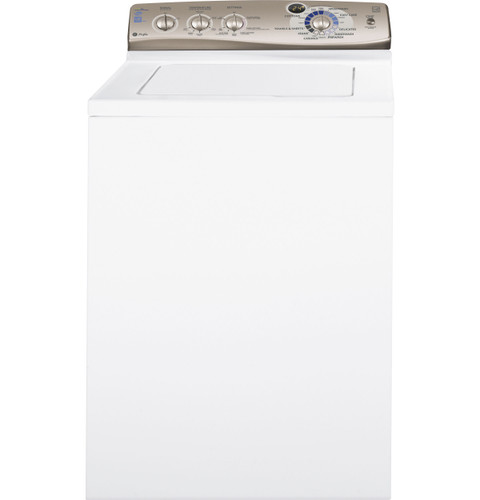
GE Profile PTWN6250M washer — manufacturer product image
Photo: PTWN6250MWT white variant. Shared source photo. Photo source
Manufacturer sources

GE Profile PTWN6250M

Repair or replace?

Washing machine · US market · 48 owner topics

GE Profile PTWN6250M / PTWN6250MWT HydroWave Infusor washer

Covers PTWN6250M and the manufacturer-listed models in this family.

GE Profile PTWN6250M / PTWN6250MWT HydroWave Infusor washer

Deciding whether to repair or replace the PTWN6250M

Use a confirmed fault, written repair estimate, and actual replacement quote to make this decision.

Start with a confirmed fault

Separate a confirmed failed component from a symptom that may have a simpler cause. The owner troubleshooting table says to straighten a kinked drain hose, clear inlet screens if filling is poor, redistribute an unbalanced load, use an appropriate HE detergent amount, and reset the cycle in specific situations. It also says pauses during sensing and low visible water can be normal. Check the manual before paying for a repair based only on sound or water level.

If the washer leaks, trips a circuit, smells hot, or moves violently, stop using it and arrange qualified service. Those observations do not identify the failed part. Record what cycle was running, whether water was entering or draining, and where the leak appears.

Get the numbers that change the decision

Request a written diagnosis and itemized estimate, including parts, labor, diagnostic charge, and return visit. Then obtain a real replacement quote including delivery, installation, removal, and any drain, floor, or electrical changes. The original product documents provide no current repair price and no successor recommendation, so a numerical break-even rule would be invented.

Check the written warranty before authorizing work. First-year qualifying factory-part defects include labor; later coverage lists specific parts but usually makes the owner responsible for labor. Lifetime language applies to the washer basket only in the manual’s schedule, with owner-paid labor. Confirm eligibility with GE using the serial and receipt.

Decide whether the documented design still fits

This washer is specified at 3.6 DOE cubic feet, with an Infusor, HE LoWater washing, PreciseFill, and 700 RPM spin. If that capacity and low-water behavior suit your loads, a repair may preserve useful capability. If frequent bulky loads exceed the basket or you dislike the design’s detergent and loading requirements, a replacement with different documented capacity and controls may fit better.

The quick guide says water may not cover the tops of clothes; this is normal. Do not mistake that behavior for proof of poor performance or use it alone to justify replacement. Similarly, GE’s “Quiet-By-Design” phrase is a marketing claim, not evidence that an individual washer’s new grinding or banging noise is normal.

Account for installation and operating evidence

The spec sheet lists 42 × 27 × 25.5-inch dimensions and a grounded 120V, 15/20-amp circuit requirement. The installation guide calls for firm flooring, correct hot/cold connections, and drain installation within specified limits. A replacement needs to fit the same route and utilities; installation changes can alter the total cost.

The EnergyGuide’s 160 kWh annual use and $17/$12 costs are based on 2007 national rates and eight weekly loads. Use the kWh figure as historical context only. Compare a replacement’s current label with your actual rates; do not count an unverified operating-cost saving as guaranteed payback.

Use function and capacity as real decision factors

A machine that completes the cycle but struggles with an occasional oversized load may still meet household needs; a washer that cannot safely complete fill, drain, or spin requires diagnosis first. The owner manual identifies normal sensing pauses and low visible water, so those alone are weak reasons to replace the washer. Conversely, recurring leaks, failed functions, or an unsuitable capacity should be included in the decision after they are confirmed.

Compare the replacement’s usable capacity and cycle options with actual loads, not only its advertised headline size. Consider whether the household values the PTWN6250M’s documented PreciseFill and HE LoWater design or prefers a different way of choosing water level and loading clothes.

Specifications & model details

PTWN6250M: model-specific checks

Plan with this model’s measurements

For GE Profile PTWN6250M, the source gives width 27 in (685.8 mm), height 42 in (1,066.8 mm), depth 25.5 in (647.7 mm). Measure the narrowest doorway, turning space and final opening using those same directions. These are product measurements; add the separately specified hose, ventilation, door/lid, handle and service space. The reported width × depth occupies about 4.78 square feet before those allowances.

Recorded model facts

Model details relevant to this topic

SpecificationRecorded valueEvidence
DOE capacity3.6 cu ft
Manufacturer
GE Profile PTWN6250M — specs

Exact-model manufacturer resource; Specification 260192, revised 4/11, pp. 1–2; explicit base and finish listing

GE specification 260192, revised 4/11, titles the base PTWN6250M and explicitly lists finish model PTWN6250MWT. Base/retail relationship is documented here; no other suffix or serial range is inferred. Specification 260192, revised 4/11, pp. 1–2; explicit base and finish listing

Observed Oct 27, 2026

Other observations retained:

3.7 cu ft — California Energy Commission — Washing machines archive; cec-washers.xlsx; sheet ClothesWashers_12022025; row 4128

Cancel cycleHold Start for 3 seconds
Manufacturer
GE Profile PTWN6250M — owner

Exact-model manufacturer resource; Owner manual 49-90400-1, 07/06/10; pp. 1, 4–7, 9

GE specification 260192, revised 4/11, titles the base PTWN6250M and explicitly lists finish model PTWN6250MWT. Base/retail relationship is documented here; no other suffix or serial range is inferred. Owner manual 49-90400-1, 07/06/10; pp. 1, 4–7, 9

Observed Oct 27, 2026
Electronics restart wait2 minutes
Manufacturer
GE Profile PTWN6250M — owner

Exact-model manufacturer resource; Owner manual 49-90400-1, 07/06/10; pp. 1, 4–7, 9

GE specification 260192, revised 4/11, titles the base PTWN6250M and explicitly lists finish model PTWN6250MWT. Base/retail relationship is documented here; no other suffix or serial range is inferred. Owner manual 49-90400-1, 07/06/10; pp. 1, 4–7, 9

Observed Oct 27, 2026
Maximum spin speed700 RPM
Manufacturer
GE Profile PTWN6250M — specs

Exact-model manufacturer resource; Specification 260192, revised 4/11, pp. 1–2; explicit base and finish listing

GE specification 260192, revised 4/11, titles the base PTWN6250M and explicitly lists finish model PTWN6250MWT. Base/retail relationship is documented here; no other suffix or serial range is inferred. Specification 260192, revised 4/11, pp. 1–2; explicit base and finish listing

Observed Oct 27, 2026
Suds-saving capability in archiveFalse
Archive
California Energy Commission — Washing machines archive

cec-washers.xlsx; sheet ClothesWashers_12022025; row 4128

Regulatory archive observation; test standard and measurement context follow the original record.

Observed Oct 27, 2026
Temperature systemPerfecTemp; Tap Cold bypasses temperature regulation
Manufacturer
GE Profile PTWN6250M — owner

Exact-model manufacturer resource; Owner manual 49-90400-1, 07/06/10; pp. 1, 4–7, 9

GE specification 260192, revised 4/11, titles the base PTWN6250M and explicitly lists finish model PTWN6250MWT. Base/retail relationship is documented here; no other suffix or serial range is inferred. Owner manual 49-90400-1, 07/06/10; pp. 1, 4–7, 9

Observed Oct 27, 2026
Unheated rinse option in archiveTrue
Archive
California Energy Commission — Washing machines archive

cec-washers.xlsx; sheet ClothesWashers_12022025; row 4128

Regulatory archive observation; test standard and measurement context follow the original record.

Observed Oct 27, 2026
Wash mechanismInfusor
Manufacturer
GE Profile PTWN6250M — specs

Exact-model manufacturer resource; Specification 260192, revised 4/11, pp. 1–2; explicit base and finish listing

GE specification 260192, revised 4/11, titles the base PTWN6250M and explicitly lists finish model PTWN6250MWT. Base/retail relationship is documented here; no other suffix or serial range is inferred. Specification 260192, revised 4/11, pp. 1–2; explicit base and finish listing

Observed Oct 27, 2026
Wash programsCottons, Prewash, Casuals, Easy Care, Delicates, Hand Wash, Speed, Drain & Spin, Towels & Sheets, Jeans, Quick Rinse
Manufacturer
GE Profile PTWN6250M — owner

Exact-model manufacturer resource; Owner manual 49-90400-1, 07/06/10; pp. 1, 4–7, 9

GE specification 260192, revised 4/11, titles the base PTWN6250M and explicitly lists finish model PTWN6250MWT. Base/retail relationship is documented here; no other suffix or serial range is inferred. Owner manual 49-90400-1, 07/06/10; pp. 1, 4–7, 9

Observed Oct 27, 2026
Wash systemHydroWave with Infusor
Manufacturer
GE Profile PTWN6250M — specs

Exact-model manufacturer resource; Specification 260192, revised 4/11, pp. 1–2; explicit base and finish listing

GE specification 260192, revised 4/11, titles the base PTWN6250M and explicitly lists finish model PTWN6250MWT. Base/retail relationship is documented here; no other suffix or serial range is inferred. Specification 260192, revised 4/11, pp. 1–2; explicit base and finish listing

Observed Oct 27, 2026
Washer controlsAutomatic
Archive
California Energy Commission — Washing machines archive

cec-washers.xlsx; sheet ClothesWashers_12022025; row 4128

Regulatory archive observation; test standard and measurement context follow the original record.

Observed Oct 27, 2026
Water fillPreciseFill automatic load sensing
Manufacturer
GE Profile PTWN6250M — specs

Exact-model manufacturer resource; Specification 260192, revised 4/11, pp. 1–2; explicit base and finish listing

GE specification 260192, revised 4/11, titles the base PTWN6250M and explicitly lists finish model PTWN6250MWT. Base/retail relationship is documented here; no other suffix or serial range is inferred. Specification 260192, revised 4/11, pp. 1–2; explicit base and finish listing

Observed Oct 27, 2026

Compare your written quotes

Enter local quotes in the same currency. These are your figures; Specs & Parts has not supplied market prices or a failure-rate estimate.

Your comparison will appear here.

A comparison group built from recorded designs

GE Profile top-load washing machines

2 records in this manufacturer/public-source group. The group uses the brand, category and recorded design, rather than a guessed series or production year.

These are source-record ranges. They do not establish current availability, a shared repair platform or installation compatibility.

More background: Repair or replace?

Category & symptom guidance

Repair or replace?

Start with the symptom and its impact

Write down what the washer does and does not do: for example, whether it fills, washes, drains, spins, or leaks. Note when the problem occurs, whether it repeats with different loads, and whether clothes come out unusually wet or the floor is wet. Separate the observed symptom from a suspected cause; the same symptom can have different explanations.

Consider the consequences of waiting. A washer that stops mid-cycle may disrupt laundry, while an active leak can damage flooring or nearby property. If there is smoke, a burning or chemical smell, or water near electrical equipment, stop using it and seek appropriate help. Do not open panels or work on internal electrical parts.

  1. Describe the symptom, when it happens, and how often.
  2. Note whether the issue affects every cycle or only a particular load or setting.
  3. Stop using the washer if there is an active leak or an unusual burning smell.

Get a diagnosis that can be compared

Ask the service provider to identify the failed function or component and explain what evidence supports that conclusion. Request a written estimate that separates diagnostic or visit charges, parts, labor, taxes, and any return visit. Ask whether the estimate changes if inspection finds another fault, and whether a repair includes a stated parts or labor guarantee. These details make two quotes comparable.

For a drainage, fill, or spin complaint, share the cycle and load conditions and any visible water or noise. A washer may behave differently with a small or unbalanced load; for some top-load high-efficiency designs, sensing and low water levels can be normal. Do not treat a normal design behavior as proof of failure, but do not dismiss a repeated symptom without a diagnosis.

Compare the actual costs

Use the repair estimate as one side of the decision. On the replacement side, total the price you would actually pay, delivery, installation, removal or disposal, required connections or accessories, and any financing cost. Deduct only credits you have confirmed. Avoid comparing a repair quote with a sticker price that leaves out delivery or setup.

Then compare the repair total with the replacement total, considering how much laundry the household handles and whether the replacement's capacity or cycle choices solve a real problem. A modest repair can be worthwhile if it restores a washer that otherwise suits you. A costly repair becomes less attractive when another known fault, repeated breakdown, or replacement-related expense is likely to follow.

  1. Ask for itemized repair and replacement totals.
  2. Include delivery, installation, removal, and taxes on the replacement side.
  3. Compare the options against your household's actual capacity and cycle needs.

Account for efficiency and drying

If energy or water use matters to the decision, compare the washer's verified model information with the replacement's official label or product information. Do not infer savings from age, a marketing phrase, or a different capacity alone. The Department of Energy explains washer efficiency measures and consumer comparisons; use comparable figures and your expected use rather than assuming a specific bill reduction.

Spin performance can also affect dryer use. A repair that restores normal spinning may reduce time spent drying, while a replacement's listed spin capability does not guarantee a household-specific savings. Consider the cost and frequency of your laundry and whether line drying is part of your routine.

Make the call with uncertainty visible

Choose repair when the diagnosis is specific, the total is acceptable, and the repaired washer still fits your needs. Choose replacement when the repair total plus likely near-term work approaches the complete replacement total, or when the existing washer no longer meets capacity or cycle needs. If the diagnosis is uncertain, a second written opinion can be more useful than relying on a general rule based on purchase age.

Before authorizing work, ask what the quote covers and what happens if the repair does not resolve the stated symptom. If replacing, confirm that the chosen model fits the space and hookups and understand the removal plan. For a washer that is being discarded, check local collection options and recycling guidance rather than leaving it where it could leak or obstruct access.

What to do with what you find

Repair quote identifies a fault and includes a complete total.

The repair option can be compared directly with replacement.

Confirm coverage and compare full costs and household fit.

Diagnosis is vague or estimate excludes possible work.

The repair total is uncertain.

Request written scope or another diagnosis before deciding.

Have these details ready

  • Exact model and serial identification
  • Symptom pattern and affected cycles
  • Written diagnostic findings and itemized repair quote
  • Complete replacement, delivery, installation, and removal total
  • Comparable official efficiency information when relevant

Common questions

Should I replace a washer just because it is old?

Age alone does not establish the fault, future repair cost, efficiency, or replacement value. Compare diagnosis, estimates, current needs, and verified model information.

What if the washer seems to use very little water?

Some high-efficiency top-load washers use load sensing and a lower water level by design. Check guidance for the exact model and distinguish normal operation from a repeatable cleaning or cycle problem.

General background sources

These sources support the shared guide. Exact model specifications and matched family procedures have their own sources above.

  1. www.energy.gov/cmei/buildings/consumer-clothes-washers
  2. producthelp.whirlpool.com/Laundry/Washers/Product_Info/Washer_Product_Assistance/Auto_Sensing_in_a_Top_Load_HE_Washer
  3. www.epa.gov/recycle/what-you-can-do
  4. media.us.lg.com/m/6d5d734b0871fbdf/original/WM4000_Owners-Manual.pdf

Owner guidance by Specs & Parts, drafted with GPT-6 Luna. Sources and scope.

Sources for PTWN6250M

GE Profile PTWN6250M — owner Observed Oct 27, 2026
GE Profile PTWN6250M — specs Observed Oct 27, 2026
Suggest a correction