Appliance & electronics support
Find your model numberAbout our sources
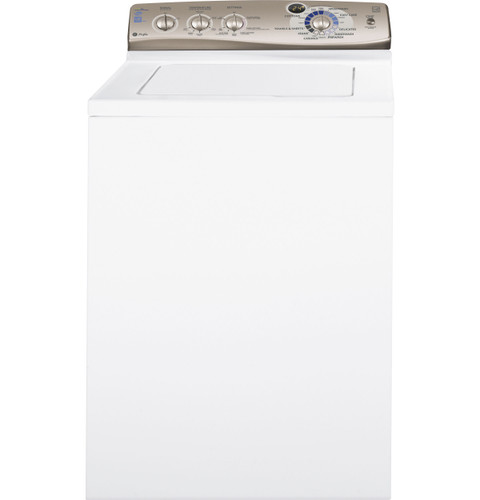
GE Profile PTWN6250M washer — manufacturer product image
Photo: PTWN6250MWT white variant. Shared source photo. Photo source
Manufacturer sources

GE Profile PTWN6250M

First use & setup

Washing machine · US market · 48 owner topics

GE Profile PTWN6250M / PTWN6250MWT HydroWave Infusor washer

Covers PTWN6250M and the manufacturer-listed models in this family.

GE Profile PTWN6250M / PTWN6250MWT HydroWave Infusor washer

Set up the first load using the Infusor washer’s own sequence

This HE top-loader uses HydroWave with Infusor wash action and automatic load sensing. The first fill can be lower than expected and quiet while the machine senses the load. GE’s quick reference explains these behaviors; do not add water or open the lid to force a fill.

Prepare a loose load, use HE detergent, select cycle and temperature, close the lid and press Start. The owner manual describes the display messages and how to pause or stop.

  1. Use HE detergent, load loosely, select cycle/temperature, close lid and press Start.
  2. Expect initial quiet sensing and low visible water.
  3. Use Drain & Spin for water remaining after a cycle when needed.

Load and add detergent

Place clothes loosely around the Infusor, leaving room for movement; do not pack items tightly over it. The manual warns overloading can reduce wash performance. Choose a load the washer can move rather than judging by whether clothing reaches the basket rim.

Use HE detergent and measure for load size, soil and water softness. Excess suds can hurt wash and rinse results. Add softener through the Infusor dispenser only if present; the manual says not to use a dispensing ball with this HE washer.

Choose cycle, temperature and available options

Use Cottons for everyday cottons, Delicates or Hand Wash for care-labeled special fabrics, Speed for small lightly soiled loads, Towels & Sheets for those items, and Drain & Spin when you need to drain/spin without washing. Follow garment labels and the full cycle chart.

Set wash/rinse temperature with Temperature. Use Settings only for options physically present. AutoSoak, 2nd Rinse, Extended Spin and fabric softener are qualified as “on some models.” Do not hunt for a control that the panel does not have.

Close the lid and begin

Close the lid before pressing Start. The manual states the washer will not fill or start the cycle with the lid open during automatic load sensing. “Lid” on the display means close it for the cycle to proceed. Pressing Start again pauses; press again to resume.

At cycle start, the washer may pause quietly while sensing. The quick reference says this initial quiet period is normal. The remaining-time display can update as fill duration is learned, so give it time to fill before assuming it is stalled.

Check fill and final spin

During washing, the water may not cover the clothes. That is normal for this Infusor/HE action; do not pour water into the basket. At the end, compare dryness with the selected cycle’s spin behavior: gentle cycles use slower spins than Cottons or Drain & Spin.

If water remains or clothing is unusually wet, check the drain hose, load balance and supply. Do not jump directly to a motor or pump diagnosis.

Washer is quiet immediately after Start.

Initial load sensing can pause before wash action begins.

Keep lid closed and allow sensing/fill to proceed.

Waterline is below the tops of clothes.

Low-water Infusor action is normal per GE quick reference.

Do not add water; confirm load and detergent are appropriate.

Display says Lid.

The lid is open or not detected, so fill/cycle cannot proceed.

Close it; if the message persists, contact service.

Common questions

Should I add water if clothes are not covered?

No. The quick reference says the Infusor wash may leave clothes uncovered and still clean effectively.

Does lifting the lid pause the timer?

No. It stops fill/agitation/spin but does not pause the cycle timer; use Start/Stop-Pause.

Specifications & model details

PTWN6250M: model-specific checks

Start with this washer’s layout

GE Profile PTWN6250M is listed as Top-Loading high-efficiency. For this recorded top-loading GE Profile design, place the first inspection at the lid, basket rim, fitted dispenser and the visible fill/drain connections. For a spin complaint, separate retained water from an uneven load, then check the selected cycle and lid state. Keep clothing loose enough to move; an agitator, impeller or automatic-fill procedure needs its own feature match.

The source’s control description

GE Profile PTWN6250M has controls described as Automatic with a vertical axis. This identifies the recorded operating design. Use the printed cycle and control labels on the machine to distinguish a paused selection, a lid condition and a completed cycle before looking for a diagnostic-code sequence.

Recorded model facts

Model details relevant to this topic

SpecificationRecorded valueEvidence
DOE capacity3.6 cu ft
Manufacturer
GE Profile PTWN6250M — specs

Exact-model manufacturer resource; Specification 260192, revised 4/11, pp. 1–2; explicit base and finish listing

GE specification 260192, revised 4/11, titles the base PTWN6250M and explicitly lists finish model PTWN6250MWT. Base/retail relationship is documented here; no other suffix or serial range is inferred. Specification 260192, revised 4/11, pp. 1–2; explicit base and finish listing

Observed Oct 27, 2026

Other observations retained:

3.7 cu ft — California Energy Commission — Washing machines archive; cec-washers.xlsx; sheet ClothesWashers_12022025; row 4128

Cancel cycleHold Start for 3 seconds
Manufacturer
GE Profile PTWN6250M — owner

Exact-model manufacturer resource; Owner manual 49-90400-1, 07/06/10; pp. 1, 4–7, 9

GE specification 260192, revised 4/11, titles the base PTWN6250M and explicitly lists finish model PTWN6250MWT. Base/retail relationship is documented here; no other suffix or serial range is inferred. Owner manual 49-90400-1, 07/06/10; pp. 1, 4–7, 9

Observed Oct 27, 2026
Electronics restart wait2 minutes
Manufacturer
GE Profile PTWN6250M — owner

Exact-model manufacturer resource; Owner manual 49-90400-1, 07/06/10; pp. 1, 4–7, 9

GE specification 260192, revised 4/11, titles the base PTWN6250M and explicitly lists finish model PTWN6250MWT. Base/retail relationship is documented here; no other suffix or serial range is inferred. Owner manual 49-90400-1, 07/06/10; pp. 1, 4–7, 9

Observed Oct 27, 2026
Maximum spin speed700 RPM
Manufacturer
GE Profile PTWN6250M — specs

Exact-model manufacturer resource; Specification 260192, revised 4/11, pp. 1–2; explicit base and finish listing

GE specification 260192, revised 4/11, titles the base PTWN6250M and explicitly lists finish model PTWN6250MWT. Base/retail relationship is documented here; no other suffix or serial range is inferred. Specification 260192, revised 4/11, pp. 1–2; explicit base and finish listing

Observed Oct 27, 2026
Suds-saving capability in archiveFalse
Archive
California Energy Commission — Washing machines archive

cec-washers.xlsx; sheet ClothesWashers_12022025; row 4128

Regulatory archive observation; test standard and measurement context follow the original record.

Observed Oct 27, 2026
Temperature systemPerfecTemp; Tap Cold bypasses temperature regulation
Manufacturer
GE Profile PTWN6250M — owner

Exact-model manufacturer resource; Owner manual 49-90400-1, 07/06/10; pp. 1, 4–7, 9

GE specification 260192, revised 4/11, titles the base PTWN6250M and explicitly lists finish model PTWN6250MWT. Base/retail relationship is documented here; no other suffix or serial range is inferred. Owner manual 49-90400-1, 07/06/10; pp. 1, 4–7, 9

Observed Oct 27, 2026
Unheated rinse option in archiveTrue
Archive
California Energy Commission — Washing machines archive

cec-washers.xlsx; sheet ClothesWashers_12022025; row 4128

Regulatory archive observation; test standard and measurement context follow the original record.

Observed Oct 27, 2026
Wash mechanismInfusor
Manufacturer
GE Profile PTWN6250M — specs

Exact-model manufacturer resource; Specification 260192, revised 4/11, pp. 1–2; explicit base and finish listing

GE specification 260192, revised 4/11, titles the base PTWN6250M and explicitly lists finish model PTWN6250MWT. Base/retail relationship is documented here; no other suffix or serial range is inferred. Specification 260192, revised 4/11, pp. 1–2; explicit base and finish listing

Observed Oct 27, 2026
Wash programsCottons, Prewash, Casuals, Easy Care, Delicates, Hand Wash, Speed, Drain & Spin, Towels & Sheets, Jeans, Quick Rinse
Manufacturer
GE Profile PTWN6250M — owner

Exact-model manufacturer resource; Owner manual 49-90400-1, 07/06/10; pp. 1, 4–7, 9

GE specification 260192, revised 4/11, titles the base PTWN6250M and explicitly lists finish model PTWN6250MWT. Base/retail relationship is documented here; no other suffix or serial range is inferred. Owner manual 49-90400-1, 07/06/10; pp. 1, 4–7, 9

Observed Oct 27, 2026
Wash systemHydroWave with Infusor
Manufacturer
GE Profile PTWN6250M — specs

Exact-model manufacturer resource; Specification 260192, revised 4/11, pp. 1–2; explicit base and finish listing

GE specification 260192, revised 4/11, titles the base PTWN6250M and explicitly lists finish model PTWN6250MWT. Base/retail relationship is documented here; no other suffix or serial range is inferred. Specification 260192, revised 4/11, pp. 1–2; explicit base and finish listing

Observed Oct 27, 2026
Washer controlsAutomatic
Archive
California Energy Commission — Washing machines archive

cec-washers.xlsx; sheet ClothesWashers_12022025; row 4128

Regulatory archive observation; test standard and measurement context follow the original record.

Observed Oct 27, 2026
Water fillPreciseFill automatic load sensing
Manufacturer
GE Profile PTWN6250M — specs

Exact-model manufacturer resource; Specification 260192, revised 4/11, pp. 1–2; explicit base and finish listing

GE specification 260192, revised 4/11, titles the base PTWN6250M and explicitly lists finish model PTWN6250MWT. Base/retail relationship is documented here; no other suffix or serial range is inferred. Specification 260192, revised 4/11, pp. 1–2; explicit base and finish listing

Observed Oct 27, 2026
More background: Set up a washer for first use

Category & symptom guidance

Set up a washer for first use

Complete installation before loading

Before the first wash, confirm that the washer is installed in a suitable location and that its transport materials have been removed as directed. Restraints differ between front-load and top-load designs. A front-load washer may use shipping bolts; another design may use a different stabilizer. Follow the exact installation guide and retain any transport parts it says to save.

Check that the washer sits firmly, required water supplies are connected, the drain hose is secured, and the cord and outlet match the product instructions. Do not start a cycle to test an installation with a visible leak, unstable cabinet, damaged cord, or uncertain drain route. Correct those issues first.

Prepare a suitable first load

Sort items by care label, color, soil, and fabric type. Keep bulky or unusual articles within the manual’s guidance; a rated capacity does not mean an item can circulate properly. A front-load washer generally relies on tumbling in a drum, while top-load machines may use an agitator or a low-profile impeller or wash plate. Load as directed for the washer’s design rather than transferring a loading pattern from another type.

Use the detergent type and amount recommended by the washer and detergent labels. Many high-efficiency washers call for HE detergent because it is formulated for lower-water washing and reduced suds. Put products in the designated dispenser or drum location for the exact model. Do not assume all washers have the same dispenser compartments or that a softener or bleach option is present.

Run the prescribed first check

Use the initial installation or test procedure in the exact manual. It may specify a particular cycle or test load, so do not substitute a procedure copied from another product. During the check, observe whether water enters, the cabinet stays stable, and the washer drains without visible leaks. Keep the area clear and do not reach into the tub or drum while it is moving.

A top-load HE washer may pause to sense the load or use less visible water than a conventional-fill machine. That can be normal when the product is designed for sensing. A front-load washer may also rotate or measure the load before the main wash action. Use the manual to distinguish normal startup behavior from a supply or control problem.

Review results and prepare for regular use

After the first check, inspect the supply connections and the floor for moisture. Confirm the drain hose stayed secured and the machine did not rock or move excessively. If all checks pass, review the manual’s everyday guidance for detergent, load size, cycle choice, and care. Leave the machine in the condition the manufacturer recommends after use, especially where door or lid ventilation is addressed.

If a leak, repeated fill failure, unusual noise, or excessive vibration occurs, stop and consult the installation troubleshooting section. Do not remove panels, defeat a lid or door lock, or continue repeated test cycles in the hope that a poor installation resolves itself. Ask the installer or manufacturer for help when the source is not an accessible hose, shutoff, or leveling issue.

What to do with what you find

The first check completes with no leak, stable position, and normal discharge.

The washer appears ready for ordinary use under the manual’s guidance.

Use the recommended detergent, loading, and cycle practices.

The washer leaks, rocks excessively, or fails to drain during setup.

Installation may be incomplete or a connection may be wrong.

Stop and have the installer or qualified service correct the issue.

Have these details ready

  • Exact first-use/test procedure
  • Observed fill, stability, leak, and drain behavior

Common questions

Should I use the same first test cycle for every washer?

No. Follow the test procedure in the exact model’s installation instructions.

Is low visible water during setup always a fault?

No. Some HE top-load sensing washers use less water, and front-load machines also operate with low visible water. Check the manual for normal behavior.

General background sources

These sources support the shared guide. Exact model specifications and matched family procedures have their own sources above.

  1. media.us.lg.com/m/6d5d734b0871fbdf/original/WM4000_Owners-Manual.pdf
  2. producthelp.whirlpool.com/Laundry/Washers/Product_Info/Washer_Product_Assistance/Auto_Sensing_in_a_Top_Load_HE_Washer
  3. images.salsify.com/image/upload/s--dBhUJ9s5--/3f58f84eaa9d207a6fdadfa3a955c70b28005ee2.pdf
  4. images.salsify.com/image/upload/s--4zVee-ir--/44e1044e71329cd6678e18edc3950e53c5694077.pdf

Owner guidance by Specs & Parts, drafted with GPT-6 Luna. Sources and scope.

Sources for PTWN6250M

GE Profile PTWN6250M — owner Observed Oct 27, 2026
GE Profile PTWN6250M — specs Observed Oct 27, 2026
Suggest a correction