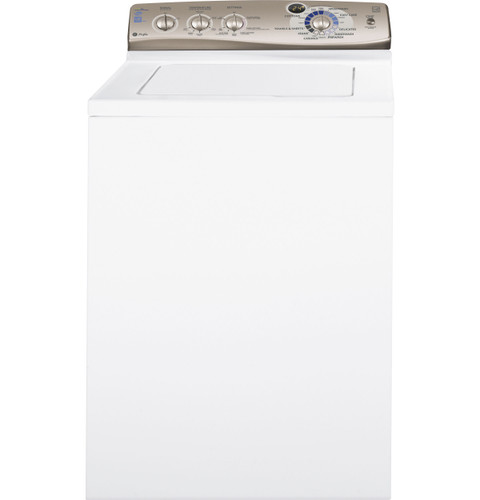
GE Profile PTWN6250M / PTWN6250MWT HydroWave Infusor washer
PTWN6250M / PTWN6250MWT: solve a no-fill or slow-fill complaint
Automatic load sensing and the Infusor intentionally use less water than a traditional top-loader. GE says the water may not cover the clothes; do not add water to imitate an older machine. A “Fill” display means the basket is filling, and the estimated time adjusts to household water pressure.
Check lid, supply, visible hose route and drainage setup before concluding that a washer part failed.
Close the lid and allow sensing
The manual says automatic sensing will not fill with the lid open. EcoFill also requires a closed lid while the basket spins to assist load sensing. Early sensing may be quiet. Wait for the display to progress.
Open both faucets and confirm connections
The no-operation chart lists supply off; temperature troubleshooting says turn both hot and cold faucets fully on and connect hoses to the correct sources. Rear fittings are labeled H and C. If one supply is absent, the selected temperature may seem wrong.
Inspect visible restrictions
Check for kinked or pinched hoses. For blocked inlet screens, GE’s chart instructs turning off the water source, removing the hoses from the upper back, cleaning screens with a brush or toothpick, reconnecting and restoring water. Do not proceed if shutoff valves leak or cannot be closed.
If water immediately drains away
The manual says fill-and-drain-at-once can mean the drain standpipe is too low. Installation requirements specify at least 30 inches and no more than eight feet above the washer base, with an open standpipe. Have an installer correct setup that falls outside those requirements.
Consider detergent and escalation
Excess suds can affect performance; use HE detergent and measure carefully, especially for small or lightly soiled loads and soft water. If faucets, lid and visible routing are correct but the washer still does not fill, record whether “Fill” appeared and seek service.
Distinguish low water from absent water
The quick reference compares small, large and super loads and explains that the Infusor can clean without water covering the garments. During normal operation, judge whether the washer progresses through fill and wash, not whether the whole load is submerged. The Auto/Adaptive Fill feature senses load size.
A complete absence of water is different: close lid, verify both faucets, check visible hose bends and note whether Fill appears. GE’s manual says PerfecTemp senses water temperature and can add warm water during a cold wash; cool water during a cold rinse is normal. Do not diagnose a temperature control from the water’s feel during a rinse.
Read the temperature symptom separately
PerfecTemp adjusts incoming water temperature for the selected wash temperature. A COLD wash can receive some warm water; TAP COLD turns PerfecTemp off. The owner guide says it does not activate during a cold rinse. If only hot wash seems cool, verify the household hot faucet and water heater; GE’s troubleshooting chart specifies 120–140°F delivery for its check. Do not infer a fill-valve fault from one cold-rinse observation.
Low Infusor water level is normal
Assess cleaning results and load instead of adding water.
Automatic load sensing is inhibited
Close lid and allow sensing.
Standpipe may be too low
Check installation with an installer.