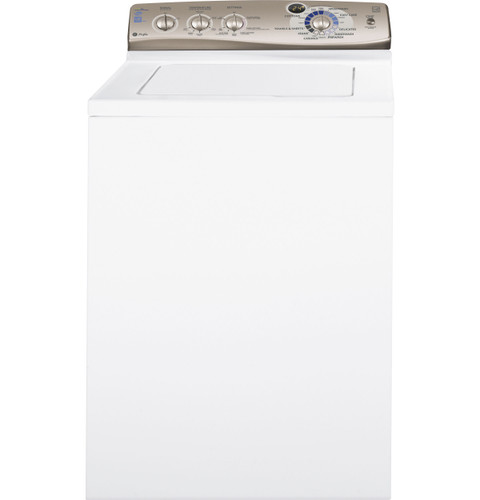
GE Profile PTWN6250M / PTWN6250MWT HydroWave Infusor washer
Using the PTWN6250M efficiently
The PTWN6250M combines HE LoWater washing, PreciseFill, and a documented 700-RPM spin; efficient use depends on matching the load and cycle.
Use the design the washer actually has
GE describes this model as a 3.6 DOE cubic-foot top-loader with HydroWave HE LoWater action, an Infusor, and PreciseFill. The quick-reference sheet explains that the water level may not cover the top of the garments; this is expected in the low-water design. Choose load size and soil settings for the clothes rather than adding water or detergent because the basket looks less full than an older deep-fill washer.
The owner guide recommends HE detergent and says less detergent may be appropriate for soft water, a small load, or light soil. Measure the detergent; excess can hurt wash results. Loosely arrange items around the Infusor and do not overload. A load that is compressed over the Infusor defeats the manual’s loading directions and can impair cleaning or balance.
Choose cycles for the load
The specification sheet lists Speed Wash for lightly soiled items needed quickly and specialty cycles for specific items. The control offers cycle and option combinations that differ by item and model configuration; consult the control labels and cycle table in the owner manual instead of applying Speed Wash to heavily soiled or bulky laundry. Select the shortest suitable cycle, not simply the shortest cycle on the dial.
Use the spin options deliberately. GE advertises a 700 RPM maximum spin, which removes more water and may reduce subsequent dryer time, but it does not mean every cycle reaches 700 RPM. If laundry remains wetter than usual, check whether the chosen cycle, load balance, or setting limited spin before assuming a component failed. Redistribute an unbalanced load and use Drain & Spin when the manual’s troubleshooting instructions call for it.
Think in whole-laundry energy, not one label number
The EnergyGuide declares 160 kWh annual electricity use based on eight wash loads a week and 2007 national average energy prices. It separately estimates annual operating cost of $17 with an electric water heater and $12 with a natural-gas water heater. Those are label-era comparative estimates, not a current household bill or current tariff. Your actual cost changes with load frequency, water temperature, hot-water system, and utility rates.
A useful practical lever is avoiding unnecessary hot water: follow garment-care instructions and select a temperature suited to soil and fabric. Do not lower temperature when hygiene or the clothing label requires otherwise. Repair hot/cold plumbing or temperature problems instead of compensating with repeated cycles. The installation sheet specifies the water-heater temperature range for a selected hot wash, so a household water-temperature change should be made with safe plumbing guidance.
Prevent repeat washing and unnecessary drying
Correct load size, HE detergent dose, and the appropriate cycle reduce the chance that clothes need a second wash. The manual says low visible water is normal, so do not rerun a cycle just to see a higher fill. Use the fabric-softener dispenser only if fitted, and avoid a dispensing ball. For fabric that can tolerate spin, a higher spin can leave less water for the dryer, but judge the result on the finished load rather than assuming a fixed energy saving.
Keep the washer clean using the owner’s care instructions: leave the lid open after washing to evaporate moisture, wipe spills, and use the manual’s occasional bleach-containing cleaning cycle if needed. Avoid unapproved descaler recipes. These maintenance steps help the appliance operate as intended; they do not substantiate any guaranteed energy savings or service life.