Appliance & electronics support
Find your model numberAbout our sources
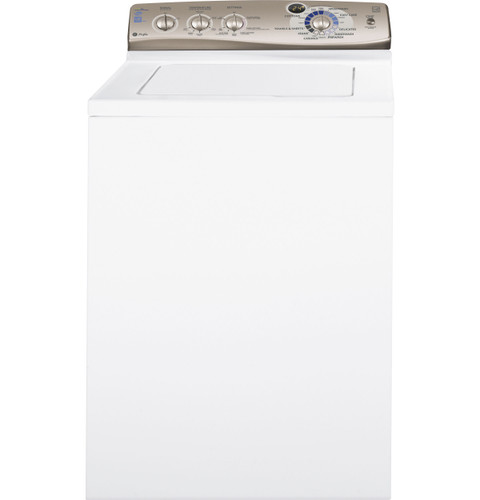
GE Profile PTWN6250M washer — manufacturer product image
Photo: PTWN6250MWT white variant. Shared source photo. Photo source
Manufacturer sources

GE Profile PTWN6250M

Specification review

Washing machine · US market · 48 owner topics

GE Profile PTWN6250M / PTWN6250MWT HydroWave Infusor washer

Covers PTWN6250M and the manufacturer-listed models in this family.

GE Profile PTWN6250M / PTWN6250MWT HydroWave Infusor washer

Specification-based review of the GE Profile PTWN6250M

This is an assessment of published specifications and owner guidance, not a hands-on test or owner-rating summary.

What its published design does well

This is a specification-based assessment, not a hands-on test or a summary of owner ratings. GE documents a 3.6 DOE-cubic-foot top-loader with HydroWave HE LoWater washing, an Infusor, and PreciseFill. The core tradeoff is clear: it is designed to use concentrated low-water washing and automatic fill measurement rather than showing a high water line familiar from older deep-fill machines. GE’s quick reference explicitly says water may not cover the top of clothes and that this is normal.

The spec sheet lists 700 RPM spin, Speed Wash for lightly soiled items, specialty cycles, and MEF/WF values. A higher spin can leave less moisture for a dryer, and the advertised short cycle can suit a lightly soiled urgent load. These are feature claims from GE’s documents, not independently measured performance results.

What an owner should consider

A buyer who expects visible deep water may find the low-water system unfamiliar. GE specifies HE detergent and advises reducing detergent for small or lightly soiled loads or soft water; overdosing can undermine results. Load arrangement matters: distribute items loosely around the Infusor and avoid covering it with a heap. The design’s proper use may require changing habits from a conventional agitator washer.

The documented capacity is 3.6 DOE cubic feet, so compare it with the amount and type of laundry in your household. A bulky blanket may need different loading or a larger laundromat machine. The spec sheet’s 42 × 27 × 25.5-inch nominal dimensions also make doorway, hose, lid, and service clearance relevant before purchasing or moving one.

What the documents do not prove

The published specification does not establish reliability, noise level in a particular home, cleaning performance on every stain, service availability today, or how much a specific household will save. “Quiet-By-Design” is GE’s product wording, not a measured decibel result. The EnergyGuide’s annual cost estimate is based on eight weekly loads and 2007 national-average utility rates; it should not be read as a modern cost forecast.

Warranty language needs careful reading. The 2011 spec advertises lifetime stainless-tub and limited ten-year parts coverage, while the owner manual names the basket as lifetime coverage and specified assemblies for years 2–10, with labor paid by the owner for those later periods. A potential buyer should review the written terms rather than relying on a broad marketing summary.

A fair conclusion

The documents show a capable-for-its-era, high-efficiency top-loader with useful fill sensing, a moderate documented capacity, a 700-RPM spin, and dedicated cycles. Its strengths matter most to an owner who accepts HE detergent, low-water operation, and correct load placement. Its tradeoffs are uncertainty about an individual machine’s history, an obsolete product listing, and no basis here for a reliability ranking or current repair-parts guarantee.

For a used unit, inspect condition, test fill/agitation/drain/spin, check for leaks and rust, and obtain a service estimate if symptoms appear. Those are evaluation steps, not evidence of an independent review. Compare its documented dimensions, capacity, spin, and written warranty with the actual replacement candidates before deciding.

Specifications & model details

PTWN6250M: model-specific checks

Plan with this model’s measurements

For GE Profile PTWN6250M, the source gives width 27 in (685.8 mm), height 42 in (1,066.8 mm), depth 25.5 in (647.7 mm). Measure the narrowest doorway, turning space and final opening using those same directions. These are product measurements; add the separately specified hose, ventilation, door/lid, handle and service space. The reported width × depth occupies about 4.78 square feet before those allowances.

The source’s control description

GE Profile PTWN6250M has controls described as Automatic with a vertical axis. This identifies the recorded operating design. Use the printed cycle and control labels on the machine to distinguish a paused selection, a lid condition and a completed cycle before looking for a diagnostic-code sequence.

Recorded model facts

Model details relevant to this topic

SpecificationRecorded valueEvidence
DOE capacity3.6 cu ft
Manufacturer
GE Profile PTWN6250M — specs

Exact-model manufacturer resource; Specification 260192, revised 4/11, pp. 1–2; explicit base and finish listing

GE specification 260192, revised 4/11, titles the base PTWN6250M and explicitly lists finish model PTWN6250MWT. Base/retail relationship is documented here; no other suffix or serial range is inferred. Specification 260192, revised 4/11, pp. 1–2; explicit base and finish listing

Observed Oct 27, 2026

Other observations retained:

3.7 cu ft — California Energy Commission — Washing machines archive; cec-washers.xlsx; sheet ClothesWashers_12022025; row 4128

Legacy modified energy factor2.2
Archive
California Energy Commission — Washing machines archive

cec-washers.xlsx; sheet ClothesWashers_12022025; row 4128

Regulatory archive observation; test standard and measurement context follow the original record.

Observed Oct 27, 2026
Legacy modified energy factor (MEF)2.20
Manufacturer
GE Profile PTWN6250M — specs

Exact-model manufacturer resource; Specification 260192, revised 4/11, pp. 1–2; explicit base and finish listing

GE specification 260192, revised 4/11, titles the base PTWN6250M and explicitly lists finish model PTWN6250MWT. Base/retail relationship is documented here; no other suffix or serial range is inferred. Specification 260192, revised 4/11, pp. 1–2; explicit base and finish listing

Observed Oct 27, 2026
Legacy water factor4.5
Archive
California Energy Commission — Washing machines archive

cec-washers.xlsx; sheet ClothesWashers_12022025; row 4128

Regulatory archive observation; test standard and measurement context follow the original record.

Observed Oct 27, 2026
Legacy water factor (WF)4.50
Manufacturer
GE Profile PTWN6250M — specs

Exact-model manufacturer resource; Specification 260192, revised 4/11, pp. 1–2; explicit base and finish listing

GE specification 260192, revised 4/11, titles the base PTWN6250M and explicitly lists finish model PTWN6250MWT. Base/retail relationship is documented here; no other suffix or serial range is inferred. Specification 260192, revised 4/11, pp. 1–2; explicit base and finish listing

Observed Oct 27, 2026
Remaining moisture under source test41.8 %
Archive
California Energy Commission — Washing machines archive

cec-washers.xlsx; sheet ClothesWashers_12022025; row 4128

Regulatory archive observation; test standard and measurement context follow the original record.

Observed Oct 27, 2026
Cancel cycleHold Start for 3 seconds
Manufacturer
GE Profile PTWN6250M — owner

Exact-model manufacturer resource; Owner manual 49-90400-1, 07/06/10; pp. 1, 4–7, 9

GE specification 260192, revised 4/11, titles the base PTWN6250M and explicitly lists finish model PTWN6250MWT. Base/retail relationship is documented here; no other suffix or serial range is inferred. Owner manual 49-90400-1, 07/06/10; pp. 1, 4–7, 9

Observed Oct 27, 2026
Electronics restart wait2 minutes
Manufacturer
GE Profile PTWN6250M — owner

Exact-model manufacturer resource; Owner manual 49-90400-1, 07/06/10; pp. 1, 4–7, 9

GE specification 260192, revised 4/11, titles the base PTWN6250M and explicitly lists finish model PTWN6250MWT. Base/retail relationship is documented here; no other suffix or serial range is inferred. Owner manual 49-90400-1, 07/06/10; pp. 1, 4–7, 9

Observed Oct 27, 2026
Maximum spin speed700 RPM
Manufacturer
GE Profile PTWN6250M — specs

Exact-model manufacturer resource; Specification 260192, revised 4/11, pp. 1–2; explicit base and finish listing

GE specification 260192, revised 4/11, titles the base PTWN6250M and explicitly lists finish model PTWN6250MWT. Base/retail relationship is documented here; no other suffix or serial range is inferred. Specification 260192, revised 4/11, pp. 1–2; explicit base and finish listing

Observed Oct 27, 2026
Suds-saving capability in archiveFalse
Archive
California Energy Commission — Washing machines archive

cec-washers.xlsx; sheet ClothesWashers_12022025; row 4128

Regulatory archive observation; test standard and measurement context follow the original record.

Observed Oct 27, 2026
Temperature systemPerfecTemp; Tap Cold bypasses temperature regulation
Manufacturer
GE Profile PTWN6250M — owner

Exact-model manufacturer resource; Owner manual 49-90400-1, 07/06/10; pp. 1, 4–7, 9

GE specification 260192, revised 4/11, titles the base PTWN6250M and explicitly lists finish model PTWN6250MWT. Base/retail relationship is documented here; no other suffix or serial range is inferred. Owner manual 49-90400-1, 07/06/10; pp. 1, 4–7, 9

Observed Oct 27, 2026
Unheated rinse option in archiveTrue
Archive
California Energy Commission — Washing machines archive

cec-washers.xlsx; sheet ClothesWashers_12022025; row 4128

Regulatory archive observation; test standard and measurement context follow the original record.

Observed Oct 27, 2026

A comparison group built from recorded designs

GE Profile top-load washing machines

2 records in this manufacturer/public-source group. The group uses the brand, category and recorded design, rather than a guessed series or production year.

These are source-record ranges. They do not establish current availability, a shared repair platform or installation compatibility.

Put the source facts side by side

PTWN6250M has 35 recorded specification fields. Compare the fields that matter for your space and use, then resolve gaps with the original documents. These are catalog candidates; fit, availability, and successor relationships have not been established.

This is a specification-based assessment. No hands-on test, owner consensus, star rating, or reliability finding is claimed.

More background: Specification review

Category & symptom guidance

Specification review

Confirm the exact washer

Match the complete model identifier in the seller listing to the manufacturer’s specification and installation documents. Family names and similar model numbers can cover different capacities, controls, finishes, or revisions. If the listing omits the full identifier, request it before comparing features. A claim for one family member does not establish that another has the same feature.

Separate concrete fields—such as dimensions, electrical requirements, rated capacity, and cycle names—from claims like “quiet” or “fast.” For a performance claim, look for its test basis and ask whether the described load, cycle, and setting match your needs. Treat figures as model-specific, and use current documents for the exact variant.

Check the opening, route, and hookups

Measure the laundry opening in several places, including trim, baseboards, shelves, and uneven flooring. Measure the delivery route separately: narrow doors, hallways, stairs, and tight turns can prevent entry even when the final space is large enough. Allow room for a lid or door to open, hoses to bend without pinching, and access to valves and the drain. Compare measurements with the exact model’s installation drawing.

Check water connections, drain arrangement, outlet, and floor support against that model’s installation instructions. Requirements vary. For example, the GE PTWN6250M installation sheet specifies a firm floor, hot and cold shutoff valves, and a defined drain-height range; those requirements are scoped to that model family. If your hookups differ, resolve whether site work is needed before buying rather than assuming an adapter will solve it.

Match capacity and wash design to your laundry

Capacity does not guarantee that a particular comforter will fit or clean well. Consider your bulky items, small frequent loads, and the room laundry needs to move. A top-load agitator has a central post; an impeller uses a low-profile wash plate; a front-loader tumbles laundry in a horizontal drum. These designs affect usable space and loading habits, so compare the layout and owner instructions along with the capacity number.

Also check whether the washer senses load size or lets you select a water level. Some top-load HE designs use less water than conventional machines. The GE PTWN6250M manual describes automatic sensing and an Infusor wash system, where water may sit below the top of the clothes. Whirlpool’s guidance likewise describes sensing on top-load HE washers. These examples do not establish behavior for all models. For a conventional washer with manual level controls, check its own settings and instructions.

Compare efficiency on a consistent basis

Use standardized energy information to compare candidate washers, and compare the same type of rating across models. DOE explains consumer washer energy use and the information available for comparisons. A rating is not a promise about your bill: load size, cycle, water temperature, and washing frequency affect actual use. If a figure has no stated basis, look for the model’s energy information or ask how it was calculated.

The GE PTWN6250M sheet lists historical efficiency figures and identifies itself as a 2011 revision. Those figures are a scoped example, not a current ranking or a way to estimate a different washer’s bill. Prefer comparable, current information for the exact variant. When candidates are close, weigh expected savings against purchase price and your laundry pattern.

Review warranty and purchase terms

Read the written warranty for the exact washer. Check its coverage period, named components, labor terms, exclusions, and service requirements. A long parts term may apply to one component without covering labor. FTC guidance explains why written terms and limits matter, but it cannot determine whether an individual claim will be covered.

Treat accessories, installation, and service as separate costs. The installation sheet may identify required conditions or parts that are not included. Ask the retailer to itemize delivery, installation, removal, and required accessories so candidate prices are comparable. Keep the listing and written terms supporting your choice, especially if a retailer summary differs from the manufacturer’s exact-model documents.

What to do with what you find

A specification uses broad language without a test basis or exact variant identifier.

The claim may not apply to the washer being evaluated or may not support a practical comparison.

Ask for the full model identifier and the supporting manufacturer document.

The installation sheet requires a utility or clearance condition that the laundry area does not meet.

The washer may require site work or may not be suitable for that location.

Resolve the requirement with the installer or seller before purchase.

Have these details ready

  • Full model identifier from the seller listing or rating label
  • Exact-model specification and installation documents
  • Measured opening, delivery route, and utility locations
  • Written warranty and itemized purchase or installation terms

Common questions

Does a low water level mean an HE top-load washer is underfilling?

Not by itself. Some sensing HE designs use less water, and their instructions explain expected operation. Compare the behavior with the exact model’s manual and cycle.

Can I use one family member’s feature list for every model in that family?

No. Confirm the full model identifier and check the documents for that variant; features and specifications can differ.

General background sources

These sources support the shared guide. Exact model specifications and matched family procedures have their own sources above.

  1. images.salsify.com/image/upload/s--Edn1DoGr--/a9306ad65159a89d3d24de6f8d543a6cc158b6b2.pdf
  2. images.salsify.com/image/upload/s--dBhUJ9s5--/3f58f84eaa9d207a6fdadfa3a955c70b28005ee2.pdf
  3. images.salsify.com/image/upload/s--4zVee-ir--/44e1044e71329cd6678e18edc3950e53c5694077.pdf
  4. media.us.lg.com/m/6d5d734b0871fbdf/original/WM4000_Owners-Manual.pdf
  5. producthelp.whirlpool.com/Laundry/Washers/Product_Info/Washer_Product_Assistance/Auto_Sensing_in_a_Top_Load_HE_Washer
  6. www.energy.gov/cmei/buildings/consumer-clothes-washers
  7. consumer.ftc.gov/articles/warranties
  8. www.ftc.gov/business-guidance/resources/businesspersons-guide-federal-warranty-law

Owner guidance by Specs & Parts, drafted with GPT-6 Luna. Sources and scope.

Sources for PTWN6250M

GE Profile PTWN6250M — owner Observed Oct 27, 2026
GE Profile PTWN6250M — specs Observed Oct 27, 2026
Suggest a correction