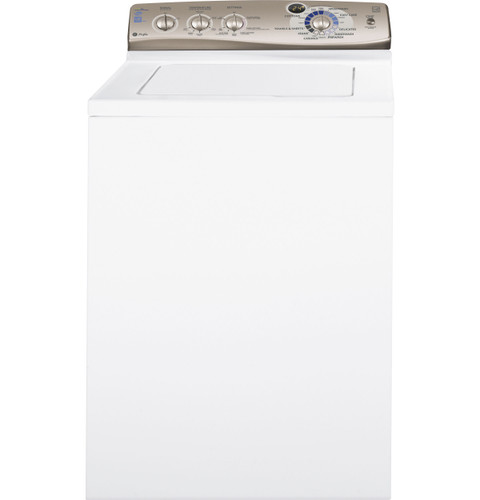
GE Profile PTWN6250M / PTWN6250MWT HydroWave Infusor washer
How to evaluate PTWN6250M pricing evidence
The supplied documents contain operating-cost estimates, not a current appliance selling price.
Separate appliance price from operating-cost label
The supplied GE documents do not establish a current retail price for the PTWN6250MWT. The EnergyGuide’s $17 and $12 figures are estimated annual operating costs under 2007 utility assumptions, not sale prices. GE’s older specification sheet also contains no purchase price. A current online listing or clearance page can change and may refer to a single remaining unit, so verify any live offer, stock, condition, delivery, and warranty directly with the seller.
The GE product record marks the model obsolete. That status means a buyer should check whether an offer is new old stock, used, refurbished, or an open-box unit, and obtain those terms in writing. Don’t infer that the appliance is available, priced fairly, or supported simply because a product page remains online.
Compare the full delivered cost
For a used or remaining-stock washer, request the exact model and serial, item condition, return window, parts/labor warranty, delivery charge, installation cost, haul-away cost, and any plumbing or electrical work. The published nominal size is 42 × 27 × 25.5 inches, but delivery access and service clearance still need measuring. A low sticker price can be offset by a difficult installation or missing hoses; the owner manual says water supply hoses are not included.
Ask the seller to clarify whether the unit has been tested through fill, wash, drain, and spin, and whether that statement is backed by a return policy. This is a buyer question, not a claim that any particular listing has passed such testing. Save the seller’s written answer with the receipt.
Account for maintenance and repair exposure
A fair comparison considers the actual warranty, not a marketing phrase. The owner manual gives one year for qualifying factory parts and labor, then named component coverage with owner-paid labor for later periods; the spec sheet’s “lifetime” and ten-year summary directs readers to the written warranty. For an older unit, ask the seller to state any warranty and get GE to confirm remaining eligibility by serial and purchase date.
If the unit needs service, request a diagnostic and itemized estimate before comparing its price with a replacement. Include parts, labor, trip charge, and installation or removal. The GE documents provide no current repair prices, so a quote from a local provider is necessary.
Use comparable alternatives
Compare washer prices only after checking the candidate’s same-basis capacity, current EnergyGuide, warranty, connections, dimensions, and installation. The PTWN6250M’s 3.6 DOE capacity, 700 RPM spec, HE LoWater/Infusor design, and 160 kWh annual label declaration are reference facts—not a claim that another model with a similar number is equivalent.
No verified successor or current competitor price is established by these materials. A careful price decision therefore starts with actual offers and total installed cost, then weighs whether capacity, cycle behavior, and service terms meet the household’s needs.
Use a written offer
For a used or clearance offer, ask the seller to put the exact model and serial, whether the appliance is new, used, refurbished, or open-box, the return period, and any included parts in writing. Confirm whether supply hoses, delivery, installation, and removal are included; the GE manual states that this washer does not include fill hoses. Inspect cosmetic damage around the lid, cabinet, hoses, and electrical cord before accepting delivery.
For a used unit, ask what was actually tested and whether the seller will accept a return if it fails to fill, agitate, drain, or spin. That is a request for evidence, not an assumption that the appliance has been tested or is in working condition.