Appliance & electronics support
Find your model numberAbout our sources
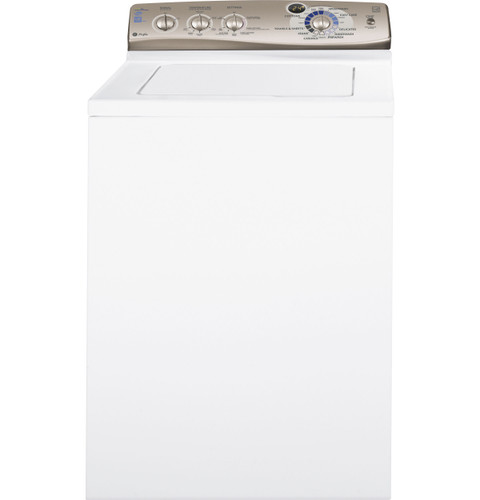
GE Profile PTWN6250M washer — manufacturer product image
Photo: PTWN6250MWT white variant. Shared source photo. Photo source
Manufacturer sources

GE Profile PTWN6250M

Leaks, moisture & condensation

Washing machine · US market · 48 owner topics

GE Profile PTWN6250M / PTWN6250MWT HydroWave Infusor washer

Covers PTWN6250M and the manufacturer-listed models in this family.

GE Profile PTWN6250M / PTWN6250MWT HydroWave Infusor washer

PTWN6250M / PTWN6250MWT: trace water at the washer safely

The owner manual identifies detergent oversudsing, fill-hose connections, drain-hose seating, household drain blockage and constant supply pressure as possible leak causes. Determine when water first appears—fill, wash or drain—and where it emerges. That observation helps distinguish an external hookup from a washer or home-plumbing issue.

If water reaches the outlet, cord or another electrical area, keep clear and do not touch a wet plug. Shut accessible supply faucets only if you can reach them from a dry area.

During wash: check suds and dose

GE says excess or unsuitable detergent can contribute to leaking. Use HE detergent and measure it; use less for a small/lightly soiled load or soft water. The low-water Infusor does not need a high-water machine’s detergent amount.

During fill: inspect supply connections

Check visible drips at faucet and rear hose couplings. Installation instructions require rubber washers and a leak check after opening faucets; hot connects to H and cold to C. GE recommends replacing fill hoses every five years. Shut off water before any hose connection work and stop if the valve will not close or fittings are damaged.

During drain: check the drain route

The rear drain hose must be seated and held with its clamp and two screws. Check visible kinks, crushing or contact with a wall. If water backs up at the standpipe or laundry tub, GE says the home drain may be clogged and a plumber may be needed. The standpipe must remain open to atmosphere.

Separate hose setup from internal leak

The installation sheet specifies a drain outlet height of at least 30 inches and no more than eight feet above the washer base. Improper setup can lead to water draining while filling or poor drainage. Do not pull a wet, connected washer forward to inspect hidden areas.

Escalate

A leak from inside the cabinet, a damaged hose, or a persistent leak after correcting detergent and visible connections requires service. Report the first wet location, cycle stage, suds, and whether the home drain backs up. Do not open panels to find a leak.

Use the timing to narrow the source

A leak during fill makes the supply couplings, inlet-side hoses and suds behavior relevant; a leak during drain makes the rear drain connection and household standpipe more relevant. GE’s chart notes constant pressure on fill hoses and recommends turning off faucets after use to reduce pressure if a hose fails. It also recommends replacing hoses every five years.

If water is pooling below the appliance but the first wet point cannot be seen, do not pull the washer out while full or connected. Photograph the safe visible area and call service or an installer. Water appearing at the household drain can be a plumbing backup rather than a washer leak. If detergent bubbles are present, reduce dose and use HE detergent before diagnosing internal leakage, but stop operation if leakage is substantial.

Leak coincides with abundant suds

Detergent type or amount may be contributing

Use HE detergent and measure a smaller dose appropriate to load.

Water backs up during drain

Household plumbing may be blocked

Stop and have the drain checked.

Leak comes from inaccessible cabinet

Internal part or connection may be involved

Arrange qualified service.

Specifications & model details

PTWN6250M: model-specific checks

Start with this washer’s layout

GE Profile PTWN6250M is listed as Top-Loading high-efficiency. For this recorded top-loading GE Profile design, place the first inspection at the lid, basket rim, fitted dispenser and the visible fill/drain connections. For a spin complaint, separate retained water from an uneven load, then check the selected cycle and lid state. Keep clothing loose enough to move; an agitator, impeller or automatic-fill procedure needs its own feature match.

Recorded model facts

Model details relevant to this topic

SpecificationRecorded valueEvidence
DOE capacity3.6 cu ft
Manufacturer
GE Profile PTWN6250M — specs

Exact-model manufacturer resource; Specification 260192, revised 4/11, pp. 1–2; explicit base and finish listing

GE specification 260192, revised 4/11, titles the base PTWN6250M and explicitly lists finish model PTWN6250MWT. Base/retail relationship is documented here; no other suffix or serial range is inferred. Specification 260192, revised 4/11, pp. 1–2; explicit base and finish listing

Observed Oct 27, 2026

Other observations retained:

3.7 cu ft — California Energy Commission — Washing machines archive; cec-washers.xlsx; sheet ClothesWashers_12022025; row 4128

Cancel cycleHold Start for 3 seconds
Manufacturer
GE Profile PTWN6250M — owner

Exact-model manufacturer resource; Owner manual 49-90400-1, 07/06/10; pp. 1, 4–7, 9

GE specification 260192, revised 4/11, titles the base PTWN6250M and explicitly lists finish model PTWN6250MWT. Base/retail relationship is documented here; no other suffix or serial range is inferred. Owner manual 49-90400-1, 07/06/10; pp. 1, 4–7, 9

Observed Oct 27, 2026
Electronics restart wait2 minutes
Manufacturer
GE Profile PTWN6250M — owner

Exact-model manufacturer resource; Owner manual 49-90400-1, 07/06/10; pp. 1, 4–7, 9

GE specification 260192, revised 4/11, titles the base PTWN6250M and explicitly lists finish model PTWN6250MWT. Base/retail relationship is documented here; no other suffix or serial range is inferred. Owner manual 49-90400-1, 07/06/10; pp. 1, 4–7, 9

Observed Oct 27, 2026
Maximum spin speed700 RPM
Manufacturer
GE Profile PTWN6250M — specs

Exact-model manufacturer resource; Specification 260192, revised 4/11, pp. 1–2; explicit base and finish listing

GE specification 260192, revised 4/11, titles the base PTWN6250M and explicitly lists finish model PTWN6250MWT. Base/retail relationship is documented here; no other suffix or serial range is inferred. Specification 260192, revised 4/11, pp. 1–2; explicit base and finish listing

Observed Oct 27, 2026
Suds-saving capability in archiveFalse
Archive
California Energy Commission — Washing machines archive

cec-washers.xlsx; sheet ClothesWashers_12022025; row 4128

Regulatory archive observation; test standard and measurement context follow the original record.

Observed Oct 27, 2026
Temperature systemPerfecTemp; Tap Cold bypasses temperature regulation
Manufacturer
GE Profile PTWN6250M — owner

Exact-model manufacturer resource; Owner manual 49-90400-1, 07/06/10; pp. 1, 4–7, 9

GE specification 260192, revised 4/11, titles the base PTWN6250M and explicitly lists finish model PTWN6250MWT. Base/retail relationship is documented here; no other suffix or serial range is inferred. Owner manual 49-90400-1, 07/06/10; pp. 1, 4–7, 9

Observed Oct 27, 2026
Unheated rinse option in archiveTrue
Archive
California Energy Commission — Washing machines archive

cec-washers.xlsx; sheet ClothesWashers_12022025; row 4128

Regulatory archive observation; test standard and measurement context follow the original record.

Observed Oct 27, 2026
Wash mechanismInfusor
Manufacturer
GE Profile PTWN6250M — specs

Exact-model manufacturer resource; Specification 260192, revised 4/11, pp. 1–2; explicit base and finish listing

GE specification 260192, revised 4/11, titles the base PTWN6250M and explicitly lists finish model PTWN6250MWT. Base/retail relationship is documented here; no other suffix or serial range is inferred. Specification 260192, revised 4/11, pp. 1–2; explicit base and finish listing

Observed Oct 27, 2026
Wash programsCottons, Prewash, Casuals, Easy Care, Delicates, Hand Wash, Speed, Drain & Spin, Towels & Sheets, Jeans, Quick Rinse
Manufacturer
GE Profile PTWN6250M — owner

Exact-model manufacturer resource; Owner manual 49-90400-1, 07/06/10; pp. 1, 4–7, 9

GE specification 260192, revised 4/11, titles the base PTWN6250M and explicitly lists finish model PTWN6250MWT. Base/retail relationship is documented here; no other suffix or serial range is inferred. Owner manual 49-90400-1, 07/06/10; pp. 1, 4–7, 9

Observed Oct 27, 2026
Wash systemHydroWave with Infusor
Manufacturer
GE Profile PTWN6250M — specs

Exact-model manufacturer resource; Specification 260192, revised 4/11, pp. 1–2; explicit base and finish listing

GE specification 260192, revised 4/11, titles the base PTWN6250M and explicitly lists finish model PTWN6250MWT. Base/retail relationship is documented here; no other suffix or serial range is inferred. Specification 260192, revised 4/11, pp. 1–2; explicit base and finish listing

Observed Oct 27, 2026
Washer controlsAutomatic
Archive
California Energy Commission — Washing machines archive

cec-washers.xlsx; sheet ClothesWashers_12022025; row 4128

Regulatory archive observation; test standard and measurement context follow the original record.

Observed Oct 27, 2026
Water fillPreciseFill automatic load sensing
Manufacturer
GE Profile PTWN6250M — specs

Exact-model manufacturer resource; Specification 260192, revised 4/11, pp. 1–2; explicit base and finish listing

GE specification 260192, revised 4/11, titles the base PTWN6250M and explicitly lists finish model PTWN6250MWT. Base/retail relationship is documented here; no other suffix or serial range is inferred. Specification 260192, revised 4/11, pp. 1–2; explicit base and finish listing

Observed Oct 27, 2026
More background: Leaks, moisture & condensation

Category & symptom guidance

Leaks, moisture & condensation

Contain water and locate its path

If water is spreading, pause the washer and close the household hot and cold supply valves if they are accessible without stepping into standing water. Keep clear of wet electrical connections. Blot the area and identify the first wet point: behind the washer, beneath a hose connection, at the drain, around the door, or in front of a dispenser.

A damp floor after a detergent spill or an overfilled dispenser has a different pattern from a steady leak during fill. Dry the area, then watch from a safe distance during a short, attended cycle only if the leak is minor and there is no electrical or structural hazard. Do not leave a suspected leak running unattended.

Inspect visible supply connections

With the washer stopped, look for drips at the hot and cold hose ends and along the visible hose length. Check for a loose-looking coupling, a kink, cracking, or abrasion without pulling the washer away from the wall if that could strain the hoses. A leak at a hose connection points toward the supply side; water that appears only during draining may come from the drain path instead.

If a hose is split, badly worn, or leaking continuously, close the supply valves and arrange replacement. Do not tighten a damaged fitting aggressively or use tape as a substitute for a sound seal. Installation guidance for the LG WM4000H*A calls for new hoses and checking seals at both ends; this is model-family guidance, not proof that a particular hose fits another washer.

Trace water during draining

If moisture appears when the washer pumps out, inspect the visible drain hose for a kink, dislodged end, or water escaping where it enters the household drain. A loose hose can spill water even when the washer itself is working. Do not push the hose deeper, seal the drain opening airtight, or change its height by guesswork; drain arrangements and limits vary by model.

For the LG WM4000H*A, the manual specifies a secured hose and warns against an airtight seal because siphoning can remove water from the drum. Use that instruction only for the named family; for another washer, follow its installation diagram and local plumbing requirements.

Check door, dispenser, and moisture patterns

A front-loader can show water around the door if laundry or debris prevents the seal from closing evenly. When stopped, inspect the visible seal for an item caught at the edge and wipe away residue; do not pull, cut, or dismantle the seal. Oversudsing from excess or unsuitable detergent can send suds or water toward the dispenser area, so compare the detergent amount with its package directions and the washer’s guidance.

Some moisture may be condensation or a small splash rather than an active leak. Dry the area and see whether it returns at the same cycle stage. Persistent water from beneath the cabinet, a torn seal, or a leak that cannot be traced from visible points calls for service.

What to do with what you find

Water drips from a visible supply hose or coupling while filling.

The supply connection or hose may be compromised.

Close the valves and replace or correct the visible connection using model-appropriate instructions.

Water appears only as the washer drains.

The drain hose or household drain connection may be dislodged or obstructed.

Check visible routing and secure placement; stop if it continues to spill.

Water persists from under the cabinet or around a damaged door seal.

The leak likely needs inspection beyond routine surface cleaning.

Stop use and arrange service.

Have these details ready

  • First wet location
  • Whether leak begins during fill, wash, or drain
  • Visible hose, drain, door, or dispenser condition
  • Whether the area stays wet after drying

Common questions

Is moisture around the washer always a leak?

No. A spill, condensation, oversudsing, or a drain connection can leave moisture. Dry the area and note whether water returns at a specific cycle stage.

Can I run another cycle to find the leak?

Only if the moisture is minor, the supply and electrical area are dry, and you can attend the washer. Stop immediately if water flows, spreads, or appears near electrical parts.

General background sources

These sources support the shared guide. Exact model specifications and matched family procedures have their own sources above.

  1. images.salsify.com/image/upload/s--4zVee-ir--/44e1044e71329cd6678e18edc3950e53c5694077.pdf
  2. images.salsify.com/image/upload/s--dBhUJ9s5--/3f58f84eaa9d207a6fdadfa3a955c70b28005ee2.pdf
  3. media.us.lg.com/m/6d5d734b0871fbdf/original/WM4000_Owners-Manual.pdf

Owner guidance by Specs & Parts, drafted with GPT-6 Luna. Sources and scope.

Sources for PTWN6250M

GE Profile PTWN6250M — owner Observed Oct 27, 2026
GE Profile PTWN6250M — specs Observed Oct 27, 2026
Suggest a correction