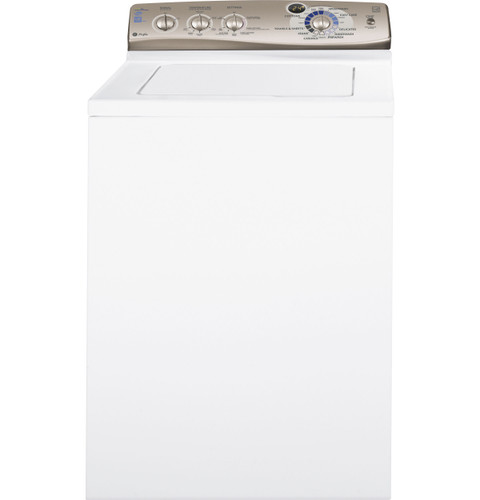
GE Profile PTWN6250M / PTWN6250MWT HydroWave Infusor washer
PTWN6250M / PTWN6250MWT: tell normal HydroWave sounds from trouble
The HydroWave system with Infusor operates differently from a traditional agitator washer. GE’s quick reference says the machine may be very quiet during portions of a cycle, pause while sensing a load and make a “swoosh” or “zip” as the direct-drive motor reverses direction to agitate. These documented sounds alone do not signal a fault.
Use the cycle stage, display and physical location of the sound to decide what to check. Firm flooring is important because GE says it minimizes spin vibration.
Sensing and agitation
At the beginning of a cycle, load sensing may be quiet. During agitation, a reversing swoosh/zip is expected. The status display may show “Fill” or later change as the cycle progresses; remaining time can update during fill.
Spin and balance
A “Balancing” message indicates the machine is adjusting spin speed and time. A clumped or bulky load can increase vibration. Stop and wait for the basket to become still, then redistribute clothes loosely around the basket’s outside. Do not load sheets or blankets across the Infusor.
Check floor and external contact
The installation guide calls for firm flooring and says not to install on rugs. If recently moved, review the installer’s shipping-bar removal step and visible leveling rather than opening the cabinet. The troubleshooting chart notes drain-hose contact with a wall may cause excessive hose wear.
Distinguish normal basket movement
The owner troubleshooting chart says the basket moves or rotates freely because it has no traditional brake. Movement while off is not by itself evidence of a loose component. Conversely, sharp repeated impacts, scraping, a washer that shifts, or a new noise on every cycle is not described as normal.
Stop and seek service
Record when the noise starts, whether water is present, what status message appears, and whether the load was balanced. Stop operation if the cabinet strikes objects, a hose is being abraded, the washer leaks, or the sound suggests contact with moving parts. Do not reach into the basket while it is moving or remove panels.
Listen for where the sound travels
A reversing “swoosh” should coincide with agitation, while the quick guide says quiet stretches occur during HydroWave operation and load sensing. A hose bump or scraping noise may come from behind the cabinet rather than the tub; check only an accessible, dry view and do not drag the machine by its hoses. The owner chart warns that a drain hose touching a wall can wear excessively.
If a noise begins only as spin accelerates, note whether “Balancing” appears and whether the load contains a single bulky item. The installation sheet identifies firm flooring as important for minimizing vibration. An empty, balanced test cycle may help establish whether noise follows the load, but do not run further cycles if the cabinet walks, hose is damaged, or water leaks.
Use the quick-reference sound examples
The quick-reference guide describes the direct-drive sound as a “swoosh” or “zip” from motor rotation back and forth during agitation, and says the HydroWave can seem unusually quiet. Compare sound timing to that documented wash action. A rattling object in the load can also be distinguished by stopping and checking clothing once the basket has fully stopped. Do not reach into a moving basket.
Reversing direct-drive motor sound is documented
Observe for normal cycle progress.
Load distribution may be uneven
Redistribute after the drum stops.
Not identified as normal in owner guide
Stop use and arrange service.