Appliance & electronics support
Find your model numberAbout our sources
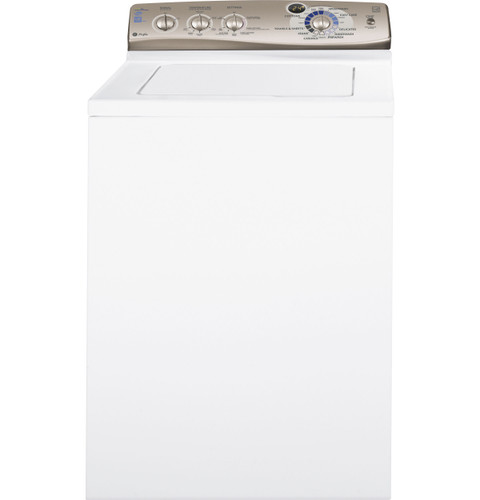
GE Profile PTWN6250M washer — manufacturer product image
Photo: PTWN6250MWT white variant. Shared source photo. Photo source
Manufacturer sources

GE Profile PTWN6250M

Not draining

Washing machine · US market · 48 owner topics

GE Profile PTWN6250M / PTWN6250MWT HydroWave Infusor washer

Covers PTWN6250M and the manufacturer-listed models in this family.

GE Profile PTWN6250M / PTWN6250MWT HydroWave Infusor washer

PTWN6250M / PTWN6250MWT: restore drainage without opening the washer

Water remaining after a cancelled cycle does not automatically mean a pump failure. GE directs owners to select Drain & Spin. If that cycle does not empty the tub, inspect visible hose routing and household plumbing. Never remove a panel or tip a tub-full washer.

The troubleshooting table identifies a kinked or improperly connected hose and a clogged home drain as likely causes.

Run Drain & Spin

Select Drain & Spin, described as draining the tub and spinning water from clothing at fast spin, close the lid and press START. If Pause is displayed, press START. A cycle paused more than 24 hours is cancelled and must be selected again.

Check the visible hose

Straighten a safe, visible kink and ensure the washer is not resting on the drain hose. Installation attaches it at the rear with a clamp and two screws. The troubleshooting chart says outlet top should be less than six feet above the floor; the installation sheet specifies the discharge between 30 inches and eight feet above washer base.

Check household plumbing

If the standpipe or laundry tub backs up, GE says the home drain may be clogged and a plumber may be needed. The standpipe must be open to atmosphere. If the washer fills and drains simultaneously, a standpipe that is too low is another documented setup concern.

Separate drainage from suds

Use HE detergent and measured amounts to avoid oversudsing, but do not treat detergent as the only explanation for retained water. Note whether the tub level falls during Drain & Spin and whether the household drain accepts water normally.

Stop and call service

If routing and home plumbing are clear but water stays in the tub after Drain & Spin, arrange service. Report the water level, display, sound and whether a drain backup occurred. Do not attempt to access the pump through the cabinet.

Use cycle history to distinguish cancel from blockage

The cycle selector can reset a wash when turned after start, and pressing START pauses it. If water is left after a cancelled cycle, the manual directs owners to Drain & Spin. The Drain & Spin cycle is designed to drain the tub and spin water from clothes; it is a deliberate recovery selection, not a repair reset.

Watch whether the tub level falls. If it falls but clothes stay damp, the selected spin speed or load balance may explain the result. If water level does not fall and the home drain is not backing up, report that distinction to service. Avoid adding detergent or starting another wash with the tub full, since it will not correct a blocked drain path.

Do not confuse standpipe drainage with washer drainage

A drain standpipe must be open to air, and a home drain that backs up is a plumbing complaint. GE’s troubleshooting chart says the household drain may be clogged and a plumber may be needed. If the hose end is placed into a laundry sink, check whether the sink itself accepts water normally. A machine that pumps water into a backed-up standpipe is not fixed by a new washer pump.

Water backs up at home drain

House plumbing may be clogged

Have plumbing checked.

Hose kinked or washer resting on it

Flow is obstructed

Correct visible route safely.

External checks pass but water remains

Internal drain fault may exist

Stop and call service.

Specifications & model details

PTWN6250M: model-specific checks

Start with this washer’s layout

GE Profile PTWN6250M is listed as Top-Loading high-efficiency. For this recorded top-loading GE Profile design, place the first inspection at the lid, basket rim, fitted dispenser and the visible fill/drain connections. For a spin complaint, separate retained water from an uneven load, then check the selected cycle and lid state. Keep clothing loose enough to move; an agitator, impeller or automatic-fill procedure needs its own feature match.

Interpret the spin rating correctly

GE Profile PTWN6250M lists a maximum spin speed of 700 RPM. That maximum is not a promise for every program or load. Compare the selected spin option and load balance before interpreting a lower observed speed as a motor fault. Save the exact code and cycle name if the machine stops.

Recorded model facts

Model details relevant to this topic

SpecificationRecorded valueEvidence
DOE capacity3.6 cu ft
Manufacturer
GE Profile PTWN6250M — specs

Exact-model manufacturer resource; Specification 260192, revised 4/11, pp. 1–2; explicit base and finish listing

GE specification 260192, revised 4/11, titles the base PTWN6250M and explicitly lists finish model PTWN6250MWT. Base/retail relationship is documented here; no other suffix or serial range is inferred. Specification 260192, revised 4/11, pp. 1–2; explicit base and finish listing

Observed Oct 27, 2026

Other observations retained:

3.7 cu ft — California Energy Commission — Washing machines archive; cec-washers.xlsx; sheet ClothesWashers_12022025; row 4128

Cancel cycleHold Start for 3 seconds
Manufacturer
GE Profile PTWN6250M — owner

Exact-model manufacturer resource; Owner manual 49-90400-1, 07/06/10; pp. 1, 4–7, 9

GE specification 260192, revised 4/11, titles the base PTWN6250M and explicitly lists finish model PTWN6250MWT. Base/retail relationship is documented here; no other suffix or serial range is inferred. Owner manual 49-90400-1, 07/06/10; pp. 1, 4–7, 9

Observed Oct 27, 2026
Electronics restart wait2 minutes
Manufacturer
GE Profile PTWN6250M — owner

Exact-model manufacturer resource; Owner manual 49-90400-1, 07/06/10; pp. 1, 4–7, 9

GE specification 260192, revised 4/11, titles the base PTWN6250M and explicitly lists finish model PTWN6250MWT. Base/retail relationship is documented here; no other suffix or serial range is inferred. Owner manual 49-90400-1, 07/06/10; pp. 1, 4–7, 9

Observed Oct 27, 2026
Maximum spin speed700 RPM
Manufacturer
GE Profile PTWN6250M — specs

Exact-model manufacturer resource; Specification 260192, revised 4/11, pp. 1–2; explicit base and finish listing

GE specification 260192, revised 4/11, titles the base PTWN6250M and explicitly lists finish model PTWN6250MWT. Base/retail relationship is documented here; no other suffix or serial range is inferred. Specification 260192, revised 4/11, pp. 1–2; explicit base and finish listing

Observed Oct 27, 2026
Suds-saving capability in archiveFalse
Archive
California Energy Commission — Washing machines archive

cec-washers.xlsx; sheet ClothesWashers_12022025; row 4128

Regulatory archive observation; test standard and measurement context follow the original record.

Observed Oct 27, 2026
Temperature systemPerfecTemp; Tap Cold bypasses temperature regulation
Manufacturer
GE Profile PTWN6250M — owner

Exact-model manufacturer resource; Owner manual 49-90400-1, 07/06/10; pp. 1, 4–7, 9

GE specification 260192, revised 4/11, titles the base PTWN6250M and explicitly lists finish model PTWN6250MWT. Base/retail relationship is documented here; no other suffix or serial range is inferred. Owner manual 49-90400-1, 07/06/10; pp. 1, 4–7, 9

Observed Oct 27, 2026
Unheated rinse option in archiveTrue
Archive
California Energy Commission — Washing machines archive

cec-washers.xlsx; sheet ClothesWashers_12022025; row 4128

Regulatory archive observation; test standard and measurement context follow the original record.

Observed Oct 27, 2026
Wash mechanismInfusor
Manufacturer
GE Profile PTWN6250M — specs

Exact-model manufacturer resource; Specification 260192, revised 4/11, pp. 1–2; explicit base and finish listing

GE specification 260192, revised 4/11, titles the base PTWN6250M and explicitly lists finish model PTWN6250MWT. Base/retail relationship is documented here; no other suffix or serial range is inferred. Specification 260192, revised 4/11, pp. 1–2; explicit base and finish listing

Observed Oct 27, 2026
Wash programsCottons, Prewash, Casuals, Easy Care, Delicates, Hand Wash, Speed, Drain & Spin, Towels & Sheets, Jeans, Quick Rinse
Manufacturer
GE Profile PTWN6250M — owner

Exact-model manufacturer resource; Owner manual 49-90400-1, 07/06/10; pp. 1, 4–7, 9

GE specification 260192, revised 4/11, titles the base PTWN6250M and explicitly lists finish model PTWN6250MWT. Base/retail relationship is documented here; no other suffix or serial range is inferred. Owner manual 49-90400-1, 07/06/10; pp. 1, 4–7, 9

Observed Oct 27, 2026
Wash systemHydroWave with Infusor
Manufacturer
GE Profile PTWN6250M — specs

Exact-model manufacturer resource; Specification 260192, revised 4/11, pp. 1–2; explicit base and finish listing

GE specification 260192, revised 4/11, titles the base PTWN6250M and explicitly lists finish model PTWN6250MWT. Base/retail relationship is documented here; no other suffix or serial range is inferred. Specification 260192, revised 4/11, pp. 1–2; explicit base and finish listing

Observed Oct 27, 2026
Washer controlsAutomatic
Archive
California Energy Commission — Washing machines archive

cec-washers.xlsx; sheet ClothesWashers_12022025; row 4128

Regulatory archive observation; test standard and measurement context follow the original record.

Observed Oct 27, 2026
Water fillPreciseFill automatic load sensing
Manufacturer
GE Profile PTWN6250M — specs

Exact-model manufacturer resource; Specification 260192, revised 4/11, pp. 1–2; explicit base and finish listing

GE specification 260192, revised 4/11, titles the base PTWN6250M and explicitly lists finish model PTWN6250MWT. Base/retail relationship is documented here; no other suffix or serial range is inferred. Specification 260192, revised 4/11, pp. 1–2; explicit base and finish listing

Observed Oct 27, 2026
More background: Not draining

Category & symptom guidance

Not draining

Confirm what remains in the washer

Look through the lid or door to see whether water is standing in the tub or drum, or whether only clothes are wet. Note whether the cycle stopped before the drain stage, whether a code appeared, and whether you hear a drain sound. Wet clothes without standing water can indicate a spin issue rather than a drain failure.

If water is present, do not force the door or reach into moving parts. Use the normal pause or cancel control as described for the washer. A front-loader may retain water behind a locked door; follow its model-specific emergency or drain instructions rather than prying the door open.

Inspect the visible drain route

With the washer stopped, check the visible drain hose for a kink, crushing, or a section trapped behind the appliance. Look where the hose enters the standpipe or laundry tub for displacement or overflow. Do not pull the machine forward if that could strain water or power connections; correct only an obvious accessible obstruction or dislodged hose.

Drain height, hose insertion, and air gap requirements vary. The GE PTWN6250M installation sheet gives a model-specific standpipe height range, while the LG WM4000H*A instructions specify a different hose arrangement. Use the exact installation directions for your washer rather than copying either set of dimensions.

Check household drainage and cycle selection

If the laundry sink or nearby drain is also slow, the household drain may be contributing. If the standpipe overflows only when the washer pumps out, stop the cycle and have the drain path assessed; a washer fault cannot be assumed from that symptom alone.

Check that the selected program includes draining and has not been paused. Some models provide a labeled drain or spin-only cycle. On the GE PTWN6250M, the owner guide identifies Drain & Spin for removing water from the tub. Use that named example only for the model; on another washer, use its own labeled function.

Set a boundary for troubleshooting

If the visible hose is clear and correctly placed but the washer repeatedly leaves water, the issue may be at the pump, filter, or internal drain path. Use an owner-accessible filter only if the exact manual explains how to access it and how to manage retained water. Never remove a panel or put hands into a pump opening without explicit owner instructions.

Stop using the washer if water leaks beneath the cabinet, the drain hose repeatedly jumps free, or a fault message returns after the manual’s owner step. Give support the amount of remaining water, cycle stage, and any pump sound or display message.

Look for a siphoning or discharge setup clue

A washer can appear unable to drain if water flows out while it is filling, or if discharged water returns or spills at the household drain. Watch from a safe distance during the next supervised cycle: note whether the tub level rises, stays unusually low, or water appears around the standpipe or laundry tub. Stop the cycle if water spills or the hose shifts.

Drain hose placement and standpipe requirements are model-specific. If the appliance was recently installed or the symptom began after a move, compare the visible hose arrangement with the exact installation instructions, including how securely the hose is held and how it enters the drain. Do not seal the standpipe or push the hose deeper based on guesswork; incorrect placement can cause siphoning or overflow. Ask an installer or plumber to correct an uncertain drain setup.

What to do with what you find

Only clothes are wet and no water remains in the tub.

The washer may have a spin or balance issue rather than a drain failure.

Use the not-spinning checks and inspect the load and selected spin setting.

Drain hose is visibly kinked or displaced.

The external drain route may be obstructing or spilling the discharge.

Correct the accessible routing according to the model’s installation guide.

Standing water returns despite a clear visible hose and proper household drain.

An internal drain issue may need service or documented owner-filter cleaning.

Follow only exact-model owner instructions or request diagnosis.

Have these details ready

  • Standing water or only wet clothing
  • Cycle stage and display message
  • Visible drain hose routing and household drain behavior
  • Whether a labeled drain cycle changes the result

Common questions

Can I open the pump filter to drain the water?

Only if the exact washer’s owner manual describes that owner task and the steps for managing retained water. Filter locations and procedures differ.

The laundry sink is draining slowly too. Is the washer pump broken?

Not necessarily. A slow household drain or standpipe can cause discharge problems. Have the shared drain path assessed before concluding the appliance has failed.

General background sources

These sources support the shared guide. Exact model specifications and matched family procedures have their own sources above.

  1. images.salsify.com/image/upload/s--4zVee-ir--/3f58f84eaa9d207a6fdadfa3a955c70b28005ee2.pdf
  2. images.salsify.com/image/upload/s--4zVee-ir--/44e1044e71329cd6678e18edc3950e53c5694077.pdf
  3. media.us.lg.com/m/6d5d734b0871fbdf/original/WM4000_Owners-Manual.pdf
  4. images.salsify.com/image/upload/s--dBhUJ9s5--/3f58f84eaa9d207a6fdadfa3a955c70b28005ee2.pdf

Owner guidance by Specs & Parts, drafted with GPT-6 Luna. Sources and scope.

Sources for PTWN6250M

GE Profile PTWN6250M — owner Observed Oct 27, 2026
GE Profile PTWN6250M — specs Observed Oct 27, 2026
Suggest a correction