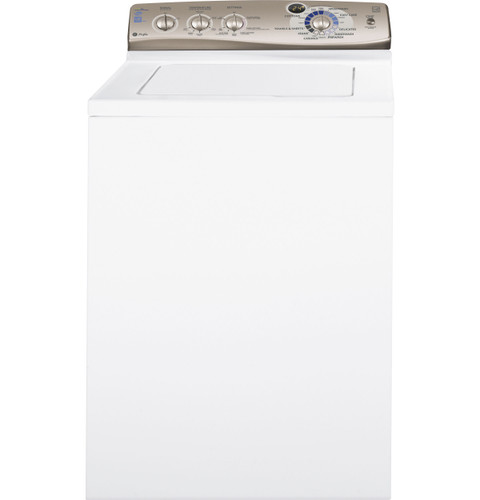
GE Profile PTWN6250M / PTWN6250MWT HydroWave Infusor washer
PTWN6250M / PTWN6250MWT: trace a symptom through the wash cycle
These GE Profile top-loaders use HydroWave wash action with an Infusor, automatic load sensing and PerfecTemp. Low water, quiet intervals, sensing pauses and a reversing motor sound can be normal for this design. Begin by noting whether the problem occurs during fill, wash, rinse, drain or spin and what the display says.
The documented owner checks cover cycle selection, lid, supplies, detergent, visible hoses and household drainage. They do not authorize internal motor, valve, wiring or lid-magnet work.
Start with status and controls
The display messages are “Lid,” “Fill,” “Pause,” “Balancing” and “End.” They describe status, not numbered failures. The estimate changes during fill because water pressure affects fill time. Turning the cycle selector after starting stops and resets to the newly selected cycle; press START to begin it. Pressing START pauses or resumes.
If fill does not begin
Close the lid: automatic load sensing will not fill with the lid open. EcoFill also requires the lid closed while the basket spins to help sense load size. Confirm both hot and cold faucets are open and check visible hose bends. The low Infusor water level need not cover the clothes.
If wash or drain seems interrupted
PreWash and Auto Soak alternate agitation and soaking. Spin may pause while the washer removes soapy water. If water remains, select Drain & Spin and inspect the visible hose for a kink or crushing. If the household drain backs up, the manual says plumbing service may be needed.
If spin or cleaning is poor
“Balancing” means the control is adjusting spin speed and time. Redistribute a visibly bunched load after the basket stops. Load loosely around the Infusor, use HE detergent and measure for load size; too much detergent can oversuds and affect results. Hand Wash and Delicates intentionally use slow spin.
Escalate with specific evidence
Call qualified service for an internal leak, persistent no-fill/no-drain/no-spin after external checks, repeated power trips or a lid message that remains with the lid closed. Give the exact status word, cycle, load and water-stage sequence rather than guessing at a failed component.
Use the manual’s checks in a useful order
First write down whether the tub is empty, partly filled or full and whether the display is stable or changing. That immediately separates a fill delay from water retained after a cycle. Next check the lid, selected cycle, START state and both faucets. Then inspect visible hoses. Only after the machine is running normally should you interpret load results such as wet clothes or spots.
The owner troubleshooting chart ties specific results to specific causes: water filling and draining simultaneously points to a low standpipe; water not draining points to a kinked or improperly connected hose; a load that is too wet can reflect the selected cycle or out-of-balance distribution. Use the matching branch rather than changing unrelated settings. If one correction fixes the symptom, note it. If it does not, stop repeating cycles and share the unchanged symptom with service.
Washer is compensating for load distribution
Redistribute after motion stops.
The control may need a separate drain cycle
Select Drain & Spin; check visible drain routing.
Load sensing may be underway
Wait for display progression and check lid closure.