Appliance & electronics support
Find your model numberAbout our sources
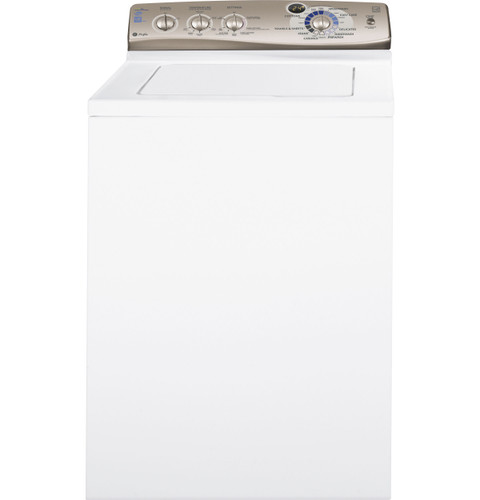
GE Profile PTWN6250MWT washer — manufacturer product image
Photo: PTWN6250MWT. Shared source photo. Photo source
Manufacturer sources

GE Profile PTWN6250MWT

Not spinning

Washing machine · US market · 48 owner topics

GE Profile PTWN6250M / PTWN6250MWT HydroWave Infusor washer

Covers PTWN6250MWT and the manufacturer-listed models in this family.

GE Profile PTWN6250M / PTWN6250MWT HydroWave Infusor washer

PTWN6250M / PTWN6250MWT: understand slow spin, imbalance and no-spin

This washer uses cycle-specific spin speeds. The owner manual describes Cottons, Speed, Drain & Spin, Quick Rinse, Towels & Sheets and Jeans as fast spin; Casuals and Delicates as slow; Hand Wash as extra-slow. The spec lists 700 RPM maximum, not a speed every cycle reaches.

Wet laundry can result from fabric cycle, imbalance, retained water or a lid/pause condition.

Check cycle and fabric

Compare the load with the selected cycle. Hand Wash and Delicates deliberately use slower spin, and some fabrics feel wetter after cold rinse. Drain & Spin provides high-speed spin if the garment permits it.

Respond to Balancing

The display says Balancing when out-of-balance is detected and spin speed/time are adjusted. Wait; if the load is gathered to one side, stop and redistribute loosely around the basket’s outside. Avoid bulky items laid over the Infusor.

Confirm drainage first

If water remains, use Drain & Spin and check visible drain-hose kinks. A drain problem can leave clothes wet even if spin behavior is normal. Do not reach into a moving basket; wait until fully stopped before rearranging.

Check lid and pause status

Lid open stops spin; a “Lid” status calls for closing it. “Pause” resumes with START. A selector change after start resets the cycle. These conditions can make it appear that spin never began.

Service persistent no-spin

If tub drains, lid is closed, cycle is appropriate and load balanced, yet spin repeatedly does not occur, record cycle and message and contact service. The supplied documents do not specify an owner motor reset or diagnostic-code sequence.

Use cycle spin design before judging the result

This family’s cycles intentionally vary: Cottons and Speed pair regular wash with fast spin; Casuals gentle wash with slow spin; Easy Care gentle wash with fast spin; Delicates extra-gentle wash with slow spin; Hand Wash has extra-slow spin. The “Drain & Spin” option is the manual’s explicit fast-spin choice.

Cold rinse can leave some fabrics feeling wetter, and the troubleshooting guide says to redistribute an imbalanced load and run Drain & Spin. If the washer pauses while spinning, GE says it may be removing soapy water more efficiently. These documented behaviors should be separated from a repeated failure to rotate.

Use a controlled observation, not repeated cycles

Observe one suitable Drain & Spin attempt and note whether the tub empties, whether the basket rotates, and whether “Balancing” appears. If the tub does not drain, troubleshoot the drain path first. If it empties but basket does not spin with a closed lid, that is materially different evidence for service. Do not repeat a high-speed cycle with a washer that is walking, making a hard impact, or leaking.

Follow the manual’s load placement instructions

GE says to load dry items loosely and evenly around the outside of the basket. Large sheets, blankets and towels should not be placed across the Infusor. When adding items after the cycle starts, raise the lid and submerge the added clothing around the outside; then close the lid and check the status display. If the washer detects imbalance, wait until stopped before redistributing.

Wet load from Hand Wash/Delicates

Selected cycles intentionally spin slowly

Choose the fabric-appropriate cycle.

Balancing displayed

Uneven distribution is being corrected

Redistribute after stopped.

Tub still full

Drain issue may prevent spin-out

Check drain setup and use service if unresolved.

Specifications & model details

PTWN6250MWT: model-specific checks

Start with this washer’s layout

GE Profile PTWN6250MWT is listed as Top-Loading high-efficiency. For this recorded top-loading GE Profile design, place the first inspection at the lid, basket rim, fitted dispenser and the visible fill/drain connections. For a spin complaint, separate retained water from an uneven load, then check the selected cycle and lid state. Keep clothing loose enough to move; an agitator, impeller or automatic-fill procedure needs its own feature match.

Interpret the spin rating correctly

GE Profile PTWN6250MWT lists a maximum spin speed of 700 RPM. That maximum is not a promise for every program or load. Compare the selected spin option and load balance before interpreting a lower observed speed as a motor fault. Save the exact code and cycle name if the machine stops.

Recorded model facts

Model details relevant to this topic

SpecificationRecorded valueEvidence
DOE capacity3.6 cu ft
Manufacturer
GE Profile PTWN6250M — specs

Exact-model manufacturer resource; Specification 260192, revised 4/11, pp. 1–2; explicit base and finish listing

GE specification 260192, revised 4/11, titles the base PTWN6250M and explicitly lists finish model PTWN6250MWT. Base/retail relationship is documented here; no other suffix or serial range is inferred. Specification 260192, revised 4/11, pp. 1–2; explicit base and finish listing

Observed Oct 27, 2026
Wash Basket TypeStainless Steel
Manufacturer
GE — PTWN6250MWT

Exact-model manufacturer resource; specification fields

Exact SKU PTWN6250MWT; manufacturer specification label: Wash Basket Type.

Observed Oct 27, 2026
Adaptive CapabilitiesAdaptive Fill
Manufacturer
GE — PTWN6250MWT

Exact-model manufacturer resource; specification fields

Exact SKU PTWN6250MWT; manufacturer specification label: Adaptive Capabilities.

Observed Oct 27, 2026
Additional Washer Features_1Auto Balance Suspension System
Manufacturer
GE — PTWN6250MWT

Exact-model manufacturer resource; specification fields

Exact SKU PTWN6250MWT; manufacturer specification label: Additional Washer Features_1.

Observed Oct 27, 2026
Additional Washer Features_2Front Serviceable
Manufacturer
GE — PTWN6250MWT

Exact-model manufacturer resource; specification fields

Exact SKU PTWN6250MWT; manufacturer specification label: Additional Washer Features_2.

Observed Oct 27, 2026
Additional Washer Features_3Galvanized Steel Cabinet
Manufacturer
GE — PTWN6250MWT

Exact-model manufacturer resource; specification fields

Exact SKU PTWN6250MWT; manufacturer specification label: Additional Washer Features_3.

Observed Oct 27, 2026
Cancel cycleHold Start for 3 seconds
Manufacturer
GE Profile PTWN6250M — owner

Exact-model manufacturer resource; Owner manual 49-90400-1, 07/06/10; pp. 1, 4–7, 9

GE specification 260192, revised 4/11, titles the base PTWN6250M and explicitly lists finish model PTWN6250MWT. Base/retail relationship is documented here; no other suffix or serial range is inferred. Owner manual 49-90400-1, 07/06/10; pp. 1, 4–7, 9

Observed Oct 27, 2026
Casuals Cycle_1Medium Soil
Manufacturer
GE — PTWN6250MWT

Exact-model manufacturer resource; specification fields

Exact SKU PTWN6250MWT; manufacturer specification label: Casuals Cycle_1.

Observed Oct 27, 2026
Casuals Cycle_2Light Soil
Manufacturer
GE — PTWN6250MWT

Exact-model manufacturer resource; specification fields

Exact SKU PTWN6250MWT; manufacturer specification label: Casuals Cycle_2.

Observed Oct 27, 2026
Control TypeRotary-Electronic
Manufacturer
GE — PTWN6250MWT

Exact-model manufacturer resource; specification fields

Exact SKU PTWN6250MWT; manufacturer specification label: Control Type.

Observed Oct 27, 2026
Cottons CycleHeavy Soil/Medium Soil/ Light Soil
Manufacturer
GE — PTWN6250MWT

Exact-model manufacturer resource; specification fields

Exact SKU PTWN6250MWT; manufacturer specification label: Cottons Cycle.

Observed Oct 27, 2026
Delicates CycleYes
Manufacturer
GE — PTWN6250MWT

Exact-model manufacturer resource; specification fields

Exact SKU PTWN6250MWT; manufacturer specification label: Delicates Cycle.

Observed Oct 27, 2026
More background: Not spinning

Category & symptom guidance

Not spinning

First identify what the cycle did

A washer that finishes with wet clothes may have skipped high-speed spin, reduced spin to handle an uneven load, or stopped before draining. Note whether water is still visible, whether the cycle ended normally, and whether the load is clumped on one side. Those clues separate a balance issue from a drain problem or an interrupted cycle.

Do not compare a high-efficiency washer’s water level with an older conventional washer. Low water during wash is normal on many high-efficiency designs and says little about whether final spin worked. Focus on the water left in garments and the tub after the cycle.

Redistribute an uneven load

Pause the cycle and wait until the basket or drum has stopped before reaching inside. Untangle sheets, towels, or garments that have wound together, then spread items around the basket on a top-loader or distribute them evenly in a front-loader. A single bulky item can shift the load off balance even when the washer is not full.

For a top-load washer with an agitator, keep bulky pieces from wrapping tightly around the center post. In an impeller design, distribute articles around the wash plate rather than stacking everything to one side. For a front-load washer, avoid packing the drum tightly; a very small load can also gather at one spot. Restart or continue using the cycle controls provided for that machine.

Check selection and remaining water

Look at the selected cycle and any spin modifier. Delicate or hand-wash programs may use a slower spin, and some controls let the owner reduce or omit spin. If there is standing water, select a drain or spin-only option only if that control is labeled for the purpose on your washer. A blocked household drain, kinked drain hose, or installation issue can prevent the washer from reaching spin.

On the GE PTWN6250M example, the owner manual identifies Drain & Spin as a way to drain the tub and spin water out. That is specific to that model’s controls; use the corresponding labeled function on another washer rather than assuming the same cycle names or button sequence.

Judge the result after a balanced retry

If a balanced, ordinary load completes with clothes still unusually wet and no water in the tub, compare the result across a second suitable load. A repeatable failure across different load sizes makes load distribution less likely. If the washer repeatedly pauses, rocks hard, or cannot reach spin, stop using it and arrange service rather than running repeated high-speed attempts.

If only one bulky item causes the symptom, use the garment’s care instructions and a cycle intended for that item. Waterproof or water-resistant items can behave differently and may require a dedicated cycle on some models; verify the exact cycle list before washing them.

Check for installation restraints after a move

If the washer was recently installed or moved, consider whether shipping restraints were removed as directed for that exact model. A restraint left in place can keep the tub from moving as intended and cause severe vibration or poor spin behavior. Do not pull or dismantle anything based on a generic description: restraint locations and removal steps depend on the washer design.

Compare the installation checklist for the model and look only at the visible rear area if it is safely accessible. If you cannot tell whether required shipping material remains, or the washer is heavy or difficult to reach, stop and have the installer or service provider check it. Do not run repeated spin attempts to see whether the symptom clears. This check is especially relevant when trouble began immediately after delivery, relocation, or a reinstall; a symptom that predates the move needs the ordinary load, drain, and cycle checks first.

What to do with what you find

Water remains in the tub after the cycle.

The washer may be unable to drain, so spin may not have begun.

Use the washer’s labeled drain/spin function if available; otherwise investigate the drain path.

A tangled or one-sided load is present.

The washer may be reducing or withholding spin to manage imbalance.

Redistribute the load and retry with an appropriate cycle.

Balanced loads repeatedly finish very wet without standing water.

A recurring spin fault is more likely than a one-off load issue.

Stop repeated attempts and request service with the cycle and load details.

Have these details ready

  • Whether water remains after the cycle
  • Cycle and spin setting used
  • Load type and whether it was tangled or one-sided
  • Whether a balanced retry changes the result

Common questions

Why did the washer leave clothes wet when the tub looks empty?

A reduced spin, spin setting, load imbalance, or interrupted cycle can leave clothes wet even after water drains. Check the cycle’s spin selection and compare with a balanced load.

Should I run spin again with a heavy blanket?

Only if the care label and the washer’s instructions allow that item and the load can remain balanced. A single bulky item can trigger imbalance, so use an appropriate cycle or laundering method.

General background sources

These sources support the shared guide. Exact model specifications and matched family procedures have their own sources above.

  1. images.salsify.com/image/upload/s--4zVee-ir--/44e1044e71329cd6678e18edc3950e53c5694077.pdf
  2. images.salsify.com/image/upload/s--dBhUJ9s5--/3f58f84eaa9d207a6fdadfa3a955c70b28005ee2.pdf
  3. media.us.lg.com/m/6d5d734b0871fbdf/original/WM4000_Owners-Manual.pdf
  4. www.energy.gov/cmei/buildings/consumer-clothes-washers

Owner guidance by Specs & Parts, drafted with GPT-6 Luna. Sources and scope.

Sources for PTWN6250MWT

GE — PTWN6250MWT Observed Oct 27, 2026
GE Profile PTWN6250M — owner Observed Oct 27, 2026
GE Profile PTWN6250M — specs Observed Oct 27, 2026
Suggest a correction