Appliance & electronics support
Find your model numberAbout our sources
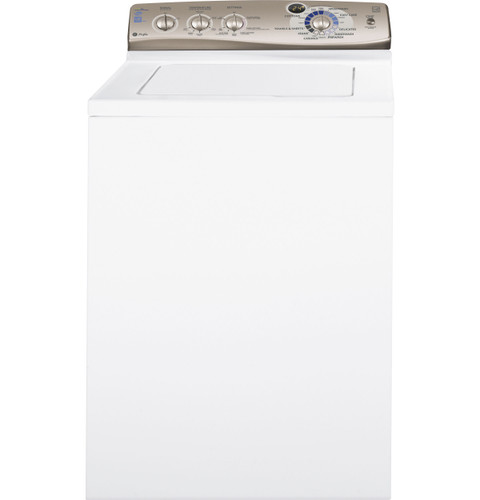
GE Profile PTWN6250MWT washer — manufacturer product image
Photo: PTWN6250MWT. Shared source photo. Photo source
Manufacturer sources

GE Profile PTWN6250MWT

Not filling

Washing machine · US market · 48 owner topics

GE Profile PTWN6250M / PTWN6250MWT HydroWave Infusor washer

Covers PTWN6250MWT and the manufacturer-listed models in this family.

GE Profile PTWN6250M / PTWN6250MWT HydroWave Infusor washer

PTWN6250M / PTWN6250MWT: solve a no-fill or slow-fill complaint

Automatic load sensing and the Infusor intentionally use less water than a traditional top-loader. GE says the water may not cover the clothes; do not add water to imitate an older machine. A “Fill” display means the basket is filling, and the estimated time adjusts to household water pressure.

Check lid, supply, visible hose route and drainage setup before concluding that a washer part failed.

Close the lid and allow sensing

The manual says automatic sensing will not fill with the lid open. EcoFill also requires a closed lid while the basket spins to assist load sensing. Early sensing may be quiet. Wait for the display to progress.

Open both faucets and confirm connections

The no-operation chart lists supply off; temperature troubleshooting says turn both hot and cold faucets fully on and connect hoses to the correct sources. Rear fittings are labeled H and C. If one supply is absent, the selected temperature may seem wrong.

Inspect visible restrictions

Check for kinked or pinched hoses. For blocked inlet screens, GE’s chart instructs turning off the water source, removing the hoses from the upper back, cleaning screens with a brush or toothpick, reconnecting and restoring water. Do not proceed if shutoff valves leak or cannot be closed.

If water immediately drains away

The manual says fill-and-drain-at-once can mean the drain standpipe is too low. Installation requirements specify at least 30 inches and no more than eight feet above the washer base, with an open standpipe. Have an installer correct setup that falls outside those requirements.

Consider detergent and escalation

Excess suds can affect performance; use HE detergent and measure carefully, especially for small or lightly soiled loads and soft water. If faucets, lid and visible routing are correct but the washer still does not fill, record whether “Fill” appeared and seek service.

Distinguish low water from absent water

The quick reference compares small, large and super loads and explains that the Infusor can clean without water covering the garments. During normal operation, judge whether the washer progresses through fill and wash, not whether the whole load is submerged. The Auto/Adaptive Fill feature senses load size.

A complete absence of water is different: close lid, verify both faucets, check visible hose bends and note whether Fill appears. GE’s manual says PerfecTemp senses water temperature and can add warm water during a cold wash; cool water during a cold rinse is normal. Do not diagnose a temperature control from the water’s feel during a rinse.

Read the temperature symptom separately

PerfecTemp adjusts incoming water temperature for the selected wash temperature. A COLD wash can receive some warm water; TAP COLD turns PerfecTemp off. The owner guide says it does not activate during a cold rinse. If only hot wash seems cool, verify the household hot faucet and water heater; GE’s troubleshooting chart specifies 120–140°F delivery for its check. Do not infer a fill-valve fault from one cold-rinse observation.

Water level looks low but cycle progresses

Low Infusor water level is normal

Assess cleaning results and load instead of adding water.

No fill with lid open

Automatic load sensing is inhibited

Close lid and allow sensing.

Fills then drains at once

Standpipe may be too low

Check installation with an installer.

Specifications & model details

PTWN6250MWT: model-specific checks

Start with this washer’s layout

GE Profile PTWN6250MWT is listed as Top-Loading high-efficiency. For this recorded top-loading GE Profile design, place the first inspection at the lid, basket rim, fitted dispenser and the visible fill/drain connections. For a spin complaint, separate retained water from an uneven load, then check the selected cycle and lid state. Keep clothing loose enough to move; an agitator, impeller or automatic-fill procedure needs its own feature match.

Interpret the spin rating correctly

GE Profile PTWN6250MWT lists a maximum spin speed of 700 RPM. That maximum is not a promise for every program or load. Compare the selected spin option and load balance before interpreting a lower observed speed as a motor fault. Save the exact code and cycle name if the machine stops.

Recorded model facts

Model details relevant to this topic

SpecificationRecorded valueEvidence
DOE capacity3.6 cu ft
Manufacturer
GE Profile PTWN6250M — specs

Exact-model manufacturer resource; Specification 260192, revised 4/11, pp. 1–2; explicit base and finish listing

GE specification 260192, revised 4/11, titles the base PTWN6250M and explicitly lists finish model PTWN6250MWT. Base/retail relationship is documented here; no other suffix or serial range is inferred. Specification 260192, revised 4/11, pp. 1–2; explicit base and finish listing

Observed Oct 27, 2026
Wash Basket TypeStainless Steel
Manufacturer
GE — PTWN6250MWT

Exact-model manufacturer resource; specification fields

Exact SKU PTWN6250MWT; manufacturer specification label: Wash Basket Type.

Observed Oct 27, 2026
Adaptive CapabilitiesAdaptive Fill
Manufacturer
GE — PTWN6250MWT

Exact-model manufacturer resource; specification fields

Exact SKU PTWN6250MWT; manufacturer specification label: Adaptive Capabilities.

Observed Oct 27, 2026
Additional Washer Features_1Auto Balance Suspension System
Manufacturer
GE — PTWN6250MWT

Exact-model manufacturer resource; specification fields

Exact SKU PTWN6250MWT; manufacturer specification label: Additional Washer Features_1.

Observed Oct 27, 2026
Additional Washer Features_2Front Serviceable
Manufacturer
GE — PTWN6250MWT

Exact-model manufacturer resource; specification fields

Exact SKU PTWN6250MWT; manufacturer specification label: Additional Washer Features_2.

Observed Oct 27, 2026
Additional Washer Features_3Galvanized Steel Cabinet
Manufacturer
GE — PTWN6250MWT

Exact-model manufacturer resource; specification fields

Exact SKU PTWN6250MWT; manufacturer specification label: Additional Washer Features_3.

Observed Oct 27, 2026
Cancel cycleHold Start for 3 seconds
Manufacturer
GE Profile PTWN6250M — owner

Exact-model manufacturer resource; Owner manual 49-90400-1, 07/06/10; pp. 1, 4–7, 9

GE specification 260192, revised 4/11, titles the base PTWN6250M and explicitly lists finish model PTWN6250MWT. Base/retail relationship is documented here; no other suffix or serial range is inferred. Owner manual 49-90400-1, 07/06/10; pp. 1, 4–7, 9

Observed Oct 27, 2026
Casuals Cycle_1Medium Soil
Manufacturer
GE — PTWN6250MWT

Exact-model manufacturer resource; specification fields

Exact SKU PTWN6250MWT; manufacturer specification label: Casuals Cycle_1.

Observed Oct 27, 2026
Casuals Cycle_2Light Soil
Manufacturer
GE — PTWN6250MWT

Exact-model manufacturer resource; specification fields

Exact SKU PTWN6250MWT; manufacturer specification label: Casuals Cycle_2.

Observed Oct 27, 2026
Control TypeRotary-Electronic
Manufacturer
GE — PTWN6250MWT

Exact-model manufacturer resource; specification fields

Exact SKU PTWN6250MWT; manufacturer specification label: Control Type.

Observed Oct 27, 2026
Cottons CycleHeavy Soil/Medium Soil/ Light Soil
Manufacturer
GE — PTWN6250MWT

Exact-model manufacturer resource; specification fields

Exact SKU PTWN6250MWT; manufacturer specification label: Cottons Cycle.

Observed Oct 27, 2026
Delicates CycleYes
Manufacturer
GE — PTWN6250MWT

Exact-model manufacturer resource; specification fields

Exact SKU PTWN6250MWT; manufacturer specification label: Delicates Cycle.

Observed Oct 27, 2026
More background: Not filling

Category & symptom guidance

Not filling

Decide whether it is low fill or no fill

Observe the washer through the beginning of a cycle. Does water enter slowly, does the machine pause while sensing, or does no water enter at all? A low visible level is not necessarily a failure: many HE designs use less water, and top-load sensing models may determine the needed amount from the load.

Do not add water manually to raise the level. The washer’s sensing and wash action are designed around its fill method; added water can interfere with operation or produce an unbalanced load. Compare the result with normal guidance for the exact model.

Check the cycle and lid or door

Confirm that the washer has an active cycle and is not paused. A top-loader may not fill while its lid is open; some models use a sensing stage before water becomes apparent. Close the lid or door fully and use the normal start or resume control identified on the panel.

The GE PTWN6250M manual says its automatic sensing will not fill with the lid open and describes a low-water Infusor design. This applies to that model. A front-loader, conventional top-loader, or another HE design can have different start conditions and fill behavior.

Verify the household water supply

Check that both hot and cold supply valves are open and that other household taps have water. Look at the visible inlet hoses for kinks or crushing, especially if the washer was recently moved. Do not disconnect a hose while the supply is pressurized or attempt to clear internal inlet screens unless the exact manual describes that owner procedure.

If one temperature setting fills but another does not, note which selection and which household supply is affected. Water pressure and supply conditions can influence fill time; do not assume a valve has failed without checking the visible supply path and the manual’s expected setup.

Use repeatable evidence to escalate

If both household supplies work, the valves are open, the hoses are unkinked, and the washer still takes no water on a normal cycle, note whether a display message appears and whether the machine makes a sensing or inlet sound. A single delayed fill may reflect a sensing phase; repeated no-fill behavior across suitable cycles is more useful evidence of a fault.

Arrange service when the exact manual directs it, a code returns, or the washer repeatedly cannot fill after visible supply checks. Avoid opening the cabinet or probing valves and wiring; those are internal service tasks.

Notice whether one temperature supply is missing

If the washer fills on some temperature choices but not others, compare the selected setting with what happens at nearby household faucets. A hot-only or cold-only problem may point to a household supply valve or supply condition, while no fill on every setting suggests a broader issue. Check that the visible hot and cold valves are open and look for a kinked hose; do not loosen a hose or screen to investigate.

A wash temperature selection does not always mean the washer draws only one supply. Some models blend water to reach a target, and exact behavior depends on the washer and its temperature controls. If one supply is unavailable, avoid repeated cycles that depend on it. Restore the household supply or ask for service if the visible valves and hoses look correct but the pattern continues.

What to do with what you find

Water enters but does not cover the load on an HE sensing washer.

The lower level may be normal for its wash design.

Judge cleaning result and follow the exact model’s loading and cycle guidance.

No water enters and the lid or door is open or cycle is paused.

A normal start condition may be preventing fill.

Close it and resume using the labeled control.

No fill persists with open valves, working household supply, and unkinked hoses.

The problem may be beyond visible owner checks.

Capture any display message and arrange diagnosis.

Have these details ready

  • Whether water enters at all or only seems low
  • Cycle and temperature setting
  • Lid or door state and pause indicators
  • Supply valve, household water, and visible hose condition

Common questions

Should water cover all the clothes during wash?

Not on many high-efficiency washers. They use less water and rely on their intended wash action; visible submersion is not a universal performance test.

Can I remove and clean the inlet screens?

Do so only if the exact owner manual gives an owner procedure. Otherwise, avoid disconnecting pressurized hoses and request support.

General background sources

These sources support the shared guide. Exact model specifications and matched family procedures have their own sources above.

  1. www.energy.gov/cmei/buildings/consumer-clothes-washers
  2. producthelp.whirlpool.com/Laundry/Washers/Product_Info/Washer_Product_Assistance/Auto_Sensing_in_a_Top_Load_HE_Washer
  3. images.salsify.com/image/upload/s--4zVee-ir--/44e1044e71329cd6678e18edc3950e53c5694077.pdf
  4. images.salsify.com/image/upload/s--dBhUJ9s5--/3f58f84eaa9d207a6fdadfa3a955c70b28005ee2.pdf
  5. media.us.lg.com/m/6d5d734b0871fbdf/original/WM4000_Owners-Manual.pdf

Owner guidance by Specs & Parts, drafted with GPT-6 Luna. Sources and scope.

Sources for PTWN6250MWT

GE — PTWN6250MWT Observed Oct 27, 2026
GE Profile PTWN6250M — owner Observed Oct 27, 2026
GE Profile PTWN6250M — specs Observed Oct 27, 2026
Suggest a correction