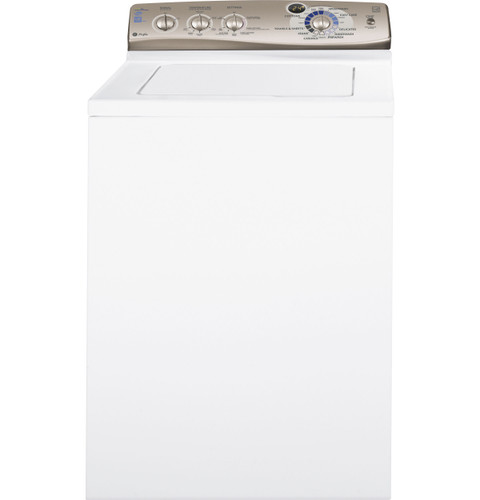
GE Profile PTWN6250M / PTWN6250MWT HydroWave Infusor washer
PTWN6250M / PTWN6250MWT: trace water at the washer safely
The owner manual identifies detergent oversudsing, fill-hose connections, drain-hose seating, household drain blockage and constant supply pressure as possible leak causes. Determine when water first appears—fill, wash or drain—and where it emerges. That observation helps distinguish an external hookup from a washer or home-plumbing issue.
If water reaches the outlet, cord or another electrical area, keep clear and do not touch a wet plug. Shut accessible supply faucets only if you can reach them from a dry area.
During wash: check suds and dose
GE says excess or unsuitable detergent can contribute to leaking. Use HE detergent and measure it; use less for a small/lightly soiled load or soft water. The low-water Infusor does not need a high-water machine’s detergent amount.
During fill: inspect supply connections
Check visible drips at faucet and rear hose couplings. Installation instructions require rubber washers and a leak check after opening faucets; hot connects to H and cold to C. GE recommends replacing fill hoses every five years. Shut off water before any hose connection work and stop if the valve will not close or fittings are damaged.
During drain: check the drain route
The rear drain hose must be seated and held with its clamp and two screws. Check visible kinks, crushing or contact with a wall. If water backs up at the standpipe or laundry tub, GE says the home drain may be clogged and a plumber may be needed. The standpipe must remain open to atmosphere.
Separate hose setup from internal leak
The installation sheet specifies a drain outlet height of at least 30 inches and no more than eight feet above the washer base. Improper setup can lead to water draining while filling or poor drainage. Do not pull a wet, connected washer forward to inspect hidden areas.
Escalate
A leak from inside the cabinet, a damaged hose, or a persistent leak after correcting detergent and visible connections requires service. Report the first wet location, cycle stage, suds, and whether the home drain backs up. Do not open panels to find a leak.
Use the timing to narrow the source
A leak during fill makes the supply couplings, inlet-side hoses and suds behavior relevant; a leak during drain makes the rear drain connection and household standpipe more relevant. GE’s chart notes constant pressure on fill hoses and recommends turning off faucets after use to reduce pressure if a hose fails. It also recommends replacing hoses every five years.
If water is pooling below the appliance but the first wet point cannot be seen, do not pull the washer out while full or connected. Photograph the safe visible area and call service or an installer. Water appearing at the household drain can be a plumbing backup rather than a washer leak. If detergent bubbles are present, reduce dose and use HE detergent before diagnosing internal leakage, but stop operation if leakage is substantial.
Detergent type or amount may be contributing
Use HE detergent and measure a smaller dose appropriate to load.
Household plumbing may be blocked
Stop and have the drain checked.
Internal part or connection may be involved
Arrange qualified service.