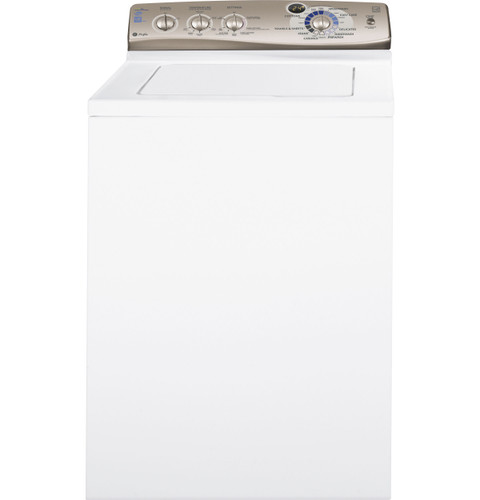
GE Profile PTWN6250M / PTWN6250MWT HydroWave Infusor washer
PTWN6250M / PTWN6250MWT: improve cleaning and rinsing with Infusor loading
GE designed the HydroWave/Infusor washer to use less water than a traditional top-loader. Water need not cover the clothes. Cleaning depends on load size and placement, HE detergent amount, cycle choice and dispenser use. The troubleshooting tables link wet loads, spots, graying, yellowing and lint to these factors.
Change one factor at a time and follow garment care labels.
Load loosely and sort
Load dry items loosely around the outside of the Infusor. Do not place sheets, blankets or towels across it. Overloading harms performance. Sort colors, soil, fabric type and lint behavior; separate lint producers from lint collectors.
Dose HE detergent
Use HE detergent and label directions. Too much detergent can oversuds and negatively affect performance. Use less for soft water, small loads and light soil. For undissolved detergent, GE suggests adding it to the basket before clothes, trying liquid detergent, or selecting warmer water if fabric care permits.
Match cycle and options
Cottons is the general everyday cycle; Speed is for small, lightly soiled loads; Delicates and Hand Wash use slower spin; PreWash addresses surface dirt and should be followed by a regular cycle. Auto Soak, Second Rinse and Extended Spin are “on some models”; use only if your panel includes them.
Use temperature and dispensers correctly
PerfecTemp senses incoming water and adjusts the fill range. Some warm water may be added on a COLD wash; PerfecTemp is inactive during cold rinse. For softener, use the Infusor cup and select FABRIC SOFTENER; do not use dispensing balls. The bleach funnel is for measured liquid chlorine bleach, not powdered bleach.
Interpret common results
Colored spots can follow softener misuse; use its dispenser and option. Graying/yellowing can involve hard water, detergent amount, hot-water delivery, overloading or undissolved detergent. Wet clothes can reflect slow-spin cycles or imbalance. Persistent results despite correcting those factors may merit service.
Treat stains, residue and wetness as different complaints
For colored spots, the manual suggests checking softener directions, selecting the Fabric Softener option and pretreating/re-washing; dye transfer calls for sorting whites/light colors from dark colors. For graying or yellowing it points to detergent quantity, hard water, heater delivery, overloading and detergent dissolving. Lint can result from sorting and from air drying.
These causes call for different adjustments. Do not raise wash temperature if garment labels prohibit it; do not add more detergent to an oversudsing load. Loose loading around the basket perimeter and a suitable cycle are the design-specific starting points. Persistent poor washing with correct loading and products may warrant service.
Use the detergent label and water conditions
The manual says HE detergent is formulated for low-water wash/rinse systems and reduces oversudsing associated with regular detergent. Follow the label amount for the washer’s load and water condition; excessive detergent negatively affects performance. When detergent does not dissolve, GE suggests adding it before clothes, trying a liquid formula, or using warmer water when fabric care allows.
Adjust one likely cause at a time
For a performance complaint, avoid changing detergent, cycle and temperature simultaneously. If residue appears, first review detergent amount and dissolution. If the load is wet, check cycle spin choice and balance. If spots appear, review softener use and color sorting. This follows the troubleshooting chart’s separate cause lists and makes it easier to tell whether a change helped. Use garment care labels when changing temperature or cycle; some fabrics should not receive a hotter wash or faster spin.
Low level is normal with Infusor
Do not add water; check loading and detergent.
Softener use or dye transfer may be involved
Follow dispenser directions and sort colors.
Drying method may leave more lint
Sort lint producers and collectors.