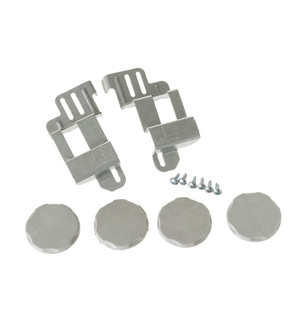
Specifications for GE24STACK with owner checks for this product design. Use the matching manual for control sequences and replacement parts.
Specifications & model details
GE24STACK: model-specific checks
Start with the source identity
GE GE24STACK is the exact code in this catalog record. This topic should be evaluated for that code and dryers category. The original source record is linked below; unrecorded settings, dates and compatibility remain unknown.
Narrow a dryer complaint through safe observations, separate airflow and load issues from appliance faults, and prepare useful evidence for diagnosis.
Owner guide: Troubleshooting & repair
Category & symptom guidance
Troubleshooting & repair
4 minute read · Shared guidance for clothes dryers
Describe the failure precisely
Start with the specific result: no start, drum turns without heat, stops mid-cycle, takes multiple cycles, makes a new sound, or shows an alert. Note whether it began suddenly or developed over several loads, and whether it occurs with every fabric type or only bulky items. A short, repeatable description is more useful than saying the dryer is broken.
Check whether the display is blank or the appliance responds but refuses to start. Confirm the door is fully closed and the cycle has actually been started using the normal controls. If the unit has a control lock, check the display or model instructions for its status; do not try an undocumented button sequence. Avoid repeatedly restarting a unit that trips a breaker or produces an odor.
Write down the cycle and options used, the load type, and the exact result.
Photograph any displayed message or indicator before clearing it.
Note recent moves, installation changes, or changes to the home's power or gas service.
Rule out load and airflow causes
A packed drum, one heavy item, or mixed fabrics can dry unevenly and extend the cycle. Try a smaller, similar-fabric load and remove items that are already dry. For sensor cycles, garments must tumble so the machine can assess moisture; a very small load or a single bulky item may not behave like a balanced load. Compare with a timed cycle only if the owner's instructions provide one and the fabric permits it.
Clean the lint screen and inspect the accessible airflow route. On vented dryers, check that the duct is not visibly crushed and that the outdoor outlet is clear. On condenser and heat-pump designs, follow the specified tank and filter care instead of looking for an outdoor vent. A clean screen alone does not prove the full vent path is clear.
Separate power symptoms from appliance symptoms
If there is no response, observe whether lights or other controls work and whether the home's breaker appears tripped. Do not remove an electrical panel or probe the outlet. A gas dryer also needs electrical power for controls and drum operation, so a gas supply does not explain a completely blank display. If a breaker trips again after a reset or the outlet, cord, or plug is hot or damaged, stop and contact an electrician or appliance service provider.
For a gas dryer, if the drum runs but there is no heat, note whether other gas appliances work only if that can be observed safely; do not open the dryer or manipulate its gas fittings. A gas odor requires immediate attention: avoid operating switches, leave the area, and contact the gas utility or emergency service from a safe location.
Use alerts as clues, not diagnoses
An airflow or filter indicator points toward a condition the machine monitors; it does not name the failed part. Clean only owner-accessible filters, confirm they are seated, and check the accessible vent termination if the dryer is vented. If the alert returns, capture it and note whether drying time changed. Do not buy a sensor or control board based solely on an indicator.
As a scoped example, LG's DLEX4000/DLGX4001 specification identifies FlowSense duct-clogging and lint-filter indicators. That does not establish the behavior or meaning of alerts on other families. For any dryer, use the exact model's owner information to identify what an alert means and what maintenance is permitted.
Prepare for a repair decision
Before scheduling a diagnosis, collect the full model number, serial number if available, power type, approximate age if known, and a short symptom timeline. Include any alert, cycle and options, load size, cleaning already done, and whether the unit was recently moved. If the issue is intermittent, record the conditions that reproduce it rather than running repeated cycles to force a failure.
Ask the service provider what diagnostic visit covers, whether labor or parts are quoted separately, and what evidence they need before arrival. Warranty terms and coverage depend on the appliance, purchase details, and the written warranty. Keep the receipt and warranty document; a product specification sheet is not a promise that a particular repair will be covered.
What to do with what you find
A smaller load dries more evenly and no warning remains.
Load size or fabric mix likely contributed.
Use a suitable load size and cycle for the garments.
The dryer runs but repeatedly takes much longer than before.
Airflow, filters, or a component issue may be involved.
Clean permitted filters, check the applicable airflow path, and document the result.
A breaker trips again, a cord is damaged, there is burning odor, or gas is smelled.
Continued operation could be unsafe.
Stop using the dryer and contact the appropriate utility or qualified service.
Have these details ready
Full model number and gas/electric type.
Exact alert or indicator and when it appears.
Cycle, load size, symptom timeline, and recent installation changes.
Owner-accessible cleaning completed and its effect.
Common questions
Does an alert identify the part I should replace?
Usually it identifies a monitored condition, not a failed component. Use the exact model instructions and gather the alert and symptom details before diagnosis.
What should I tell the repair provider?
Give the full model, gas or electric type, exact symptom, alert, cycle and load conditions, recent installation changes, and what owner cleaning you completed.
General background sources
These sources support the shared guide. Exact model specifications and matched family procedures have their own sources above.
Explicit product_first_distribution_date in exact OEM primary SKU record; not a manufacturing year or import date. Primary source: https://www.geappliances.com/appliance/GE-Washer-Dryer-24-Stack-Bracket-Kit-GE24STACK