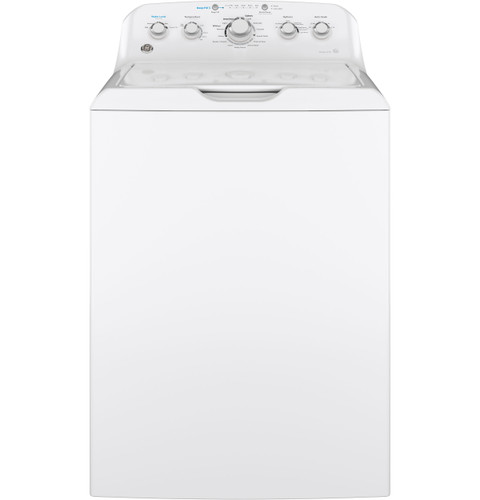
The GTW465ASNWW manual documents a top-load washer with a dual-action agitator, Deep Fill selection, and automatic balance behavior. Those owner choices make load placement and spin observations especially useful. It is a separate design from GFW550 front-load machines; the group does not claim interchange with other GTW465 suffixes.
Washer capacity
4.5 cu ft
Energy Consumption (kWh/year)
210 kWh/year
Overall Width
27 in
1 detailed family article26 short family notes47 detailed owner guides
Detailed articles use sources for the named brand and product family. Short notes add family details to shared guidance. Owner guides cover the product category and recorded design, with this model’s measurements and brand details shown separately. Exact controls and part fitment require a matching manufacturer source.
Locate the product identification, distinguish a model from a serial number, and use the exact model to find compatible documents and service information.
Read capacity, electrical, water, and performance information in context, and use the exact model’s documents for decisions that affect purchase or hookup.
Prepare a stable location and compatible services, then use the exact installation guide to coordinate setup, leveling, and an initial operating check.
Use the washer’s rating and installation documents to confirm a grounded supply, outlet access, and circuit suitability; refer electrical changes to a qualified electrician.
Prepare the washer for transport with the product-specific restraint, water and drain precautions, adequate help, and careful protection of hoses and cord.
Remove model-specific transport materials, prepare laundry products and supplies, and make a supervised first check for leaks, stability, and drainage.
On the GTW465, water temperature and soil level are selected alongside the cycle, but not every cycle offers every combination. The manual notes that Normal/Colors offers several temperature choices, while other cycles can embed...
The GTW465 cycle table lists Normal/Colors for typical cotton loads and Drain & Spin for wet items that need water extracted or a rinse followed by spin. The manual describes GTW465’s Drain & Spin as a high-speed spin. If a load remains...
Choose wash temperature by balancing the garment care label, soil, detergent directions, and the washer’s temperature controls. A selected setting may describe a target or mix rather than water straight from the tap.
When the GTW465 Fill light flashes for a fill interruption or certain conditions, the manual says the washer runs its pump and ignores controls during a 4-minute lockout. Wait until the period ends and the pump sound stops before...
After a wash, the GTW465 manual recommends leaving the lid open so moisture can evaporate. To clean the basket, use a clean soft cloth dampened with liquid detergent, then rinse; avoid harsh or gritty cleaners. Wipe spills from the...
The GTW465ASNWW product listing includes a fabric-softener dispenser. The manual’s illustrated procedure removes the dispenser from the top of the agitator, separates its cup from the cover, and cleans the pieces before reassembly....
For a long absence when temperatures may fall below freezing, the GTW465 manual says to shut off the water faucets and drain water from the hoses and pump-filter area. Follow the installation and owner-manual directions for your...
The GTW465ASNWW is a top-load washer with an agitator, stainless basket, and owner-selectable water and rinse choices. When a cycle stops or clothes stay wet, identify which stage did not happen: fill, agitation, drain, or spin. One...
If Fill flashes, let the lockout finish
Load the agitator basket so items can move around the center post
Distinguish an intentionally low water level from no fill
The GTW465 manual’s cycle-status lights identify Fill, Soak, Wash, Rinse, and Spin. If Spin and Rinse blink near cycle end, the machine may be correcting an out-of-balance load; redistribute items evenly and use Drain & Spin if clothes...
The GTW465 manual’s cycle-status lights identify Fill, Soak, Wash, Rinse, and Spin. If Spin and Rinse blink near cycle end, the machine may be correcting an out-of-balance load; redistribute items evenly and use Drain & Spin if clothes...
The GTW465 manual’s cycle-status lights identify Fill, Soak, Wash, Rinse, and Spin. If Spin and Rinse blink near cycle end, the machine may be correcting an out-of-balance load; redistribute items evenly and use Drain & Spin if clothes...
The GTW465 family’s unbalance indication uses the cycle status lights: Spin and Rinse may blink while the washer attempts to redistribute the load. If it cannot reach full spin, the manual says the clothes may be wetter; redistribute...
A bulky load can thump as the washer redistributes it. Check that the cabinet is level, the load is spread around the basket, and the agitator is not trapped by an item. Persistent grinding, metal-on-metal scraping, or movement across...
Identify whether water is spilling over the basket, appearing at a supply hose, or pooling under the cabinet. Check that the load is not above the basket’s loading guide and that the drain hose remains in its standpipe. Close the water...
The GTW465 manual says the lid locks during load sensing on applicable Auto-water-level controls and during spin, then unlocks after those stages. Start/Pause can pause and unlock when appropriate. If the lid is locked, note whether the...
The GTW465 manual says the lid locks during load sensing on applicable Auto-water-level controls and during spin, then unlocks after those stages. Start/Pause can pause and unlock when appropriate. If the lid is locked, note whether the...
The GTW465 manual says to loosely load garments around the agitator/basket and adjust water level rather than overloading. Deep Fill is an available selection on the documented controls, while water-level choices may vary by model. If...
The profile’s exact documented code is GTW465ASNWW. Use that full code for an agitator, lid, basket, hose, or control part search. A visually similar GE top-loader may have a different basket or control layout; confirm catalog fit...
Owner-level tasks include load redistribution and accessible cleaning described in the manual. Lid-lock, motor, suspension, and control repairs require qualified service. Never bypass the lock to watch the basket run. If the washer will...
Before adding a pedestal, drain pan, or hose extension, verify the GTW465 model’s official installation/accessory information. A top-load lid needs usable overhead clearance, and stacking accessories designed for a front-load pair do...
List the connection or clearance you need to solve
GTW465 uses a top-load agitator basket; GFW550 is a front-load washer with a sealed door and dispenser. Parts, detergent drawer accessories, stacking kits, and cleaning steps are model-family specific. If a retailer lists only a brand...
The manual illustrations identify the GTW465 control panel, basket, agitator, and owner-accessible parts. Use them to check loading and cleaning descriptions, not as instructions to remove the cabinet or reach a drive component. If your...
For a service quote, report whether the tub fills, agitates, drains, and spins; whether the lid locks; and whether the last load was bulky or unbalanced. Ask the provider to separate the diagnostic fee from labor and parts. “Does not...
Use a written diagnosis and quote, then compare replacements that fit the existing opening, hose reach, lid clearance, and desired agitator style. Include delivery, installation, and haul-away. The GTW465’s 4.5-cu-ft class and Deep Fill...
A balanced, correctly sized load helps the washer complete its intended wash and spin without repeat attempts. Use the options required by the soil and fabric; Deep Fill changes water use and should not be selected automatically for...
Use model-specific annual energy and water information where available, then multiply by local electricity, water, and sewer rates. Household cost also changes with hot-water temperature, load size, selected options, and extra rinse...
Have the rating-label code, serial number, purchase date, and service records ready. Ask whether the reported symptom is covered and whether a specific service provider is required. A manual match only identifies the correct operating...
Check official recall and safety notice sources using the washer's complete model and serial information. A search result is a lead; confirm applicability, follow the stated remedy, and report a hazard with specific evidence.
Establish a washer's age and product history from identifiers and records. Separate manufacture date, purchase date, installation history, and service events; avoid treating any one of them as a reliability forecast.
Review a washer’s published specifications against the laundry, installation, and ownership needs that matter in your home. Treat figures as model-specific claims and verify the exact variant before relying on them.
Build a fair washer comparison around your loads, room, utility setup, and ownership priorities. Verify each candidate’s exact variant and compare equivalent manufacturer information.
Plan a washer replacement around the physical route, opening, connections, floor, and chosen washer design. Confirm fit and installation conditions for the exact model before arranging delivery.
Compare washer offers using current seller quotes, exact model identifiers, itemized delivery and installation terms, and verified stock status. Build an owner-specific total rather than relying on generic price averages.
Provide GTW465ASNWW, the cycle stage, whether it contains water, how the load was distributed, and any displayed message. Mention if the problem happens empty as well as with laundry. Do not bypass the lid lock or move a water-filled...
Arrange washer removal through a local recycler, waste program, retailer, or donation route that confirms it accepts the appliance and can handle pickup. Prepare the unit for safe transport and verify local requirements.