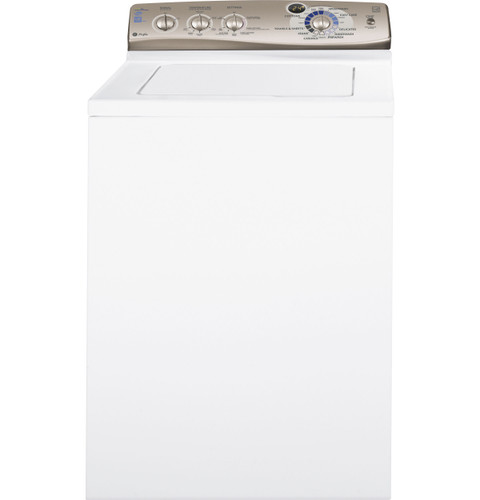
GE Profile PTWN6250M / PTWN6250MWT HydroWave Infusor washer
Planning a replacement for the PTWN6250M
GE’s product record marks this model obsolete, while the supplied sources do not identify a successor.
Confirm the reason to replace
GE’s current product record marks PTWN6250MWT obsolete, but it does not identify a verified successor model. Do not assume another PTW-series washer is a direct replacement based on a similar prefix, capacity, or color. A replacement should be chosen from current manufacturer installation documents and confirmed fit, not a guessed model lineage.
Before shopping, establish whether the problem is a repairable fault, an installation issue, or a capacity mismatch. Record symptoms, water leaks, cycle behavior, and any service diagnosis. The washer’s owner guide includes troubleshooting items such as clogged inlet screens, kinked drain hose, unbalanced loads, and normal load-sensing pauses. A verified inexpensive setup correction may change the decision; a guessed part swap may not.
Carry over the measurements and connections
The PTWN6250M spec sheet lists 42 inches high, 27 inches wide, and 25.5 inches deep. Measure the actual opening, door swing, doorway route, and hose clearance; use the candidate’s current installation manual for its true required clearance. The existing electrical supply is 120V, 60Hz, 10A with grounded three-prong receptacle on an individual 15- or 20-amp circuit. Never use an adapter or extension cord to make an incompatible candidate fit.
The installation guide also defines drain and water conditions. For this washer it specifies 10–150 psi supply pressure, proper hot and cold valves, and bounded standpipe height/diameter. A new washer may impose different requirements. Have the installer verify the home’s drain, flooring, faucet locations, and circuit against the replacement instructions before delivery.
Choose capacity and washing behavior deliberately
The GE’s 3.6 DOE capacity, Infusor, low-water HE detergent system, PreciseFill, and 700 RPM spin are useful comparison anchors. Decide whether the capacity was adequate and whether you liked the low-water behavior. The GE quick reference warns that water may not cover the tops of garments; that is normal for this model. If you prefer a deeper visible fill, compare candidate controls and manuals rather than expecting every high-efficiency washer to behave alike.
Compare the candidate’s use and care manual for detergent type, cycle choices, dispenser configuration, fabric limits, and cleaning instructions. Do not transfer PTWN6250M cleaning or control steps to a different machine. The replacement’s own manual governs its products, cycles, and maintenance.
Compare lifecycle costs without invented savings
Use actual written repair and replacement quotes. Include diagnostic and labor charges, parts, delivery, installation, drain or electrical changes, removal, and any required accessories. Then compare those costs with the capacity and features you need. No source supplied here provides a current market price or proves a particular successor is cheaper to operate.
The old EnergyGuide’s $17/$12 annual costs assume 2007 utility rates and eight loads weekly. Use its declared 160 kWh only as a historical benchmark; compare a candidate’s current EnergyGuide and calculate with current local rates and your own load pattern. Do not claim a fixed savings amount from replacement.