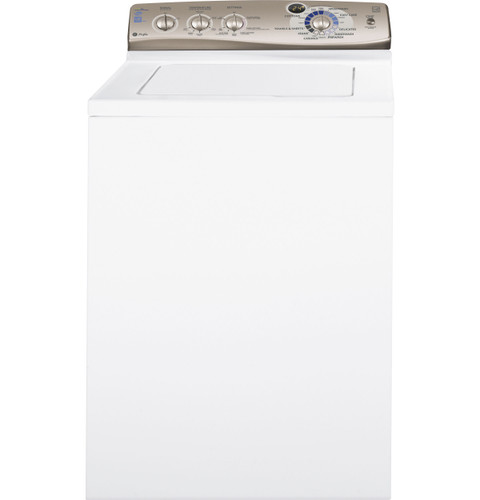
GE Profile PTWN6250M / PTWN6250MWT HydroWave Infusor washer
Deciding whether to repair or replace the PTWN6250M
Use a confirmed fault, written repair estimate, and actual replacement quote to make this decision.
Start with a confirmed fault
Separate a confirmed failed component from a symptom that may have a simpler cause. The owner troubleshooting table says to straighten a kinked drain hose, clear inlet screens if filling is poor, redistribute an unbalanced load, use an appropriate HE detergent amount, and reset the cycle in specific situations. It also says pauses during sensing and low visible water can be normal. Check the manual before paying for a repair based only on sound or water level.
If the washer leaks, trips a circuit, smells hot, or moves violently, stop using it and arrange qualified service. Those observations do not identify the failed part. Record what cycle was running, whether water was entering or draining, and where the leak appears.
Get the numbers that change the decision
Request a written diagnosis and itemized estimate, including parts, labor, diagnostic charge, and return visit. Then obtain a real replacement quote including delivery, installation, removal, and any drain, floor, or electrical changes. The original product documents provide no current repair price and no successor recommendation, so a numerical break-even rule would be invented.
Check the written warranty before authorizing work. First-year qualifying factory-part defects include labor; later coverage lists specific parts but usually makes the owner responsible for labor. Lifetime language applies to the washer basket only in the manual’s schedule, with owner-paid labor. Confirm eligibility with GE using the serial and receipt.
Decide whether the documented design still fits
This washer is specified at 3.6 DOE cubic feet, with an Infusor, HE LoWater washing, PreciseFill, and 700 RPM spin. If that capacity and low-water behavior suit your loads, a repair may preserve useful capability. If frequent bulky loads exceed the basket or you dislike the design’s detergent and loading requirements, a replacement with different documented capacity and controls may fit better.
The quick guide says water may not cover the tops of clothes; this is normal. Do not mistake that behavior for proof of poor performance or use it alone to justify replacement. Similarly, GE’s “Quiet-By-Design” phrase is a marketing claim, not evidence that an individual washer’s new grinding or banging noise is normal.
Account for installation and operating evidence
The spec sheet lists 42 × 27 × 25.5-inch dimensions and a grounded 120V, 15/20-amp circuit requirement. The installation guide calls for firm flooring, correct hot/cold connections, and drain installation within specified limits. A replacement needs to fit the same route and utilities; installation changes can alter the total cost.
The EnergyGuide’s 160 kWh annual use and $17/$12 costs are based on 2007 national rates and eight weekly loads. Use the kWh figure as historical context only. Compare a replacement’s current label with your actual rates; do not count an unverified operating-cost saving as guaranteed payback.
Use function and capacity as real decision factors
A machine that completes the cycle but struggles with an occasional oversized load may still meet household needs; a washer that cannot safely complete fill, drain, or spin requires diagnosis first. The owner manual identifies normal sensing pauses and low visible water, so those alone are weak reasons to replace the washer. Conversely, recurring leaks, failed functions, or an unsuitable capacity should be included in the decision after they are confirmed.
Compare the replacement’s usable capacity and cycle options with actual loads, not only its advertised headline size. Consider whether the household values the PTWN6250M’s documented PreciseFill and HE LoWater design or prefers a different way of choosing water level and loading clothes.