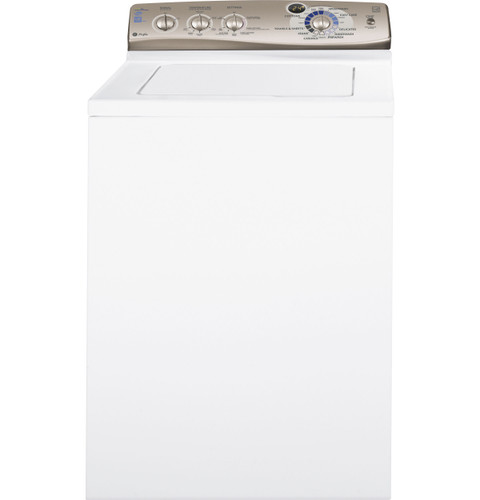
GE Profile PTWN6250M / PTWN6250MWT HydroWave Infusor washer
Estimating repair cost for this GE washer
A credible repair estimate depends on a confirmed diagnosis and a quote that separates parts, labor, and visit charges.
Ask for diagnosis before a number
The GE manuals and specification sheet do not publish repair prices. A useful cost estimate starts with the exact symptom and model/serial, then a qualified technician identifies the failed component. For this washer, the owner troubleshooting guide names several non-part causes: a kinked drain hose, clogged inlet screens, unbalanced load, excessive detergent, or normal sensing pauses. Checking those safely can prevent treating a setup issue as a control-board failure.
Do not disassemble the machine based on a sound or symptom alone. GE’s owner manual warns owners not to attempt repair or replace parts unless specifically recommended and understood. Give the technician the cycle, load, water behavior, error indication if present, leak location, and when the problem occurs.
Request an itemized estimate
Ask the provider to separate the diagnostic or trip fee, labor, part, taxes, return visit, and any required hoses or plumbing work. Ask whether the quote assumes an OEM part and whether the job carries a repair warranty. If replacing the washer is being considered, include delivery, installation, removal, and disposal in that comparison. The source documents provide none of these dollar amounts, so a local written quote is essential.
If ordering a part yourself, use the full PTWN6250MWT identity and serial in GE’s current parts lookup. A generic PTWN6250 listing may not prove fit. Confirm the actual failed part and ask whether installation requires a trained technician, especially for electrical controls, suspension, or a water leak.
Check warranty before authorizing paid work
The manual covers any factory-specified part defect plus labor in year one, subject to its terms. Years two–five name suspension rods/springs, main electronic control board, and a lid or cover that rusts; years two–ten name shaft/tube assembly and outer tub; lifetime coverage names the basket. For those later periods, the owner pays labor. These are limited defect warranties, not a promise that a symptom qualifies.
The 2011 specification’s summary says lifetime stainless tub and limited ten-year parts coverage, but the written manual itemizes narrower named components and explicitly assigns later labor costs to the owner. Ask GE to confirm the exact part, serial, purchase date, cause, and covered charges before approving service. Bring the receipt and retain the case number.
Compare the repair with replacement on real quotes
Once diagnosis is known, compare the total repair amount with an actual replacement offer and its installation costs. Consider whether the existing 3.6 DOE capacity, 700 RPM spin, and low-water Infusor behavior still serve the household. Those documented features have value only if they fit current needs; they do not justify a repair at any price.
Do not use an invented “typical repair cost” or assume the machine has a particular remaining life. The supplied documents cannot support either. A repair quote, warranty determination, and candidate replacement quote are the evidence needed for an informed decision.
Make the visit productive
Before the appointment, write down whether the basket fills, whether the Infusor moves, whether water drains, and what the spin does. Note if the failure occurs with every load or only bulky or unbalanced loads. GE’s guide says to redistribute an unbalanced load and use Drain & Spin when appropriate; recording the sequence helps the technician distinguish load behavior from repeatable machine behavior.
Photograph water at a leak before drying it, but do not run another cycle if water is near an outlet or electrical component. Bring the manual’s model identity and the receipt if warranty coverage may apply. This information can reduce ambiguity in diagnosis, although the technician still needs to inspect the washer.