Appliance & electronics support
Find your model numberAbout our sources
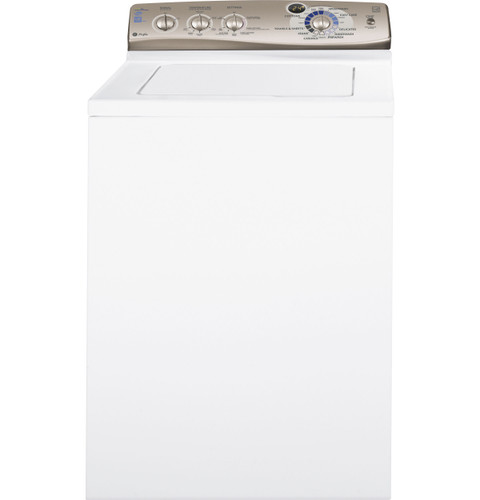
GE Profile PTWN6250MWT washer — manufacturer product image
Photo: PTWN6250MWT. Shared source photo. Photo source
Manufacturer sources

GE Profile PTWN6250MWT

Recycling & disposal

Washing machine · US market · 48 owner topics

GE Profile PTWN6250M / PTWN6250MWT HydroWave Infusor washer

Covers PTWN6250MWT and the manufacturer-listed models in this family.

GE Profile PTWN6250M / PTWN6250MWT HydroWave Infusor washer

Preparing a PTWN6250M washer for recycling

Arrange appliance recovery before disconnecting the washer, and preserve the manufacturer’s lid-removal safety instruction.

Choose a real appliance recovery route

Before removing a washer, contact your municipal waste service or a licensed appliance recycler and ask whether they accept full-size washers, whether pickup is available, and whether the appliance must be disconnected or drained in advance. Rules vary by location, and the supplied GE documents do not identify a current recycling contractor or guarantee that a retailer will haul this model away. Get the acceptance and charges in writing before scheduling delivery of a replacement.

If the washer still works and you are considering donation, ask the receiving organization whether it accepts this exact type and condition. The product’s obsolete listing does not determine whether a local organization will accept it. Disclose any known leak, failed cycle, or missing part and provide the manual and service records if available.

Disconnect it safely

The owner manual says to turn off water faucets for long absences and to have a service technician remove water from the drain pump and hoses before moving or storing the washer. For recycling, ask the recycler or a qualified installer to disconnect power and plumbing, drain residual water, and protect the floor. Do not cut a live cord, open electrical compartments, or tip a water-filled washer.

The washer uses a grounded 120-volt supply and separate hot and cold hoses. Unplug only after confirming the controls are off and the outlet can be reached safely. Close both water valves before hoses are disconnected. Keep the power cord, hoses, and loose hardware with the appliance only if the recycler requests them.

Remove the lid before final disposal

GE’s owner manual specifically directs owners to remove the washer lid before discarding the appliance to prevent children from becoming trapped inside. Arrange that step with the recycler or qualified service provider, and ensure the washer cannot be accessed as a play space while awaiting pickup. Do not leave a removed lid or exposed appliance unsecured where children can reach it.

The lid instruction is a safety measure from the manufacturer; it does not require an owner to dismantle the machine beyond what can be done safely. If removing it involves electrical or mechanical work you cannot perform safely, ask the recycler or technician to do it before taking the appliance away.

Keep the collection receipt and service records

Keep the model/serial photograph, purchase receipt, service invoices, and any warranty or recall case number until open claims are resolved. Recycling does not itself settle a service dispute or confirm that a recall remedy was completed. If GE has directed a remedy for this exact washer, follow those instructions before arranging disposal.

Ask the recycler what components it accepts and whether it handles steel, wiring, and electronics through its normal process. Do not claim a particular recycling percentage or environmental benefit without verified local information. A documented handoff receipt helps establish that the machine was collected rather than abandoned.

Coordinate pickup and preparation

The specification sheet gives nominal dimensions of 42 inches high, 27 inches wide, and 25.5 inches deep; use them to discuss doorway access and pickup clearance, but measure the actual route and appliance. The specification data do not include a verified shipping weight, so ask the recycler or delivery service if a weight limit affects pickup. Keep the washer upright and do not drag it across flooring or stairs.

A recycler may require hoses to be disconnected, water drained, and the lid removed before collection. Confirm its instructions first, because local services differ. The installation guide’s shipping rod is for keeping the tub stationary in transport; retain and reinstall it if the washer is being moved intact.

Specifications & model details

PTWN6250MWT: model-specific checks

Recorded model facts

Model details relevant to this topic

SpecificationRecorded valueEvidence
DOE capacity3.6 cu ft
Manufacturer
GE Profile PTWN6250M — specs

Exact-model manufacturer resource; Specification 260192, revised 4/11, pp. 1–2; explicit base and finish listing

GE specification 260192, revised 4/11, titles the base PTWN6250M and explicitly lists finish model PTWN6250MWT. Base/retail relationship is documented here; no other suffix or serial range is inferred. Specification 260192, revised 4/11, pp. 1–2; explicit base and finish listing

Observed Oct 27, 2026
Wash Basket TypeStainless Steel
Manufacturer
GE — PTWN6250MWT

Exact-model manufacturer resource; specification fields

Exact SKU PTWN6250MWT; manufacturer specification label: Wash Basket Type.

Observed Oct 27, 2026
Adaptive CapabilitiesAdaptive Fill
Manufacturer
GE — PTWN6250MWT

Exact-model manufacturer resource; specification fields

Exact SKU PTWN6250MWT; manufacturer specification label: Adaptive Capabilities.

Observed Oct 27, 2026
Additional Washer Features_1Auto Balance Suspension System
Manufacturer
GE — PTWN6250MWT

Exact-model manufacturer resource; specification fields

Exact SKU PTWN6250MWT; manufacturer specification label: Additional Washer Features_1.

Observed Oct 27, 2026
Additional Washer Features_2Front Serviceable
Manufacturer
GE — PTWN6250MWT

Exact-model manufacturer resource; specification fields

Exact SKU PTWN6250MWT; manufacturer specification label: Additional Washer Features_2.

Observed Oct 27, 2026
Additional Washer Features_3Galvanized Steel Cabinet
Manufacturer
GE — PTWN6250MWT

Exact-model manufacturer resource; specification fields

Exact SKU PTWN6250MWT; manufacturer specification label: Additional Washer Features_3.

Observed Oct 27, 2026
Cancel cycleHold Start for 3 seconds
Manufacturer
GE Profile PTWN6250M — owner

Exact-model manufacturer resource; Owner manual 49-90400-1, 07/06/10; pp. 1, 4–7, 9

GE specification 260192, revised 4/11, titles the base PTWN6250M and explicitly lists finish model PTWN6250MWT. Base/retail relationship is documented here; no other suffix or serial range is inferred. Owner manual 49-90400-1, 07/06/10; pp. 1, 4–7, 9

Observed Oct 27, 2026
Casuals Cycle_1Medium Soil
Manufacturer
GE — PTWN6250MWT

Exact-model manufacturer resource; specification fields

Exact SKU PTWN6250MWT; manufacturer specification label: Casuals Cycle_1.

Observed Oct 27, 2026
Casuals Cycle_2Light Soil
Manufacturer
GE — PTWN6250MWT

Exact-model manufacturer resource; specification fields

Exact SKU PTWN6250MWT; manufacturer specification label: Casuals Cycle_2.

Observed Oct 27, 2026
Control TypeRotary-Electronic
Manufacturer
GE — PTWN6250MWT

Exact-model manufacturer resource; specification fields

Exact SKU PTWN6250MWT; manufacturer specification label: Control Type.

Observed Oct 27, 2026
Cottons CycleHeavy Soil/Medium Soil/ Light Soil
Manufacturer
GE — PTWN6250MWT

Exact-model manufacturer resource; specification fields

Exact SKU PTWN6250MWT; manufacturer specification label: Cottons Cycle.

Observed Oct 27, 2026
Delicates CycleYes
Manufacturer
GE — PTWN6250MWT

Exact-model manufacturer resource; specification fields

Exact SKU PTWN6250MWT; manufacturer specification label: Delicates Cycle.

Observed Oct 27, 2026
More background: Recycling & disposal

Category & symptom guidance

Recycling & disposal

Choose a local disposition route

Start with the local waste authority or recycling program and ask specifically whether it accepts washing machines, whether pickup or drop-off is offered, and whether appointments, fees, or preparation rules apply. Rules vary by city and service area, so a general recycling directory cannot confirm that your address is covered. Ask whether the program accepts a working washer, a nonworking washer, or both, and whether it requires the appliance to be disconnected before collection.

If purchasing a replacement, ask the retailer whether old-unit haul-away is available for your delivery address and what the service includes. Confirm whether the old washer must be empty, disconnected, accessible at floor level, or in a particular condition. A seller may have limits on stairs, stacked appliances, or units that contain water. Get the terms in writing alongside the delivery quote so removal does not become an unexpected obstacle on the delivery day.

  1. Contact the local waste or recycling authority for appliance-specific rules.
  2. Ask the retailer about haul-away scope and access limits.
  3. Confirm pickup date, fee, and preparation requirements.

Consider reuse when the washer is serviceable

If the washer works and is safe to use, consider whether a reuse organization, community program, or recipient can accept it before arranging disposal. Describe its condition honestly, including known faults, missing parts, and whether it can be demonstrated. Confirm who will disconnect and transport it; a recipient’s willingness to take the washer does not establish that they can safely move or install it.

For a donation, ask about acceptance criteria, pickup area, scheduling, and any documentation the organization provides. Do not assume a tax deduction or a particular valuation; ask the recipient and consult applicable tax guidance if that matters. If the appliance is unreliable or has a serious leak or electrical problem, disclose that clearly and use a route that accepts nonworking appliances instead of passing the problem to another owner.

Prepare the washer for collection

Remove laundry and personal items, and check the drum, dispenser, and pockets for objects before the scheduled removal. Follow the owner manual’s preparation directions for draining or cleaning; procedures differ by design and model. For a front-loader, the manual may describe an accessible drain filter or residual-water step. Do not remove panels or attempt internal service to prepare it. If water remains and the normal manual procedure is unclear, ask the hauler or service provider what they require.

Arrange disconnection through the retailer’s installer or another appropriate person if the hookup work is outside your skills. Avoid pulling a connected appliance across the floor, forcing a hose fitting, or leaving a water line open. Coordinate shutoff and removal so the area can be checked for leakage after the washer is moved. Keep any required shipping hardware if the owner manual calls for it during transport; confirm the exact model’s directions before the unit leaves.

  1. Empty and inspect the drum and dispensers.
  2. Use only model-specific owner preparation instructions.
  3. Coordinate water disconnection and removal with the scheduled provider.

Prevent access hazards during storage and transport

Keep the washer stable and block access to the drum or tub while it waits for pickup, especially where children or animals may be present. The GE PTWN6250M owner manual instructs owners to remove the lid before discarding or removing that washer from service; the LG WM4000H*A manual says to remove the door before disposal to reduce entrapment danger. These are model-scoped instructions, and the appropriate preparation depends on the washer design. Follow the exact unit’s owner instructions and any local collection rule.

Do not dismantle a washer simply to make it easier to carry or fit in a vehicle. A heavy appliance can shift, and exposed components can create handling hazards. Ask the hauler how it must be staged and whether it will be collected from inside the home or curbside. If the route involves stairs, tight turns, or a stacked dryer, disclose that in advance so the provider can determine whether the pickup is within its service.

Verify completion and keep the right records

Before collection, confirm the appliance is accepted in its current condition and that the pickup provider will take the whole washer rather than only specified components. Ask whether a receipt or collection confirmation is available. If a retailer handles haul-away, keep the order record; if a municipal or private program collects it, retain any appointment confirmation or fee receipt. This is useful if the appliance is missed or a property manager asks how it was removed.

If the washer is part of a property sale, rental turnover, or warranty exchange, confirm who owns the appliance and who is responsible for disposal before arranging removal. For a replacement under a service agreement, ask the provider whether it requires inspection or return of the old unit. Do not scrap or donate the washer until those conditions are resolved. Confirm that any hoses, packaging, and accessories that must stay with the replacement are not accidentally removed with the old appliance.

What to do with what you find

A pickup provider does not accept the washer’s condition or access route.

The planned removal may fail or require another route.

Confirm an alternative local recycler, waste service, or reuse organization before delivery.

The washer may be subject to a warranty exchange, lease, or property agreement.

Ownership or return requirements may control disposal.

Resolve responsibility with the relevant seller, provider, or property owner first.

Have these details ready

  • Local recycler or waste program acceptance and preparation rules
  • Retailer haul-away scope or collection appointment confirmation
  • Exact-model owner instructions for storage and disposal
  • Ownership, warranty exchange, or property responsibility terms

Common questions

Can I put a washer out with ordinary curbside recycling?

Do not assume so. Ask the local program whether it accepts washers and what appointment, fee, and preparation rules apply.

Should I remove the door or lid before recycling?

Follow the exact model’s owner instructions and collection rules. Some manuals give entrapment-prevention steps, but the design determines the procedure.

General background sources

These sources support the shared guide. Exact model specifications and matched family procedures have their own sources above.

  1. www.epa.gov/recycle/what-you-can-do
  2. images.salsify.com/image/upload/s--4zVee-ir--/44e1044e71329cd6678e18edc3950e53c5694077.pdf
  3. media.us.lg.com/m/6d5d734b0871fbdf/original/WM4000_Owners-Manual.pdf
  4. consumer.ftc.gov/articles/warranties

Owner guidance by Specs & Parts, drafted with GPT-6 Luna. Sources and scope.

Sources for PTWN6250MWT

GE — PTWN6250MWT Observed Oct 27, 2026
GE Profile PTWN6250M — owner Observed Oct 27, 2026
GE Profile PTWN6250M — specs Observed Oct 27, 2026
Suggest a correction