Appliance & electronics support
Find your model numberAbout our sources
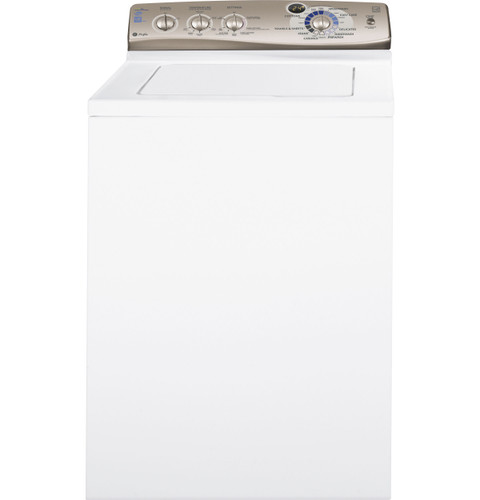
GE Profile PTWN6250MWT washer — manufacturer product image
Photo: PTWN6250MWT. Shared source photo. Photo source
Manufacturer sources

GE Profile PTWN6250MWT

Water quality & scale

Washing machine · US market · 48 owner topics

GE Profile PTWN6250M / PTWN6250MWT HydroWave Infusor washer

Covers PTWN6250MWT and the manufacturer-listed models in this family.

GE Profile PTWN6250M / PTWN6250MWT HydroWave Infusor washer

Cleaning mineral residue and detergent buildup

The PTWN6250M manual gives cleaning and detergent guidance, but no model-specific chemical descaling recipe.

Identify the residue before choosing a cleaner

The PTWN6250M owner guide provides routine washer cleaning directions, but it does not publish a descaling recipe or authorize a particular commercial descaler. Distinguish chalky mineral scale from detergent or softener film: mineral deposits often appear as hard pale crust where water evaporates, while product buildup may feel slippery or waxy. The appropriate response depends on what you see. Don’t pour a strong acid, vinegar, bleach, or a dishwasher product into the washer unless the exact GE manual expressly directs it.

If the concern is odor or general basket cleanliness rather than scale, use the owner manual’s occasional interior-cleaning recommendation: run a cycle containing bleach to help keep the washer clean, following the bleach product label and the machine’s bleach-funnel directions. This is a cleaning suggestion, not a model-specific scale-removal procedure. Never combine bleach with vinegar or other acids.

Prevent detergent film at the source

Because the washer uses HE LoWater action, the manual calls for HE detergent and recommends less detergent for soft water, smaller loads, or lightly soiled clothes. Overdosing is a plausible cause of residue and poor rinsing; adding more detergent to “fight” buildup worsens the condition. Measure rather than free-pour, and don’t use a softener ball, which GE says does not work correctly in this HE washer.

Clean the fabric-softener dispenser only if residue collects. On models with the removable dispenser, the manual describes lifting the tab, turning the top counterclockwise, lifting the cup from the Infusor, and washing buildup with a soft cloth or toothbrush. Keep the three rectangular drainage openings clear. The manual gives a soak mixture of one gallon warm water, one-quarter cup liquid detergent, and one cup bleach for the dispenser parts; use this only for the removable dispenser assembly and never mix bleach with vinegar or ammonia.

Inspect the water supply if deposits recur

If a film returns soon after cleaning, inspect the water supply and hoses rather than repeatedly dosing the basket with an unapproved chemical. The owner troubleshooting section lists clogged inlet screens as a cause of slow or inadequate filling and says to disconnect the hoses at the washer, brush or pick clean the screens, reconnect, and restore water. Shut off faucets before work and protect the floor from water. If the residue is hard scale or the home has unusually mineral-rich water, consult GE support for an approved treatment compatible with this model.

The installation sheet specifies water pressure and temperature requirements. A plumbing problem can change how the washer fills and rinses; mineral scale itself is not proof that a washer valve or basket has failed. If a screen is damaged, a fitting leaks, or deposits appear inside an inaccessible valve, stop and arrange service rather than forcing the screen or dismantling the control.

Keep a safe result check

After cleaning the dispenser or basket, inspect the cup seating and drainage holes, wipe away splashes, and run a small load using the normal HE detergent amount. Look for clear rinsing, no new concentrated softener spots, and no leak at the fill hoses. The manual does not specify a universal “descale” interval, so set cleaning frequency from visible buildup and the GE care instructions instead of an arbitrary calendar.

For a service request, describe the substance, where it appears, when it returns, the detergent type and amount, water hardness if known, and whether inlet screens were checked. Those details help distinguish product buildup, water-supply deposits, and a mechanical leak without claiming that a particular cleaner has been approved.

Specifications & model details

PTWN6250MWT: model-specific checks

Start with this washer’s layout

GE Profile PTWN6250MWT is listed as Top-Loading high-efficiency. For this recorded top-loading GE Profile design, place the first inspection at the lid, basket rim, fitted dispenser and the visible fill/drain connections. For a spin complaint, separate retained water from an uneven load, then check the selected cycle and lid state. Keep clothing loose enough to move; an agitator, impeller or automatic-fill procedure needs its own feature match.

Recorded model facts

Model details relevant to this topic

SpecificationRecorded valueEvidence
DOE capacity3.6 cu ft
Manufacturer
GE Profile PTWN6250M — specs

Exact-model manufacturer resource; Specification 260192, revised 4/11, pp. 1–2; explicit base and finish listing

GE specification 260192, revised 4/11, titles the base PTWN6250M and explicitly lists finish model PTWN6250MWT. Base/retail relationship is documented here; no other suffix or serial range is inferred. Specification 260192, revised 4/11, pp. 1–2; explicit base and finish listing

Observed Oct 27, 2026
Wash Basket TypeStainless Steel
Manufacturer
GE — PTWN6250MWT

Exact-model manufacturer resource; specification fields

Exact SKU PTWN6250MWT; manufacturer specification label: Wash Basket Type.

Observed Oct 27, 2026
Adaptive CapabilitiesAdaptive Fill
Manufacturer
GE — PTWN6250MWT

Exact-model manufacturer resource; specification fields

Exact SKU PTWN6250MWT; manufacturer specification label: Adaptive Capabilities.

Observed Oct 27, 2026
Additional Washer Features_1Auto Balance Suspension System
Manufacturer
GE — PTWN6250MWT

Exact-model manufacturer resource; specification fields

Exact SKU PTWN6250MWT; manufacturer specification label: Additional Washer Features_1.

Observed Oct 27, 2026
Additional Washer Features_2Front Serviceable
Manufacturer
GE — PTWN6250MWT

Exact-model manufacturer resource; specification fields

Exact SKU PTWN6250MWT; manufacturer specification label: Additional Washer Features_2.

Observed Oct 27, 2026
Additional Washer Features_3Galvanized Steel Cabinet
Manufacturer
GE — PTWN6250MWT

Exact-model manufacturer resource; specification fields

Exact SKU PTWN6250MWT; manufacturer specification label: Additional Washer Features_3.

Observed Oct 27, 2026
Cancel cycleHold Start for 3 seconds
Manufacturer
GE Profile PTWN6250M — owner

Exact-model manufacturer resource; Owner manual 49-90400-1, 07/06/10; pp. 1, 4–7, 9

GE specification 260192, revised 4/11, titles the base PTWN6250M and explicitly lists finish model PTWN6250MWT. Base/retail relationship is documented here; no other suffix or serial range is inferred. Owner manual 49-90400-1, 07/06/10; pp. 1, 4–7, 9

Observed Oct 27, 2026
Casuals Cycle_1Medium Soil
Manufacturer
GE — PTWN6250MWT

Exact-model manufacturer resource; specification fields

Exact SKU PTWN6250MWT; manufacturer specification label: Casuals Cycle_1.

Observed Oct 27, 2026
Casuals Cycle_2Light Soil
Manufacturer
GE — PTWN6250MWT

Exact-model manufacturer resource; specification fields

Exact SKU PTWN6250MWT; manufacturer specification label: Casuals Cycle_2.

Observed Oct 27, 2026
Control TypeRotary-Electronic
Manufacturer
GE — PTWN6250MWT

Exact-model manufacturer resource; specification fields

Exact SKU PTWN6250MWT; manufacturer specification label: Control Type.

Observed Oct 27, 2026
Cottons CycleHeavy Soil/Medium Soil/ Light Soil
Manufacturer
GE — PTWN6250MWT

Exact-model manufacturer resource; specification fields

Exact SKU PTWN6250MWT; manufacturer specification label: Cottons Cycle.

Observed Oct 27, 2026
Delicates CycleYes
Manufacturer
GE — PTWN6250MWT

Exact-model manufacturer resource; specification fields

Exact SKU PTWN6250MWT; manufacturer specification label: Delicates Cycle.

Observed Oct 27, 2026
More background: Water quality & scale

Category & symptom guidance

Water quality & scale

Recognize the likely residue

Hard water minerals can leave pale, chalky deposits on fixtures and may contribute to deposits in a washer. Detergent residue more often feels slick or soapy, may appear as streaks or flakes, and can build up when too much product is used or rinsing is poor. Fabric fibers, lint, and soil can also look like flakes. Color and texture offer clues, not a definitive diagnosis.

Check several places before treating the machine: the dispenser, basket or drum, nearby faucet, and recently washed fabric. If the same white crust appears on other water-using fixtures, household water hardness may be relevant. If only laundry has spots, review detergent amount, load size, and fabric care. Do not scrape a coated basket or seal to collect a sample.

Use water-quality evidence before adding treatment

If scale is a recurring concern, use a water-hardness test or a recent water utility report rather than guessing from one mark. Water hardness is commonly reported as mineral concentration; the result helps distinguish a household water condition from a washer-specific residue problem. A water softener or treatment device has its own settings and maintenance instructions, so confirm that it is operating as intended before changing washer products.

Avoid adding vinegar, citric acid, or a commercial descaler as an experiment. Acids can affect materials, and washer manufacturers may restrict products or direct owners to a specific cycle. Never combine acids with chlorine bleach. Check the washer manual and the treatment label for permitted use, amount, and cycle. If either source is silent, do not assume a substance is safe for seals, finishes, or plumbing.

Correct detergent-related buildup first

For a film that appears after laundry, measure detergent according to its label and the washer’s dispenser directions. Consider load size, soil, water hardness, and whether the product is concentrated. More detergent can worsen residue, especially in a low-water high-efficiency machine. Use detergent labeled for HE machines where the washer requires it. Do not put extra product directly into the drum to compensate for a dispenser problem.

Clean only accessible surfaces by the method allowed in the washer manual. If the washer has a manufacturer-specified tub-clean cycle, use its stated product and directions. A cleaning cycle for odor or detergent buildup is not necessarily a mineral descaling cycle. Keep bleach, acids, and other cleaners separate, and rinse any removable dispenser part only if the instructions permit removal.

Escalate deposits that recur or affect operation

If deposits return soon after a manufacturer-approved cleaning, note where they form and whether cycles are taking in or draining water normally. A blocked dispenser passage, damaged component, or water-supply issue can resemble a scale problem. Do not insert wires or tools into ports, valves, or drain openings, and do not dismantle the washer to inspect hidden deposits.

For household hardness treatment, use a water professional or the treatment-system manufacturer when the test result is outside the system’s stated range or the softener is not regenerating as expected. For a washer fault, use the appliance maker’s diagnosis process. The useful distinction is whether the residue tracks the home’s water, the laundry product, or a specific washer function; treatment should follow that evidence.

What to do with what you find

Chalky deposits appear on multiple household fixtures as well as the washer.

Household mineral content may be contributing, though it does not prove a washer fault.

Check a hardness test or utility report and follow the water-treatment system’s own guidance.

Residue is slick, sudsy, or concentrated around the dispenser after loads.

Excess or poorly dispensed detergent is more likely than confirmed scale.

Review product amount and dispenser use, then clean accessible surfaces as the washer manual allows.

Have these details ready

  • Where the residue appears, its texture, color, and whether it occurs on other household fixtures.
  • Water-hardness test or utility report, if available.
  • Exact washer model and approved cleaning or descaling instructions.

Common questions

Can I use vinegar to descale my washer?

Only if the exact washer instructions and product guidance permit it. Never combine vinegar or another acid with chlorine bleach.

Does a tub-clean cycle remove hard-water scale?

Not necessarily. Its purpose and approved products depend on the model; do not treat a cleaning cycle as a descaling instruction unless the manual says so.

General background sources

These sources support the shared guide. Exact model specifications and matched family procedures have their own sources above.

  1. www.energy.gov/cmei/buildings/consumer-clothes-washers
  2. images.salsify.com/image/upload/s--4zVee-ir--/44e1044e71329cd6678e18edc3950e53c5694077.pdf
  3. media.us.lg.com/m/6d5d734b0871fbdf/original/WM4000_Owners-Manual.pdf

Owner guidance by Specs & Parts, drafted with GPT-6 Luna. Sources and scope.

Sources for PTWN6250MWT

GE — PTWN6250MWT Observed Oct 27, 2026
GE Profile PTWN6250M — owner Observed Oct 27, 2026
GE Profile PTWN6250M — specs Observed Oct 27, 2026
Suggest a correction