Appliance & electronics support
Find your model numberAbout our sources
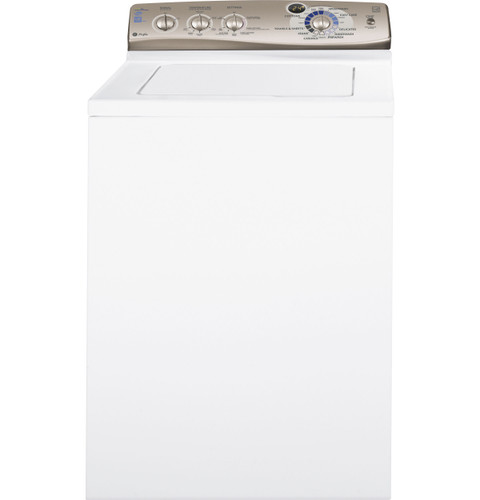
GE Profile PTWN6250MWT washer — manufacturer product image
Photo: PTWN6250MWT. Shared source photo. Photo source
Manufacturer sources

GE Profile PTWN6250MWT

Cycles & programs

Washing machine · US market · 48 owner topics

GE Profile PTWN6250M / PTWN6250MWT HydroWave Infusor washer

Covers PTWN6250MWT and the manufacturer-listed models in this family.

GE Profile PTWN6250M / PTWN6250MWT HydroWave Infusor washer

Match the washer cycle to fabric and soil level

The owner manual lists distinct wash actions and spin levels. Cottons is the general everyday cycle; Prewash removes surface dirt before a regular wash; Casuals and Easy Care handle wrinkle-free fabrics with different spin speeds; Delicates and Hand Wash use gentler agitation/spin. Speed is for small lightly soiled loads.

Towels & Sheets, Jeans, Quick Rinse and Drain & Spin each serve narrower jobs. Use the chart and garment labels; do not choose by name alone or expect every cycle to extract the same amount of water.

  1. Match garments/soil to chart and spin level.
  2. Follow Prewash with main wash; use Quick Rinse for non-soiled items.
  3. Use Drain & Spin for draining/spinning, not washing.

Choose a main wash cycle

Cottons uses regular wash/fast spin for cottons, household linens and work/play clothes; GE calls it the overall everyday choice. Prewash addresses surface dirt on heavily soiled clothes and should be followed with a regular cycle.

Casuals is gentle wash/slow spin for wrinkle-free/permanent-press clothes and knits. Easy Care is gentle wash/fast spin for similar fabrics. Compare the care label and desired extraction: clothing may leave wetter after a slow-spin program by design.

Protect delicate and special-care pieces

Delicates uses extra-gentle wash and slow spin for lingerie and special-care fabrics with light/normal soil. Hand Wash uses handwash action and extra-slow spin for items labeled handwashable. Follow the garment label; “gentle” does not make dry-clean-only clothing washable.

Jeans is gentle wash/fast spin for medium/light soil denim. The manual directs heavily soiled work jeans to Cottons Heavy. Towels & Sheets uses agitation and soak periods designed for these loads, then fast spin.

Use quick cycles for the right load

Speed is a regular-wash/fast-spin program for small, lightly soiled items needed quickly. Quick Rinse rinses and spins non-soiled items when only a rinse is wanted; it is not a full wash for dirty clothes.

Drain & Spin drains the tub and spins water out with fast spin. Use it when a cycle leaves water behind or when a separate spin is needed. It does not add detergent or wash; confirm drain hose is clear if it cannot empty.

Know why pauses and time estimates vary

Prewash and AutoSoak can alternate agitation and soak pauses. The manual also says pauses during spin may help remove soapy water. HydroWave can be quiet during portions and make a swoosh/zip as the motor changes agitation direction.

The estimate changes because fill time depends on pressure and the timer adapts. Allow the cycle to continue unless it displays an alert or water escapes. A pause alone is not evidence of a failed timer.

Handwash-labeled item needs cleaning.

Hand Wash uses extra-gentle action and extra-slow spin.

Check care tag and select that cycle.

Heavily soiled work jeans need washing.

Manual distinguishes them from medium/light denim.

Use Cottons Heavy rather than Jeans.

Water remains after wash.

Drain & Spin is the separate drain/spin program.

Check hose for kink, then run Drain & Spin.

Common questions

Does Drain & Spin wash clothes?

No. It drains and spins water out with a fast spin.

Why does Prewash pause?

It alternates agitation and soak as part of the documented cleaning action.

Specifications & model details

PTWN6250MWT: model-specific checks

Start with this washer’s layout

GE Profile PTWN6250MWT is listed as Top-Loading high-efficiency. For this recorded top-loading GE Profile design, place the first inspection at the lid, basket rim, fitted dispenser and the visible fill/drain connections. For a spin complaint, separate retained water from an uneven load, then check the selected cycle and lid state. Keep clothing loose enough to move; an agitator, impeller or automatic-fill procedure needs its own feature match.

Interpret the spin rating correctly

GE Profile PTWN6250MWT lists a maximum spin speed of 700 RPM. That maximum is not a promise for every program or load. Compare the selected spin option and load balance before interpreting a lower observed speed as a motor fault. Save the exact code and cycle name if the machine stops.

Recorded model facts

Model details relevant to this topic

SpecificationRecorded valueEvidence
DOE capacity3.6 cu ft
Manufacturer
GE Profile PTWN6250M — specs

Exact-model manufacturer resource; Specification 260192, revised 4/11, pp. 1–2; explicit base and finish listing

GE specification 260192, revised 4/11, titles the base PTWN6250M and explicitly lists finish model PTWN6250MWT. Base/retail relationship is documented here; no other suffix or serial range is inferred. Specification 260192, revised 4/11, pp. 1–2; explicit base and finish listing

Observed Oct 27, 2026
Maximum spin speed700 RPM
Manufacturer
GE Profile PTWN6250M — specs

Exact-model manufacturer resource; Specification 260192, revised 4/11, pp. 1–2; explicit base and finish listing

GE specification 260192, revised 4/11, titles the base PTWN6250M and explicitly lists finish model PTWN6250MWT. Base/retail relationship is documented here; no other suffix or serial range is inferred. Specification 260192, revised 4/11, pp. 1–2; explicit base and finish listing

Observed Oct 27, 2026
Number of CyclesMultiple
Manufacturer
GE — PTWN6250MWT

Exact-model manufacturer resource; specification fields

Exact SKU PTWN6250MWT; manufacturer specification label: Number of Cycles.

Observed Oct 27, 2026
Wash programsCottons, Prewash, Casuals, Easy Care, Delicates, Hand Wash, Speed, Drain & Spin, Towels & Sheets, Jeans, Quick Rinse
Manufacturer
GE Profile PTWN6250M — owner

Exact-model manufacturer resource; Owner manual 49-90400-1, 07/06/10; pp. 1, 4–7, 9

GE specification 260192, revised 4/11, titles the base PTWN6250M and explicitly lists finish model PTWN6250MWT. Base/retail relationship is documented here; no other suffix or serial range is inferred. Owner manual 49-90400-1, 07/06/10; pp. 1, 4–7, 9

Observed Oct 27, 2026
More background: Choose washer cycles for the load

Category & symptom guidance

Choose washer cycles for the load

Sort before choosing a program

Group laundry by care label, color, soil level, and fabric type. Separate items that may transfer dye and avoid combining delicate fabrics with heavy pieces that can abrade or tangle them. Empty pockets, close fasteners, and pretreat stains according to product directions before loading.

Choose a cycle based on the garment’s care instructions and the washer manual’s description. Names such as Normal, Delicate, Quick, or Bedding are not standardized promises across brands. Read what the program changes—such as wash action, duration, rinse, or spin—rather than selecting by name alone.

Account for washer design

A front-load washer tumbles laundry in a horizontal drum and generally uses low visible water. Top-load washers may use an agitator post or a low-profile impeller or wash plate; loading guidance and fabric movement differ across those designs. High-efficiency sensing top-loaders may use less water than conventional-fill machines. Do not judge cleaning by whether water covers the load unless the exact manual says that is expected.

Bulky, waterproof, or water-resistant items need special attention. Some manuals restrict these items to specific cycles because they can create an unbalanced load. Check the exact instructions before washing a comforter, mattress cover, outdoor garment, or large item. A cycle name on a different brand does not establish that it is suitable.

Use quick and specialty cycles thoughtfully

A quick cycle is usually intended for a limited type of load, such as lightly soiled items, but confirm the specific washer’s description and capacity guidance. It may not provide the same treatment as a longer program for heavy soil or bulky laundry. Specialty programs can adjust wash action or timing for a fabric or item type, and some are available only on certain models.

The GE PTWN6250M manual provides cycle descriptions for that named top-load example, including its own quick and specialty programs. Those names and actions cannot be transferred to another washer. Choose the closest supported program in your own manual, and use the garment care label when the two sources appear to conflict.

Judge results and adjust one factor

After a cycle, inspect whether soil was removed, items are tangled, or fabric feels wetter than expected. An unbalanced load, overloading, excess detergent, and a cycle mismatch can affect results. Change one owner-level factor at a time: load size, sorting, detergent amount, or a compatible cycle. Use the manual before adding options or repeating a wash.

A pause, quiet interval, or changing time display may be normal during sensing, filling, or load balancing. If the washer cannot complete a cycle, repeatedly fails to drain, leaks, or moves excessively, stop and consult the troubleshooting section. Do not reach into moving parts or attempt to defeat a door or lid lock to retrieve laundry.

Match detergent use to the washer and soil

Use detergent labeled for your washer type and follow its package directions and the washer’s dispenser guidance. Too much detergent can leave residue or excess suds, while too little may not clean a heavily soiled load. Concentrated products make a small-looking dose easy to overestimate, so use the product’s measure and adjust only when the load or soil level calls for it.

If items feel slick, smell strongly of detergent, or show residue after washing, check whether the load was crowded and whether the dose exceeded the product guidance. On a high-efficiency washer, use HE detergent where the washer calls for it; excess suds can interfere with rinsing and cycle behavior. Do not add extra detergent simply because the washer used little visible water. Recheck the care label and cycle description before choosing a hotter or more vigorous wash to compensate.

What to do with what you find

A delicate item’s care label calls for gentle treatment, but the selected program is described as vigorous in the washer manual.

That program may damage the item.

Choose a compatible gentle program or follow the garment label’s alternative care method.

A load comes out wet and visibly unevenly distributed, with no leak or drain warning.

Load balance or cycle choice may have limited spin extraction.

Redistribute the load as the manual permits and select a compatible drain or spin procedure.

Have these details ready

  • Garment care labels and exact cycle descriptions
  • Observed load balance, cleaning, and drainage results

Common questions

Are cycle names consistent across brands?

No. Check the exact washer manual for the action and load the program is intended to handle.

Can I wash waterproof items on any bulky cycle?

No. Some manuals restrict waterproof or water-resistant items to specific cycles. Confirm suitability in your model’s instructions.

General background sources

These sources support the shared guide. Exact model specifications and matched family procedures have their own sources above.

  1. media.us.lg.com/m/6d5d734b0871fbdf/original/WM4000_Owners-Manual.pdf
  2. images.salsify.com/image/upload/s--4zVee-ir--/44e1044e71329cd6678e18edc3950e53c5694077.pdf
  3. www.energy.gov/cmei/buildings/consumer-clothes-washers
  4. producthelp.whirlpool.com/Laundry/Washers/Product_Info/Washer_Product_Assistance/Auto_Sensing_in_a_Top_Load_HE_Washer

Owner guidance by Specs & Parts, drafted with GPT-6 Luna. Sources and scope.

Sources for PTWN6250MWT

GE — PTWN6250MWT Observed Oct 27, 2026
GE Profile PTWN6250M — owner Observed Oct 27, 2026
GE Profile PTWN6250M — specs Observed Oct 27, 2026
Suggest a correction