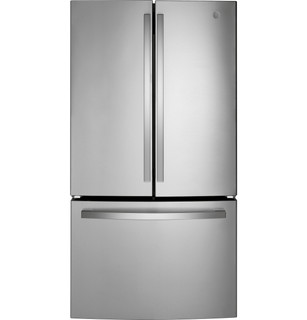
GE GNE27JYMFS French-door refrigerator
GNE27JYMFS: separate warm compartments, airflow, and filter-related water symptoms
GNE27JYMFS is a French-door refrigerator with a bottom freezer, internal water dispenser, factory ice maker, and internal temperature controls. If cooling, water, or ice changes, report which compartment is affected and whether dispensing changed at the same time.
The GE product page lists an XWFE filter for this model. Do not transfer the PFE28 RPWFE cartridge guidance to the GNE27. The cartridge, control response, and water path are model-specific; an exact code and the point of the symptom are more helpful than a general claim that “the fridge stopped.”
Measure both compartments before changing temperature settings
Put a refrigerator thermometer in the fresh-food area and a separate one in the freezer; note each reading and whether the doors were opened often or a large warm load was added. “Not cooling” can mean the fresh-food section is warm while the freezer remains cold, or both sections are warming. GE’s general advice distinguishes these patterns because a shared cooling system moves cold air between compartments.
Check that the doors close fully, no drawer or package blocks the gasket, and visible air openings are not covered. Avoid repeated adjustments to the internal controls. Record the existing settings and use the manual’s stabilization guidance after any one change. If both sections keep warming, protect food and schedule service rather than cycling through settings.
Use the internal water dispenser location as a clue
The GNE27 product page places water inside the fresh-food section, so a leak at that dispenser is not an exterior door-paddle leak. Note whether water appears during dispensing, after filter replacement, or without use. Dry the shelf and floor of the compartment and observe where it reappears. A small spill in the dispenser recess differs from water under the appliance or around a supply connection.
If the leak follows filter handling, verify the XWFE is seated according to the model instructions and inspect for visible water around the cartridge area. Do not pull internal tubing or force the filter. If water continues to flow or reaches electrical components, stop using the dispenser and close the accessible refrigerator supply valve if safe.
Replace XWFE on the schedule and interpret its status carefully
GE’s filter replacement guidance covers GNE27 models and describes six months or roughly 170–200 gallons as general replacement guidance, with reduced flow as another reason to replace sooner. The exact user manual and water conditions still matter. The GE support article says the refrigerator water supply does not need to be shut off for the listed cartridge replacement; follow its placement and removal directions for the installed filter.
XWFE includes RFID status behavior that can affect water and ice: GE says an expired or improperly recognized cartridge can cause a red filter status, and an incompatible/wrong filter can produce “ERR” and disable dispensing. Read the whole message. A filter warning is not automatically a compressor or ice-maker failure. Use only the cartridge and bypass accessory documented for the model.
If ice slows, compare ice production with dispenser water flow
Check whether the internal water dispenser also has reduced flow. When both water and ice are affected, filter status, supply, and cartridge seating become useful checks. If water works normally but ice production alone stops, record whether the ice maker is switched on, whether the bin is full or misseated, and whether the freezer is cold enough per the manual.
Do not remove a jammed ice mechanism with tools or pour hot water into it. GE lists a factory ice maker on this exact model, but owner controls and reset behavior should come from its manual. Photograph an ice-maker indicator and report any buzzing or water leak separately.
Check the bottom-freezer drawers and door closure after cleaning
The GNE27 has French doors above a pull-out freezer with two-level storage according to its product listing. After loading, confirm the lower drawer closes all the way and no package is trapped behind or above a drawer. A freezer drawer that remains slightly open can admit humid room air, create frost, and warm the freezer. Check the gasket for visible debris and the drawer alignment from outside.
Clean removable shelves and drawers only as the manual permits; heavy glass parts may require support when removed. Keep air paths open and avoid packing food into the freezer so tightly that the drawer cannot close. If frost returns despite clear closure, document its location and schedule service.
Give service a water-and-temperature timeline
For service, provide the model and serial label, both compartment readings, the filter model/status, the ice-maker behavior, and when the symptom began. Note whether the refrigerator was moved, lost power, or had a filter changed shortly beforehand. If water is leaking, include the first location and whether it followed dispenser use.
Stop using the water system if a leak persists; preserve the filter packaging if you suspect a cartridge mismatch. Do not remove panels or test a water valve. A technician can assess the sealed cooling and water systems from these owner observations.