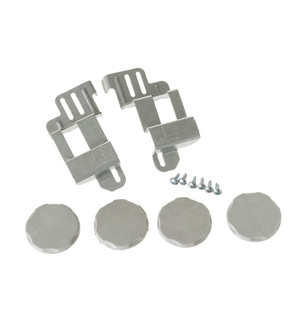
Specifications for GE24STACK with owner checks for this product design. Use the matching manual for control sequences and replacement parts.
Specifications & model details
GE24STACK: model-specific checks
Start with the source identity
GE GE24STACK is the exact code in this catalog record. This topic should be evaluated for that code and dryers category. The original source record is linked below; unrecorded settings, dates and compatibility remain unknown.
Plan dryer removal by separating appliance haul-away from material recycling, confirming local acceptance, and protecting the delivery route. Electric, gas, and ventless models have different disconnection and handling needs.
Owner guide: Recycling & disposal
Category & symptom guidance
Recycling & disposal
4 minute read · Shared guidance for clothes dryers
Find a receiving program before pickup
Start with your local waste authority, municipal recycling program, or a retailer that offers appliance take-back. Ask whether it accepts clothes dryers, whether the unit must be intact, and whether pickup or drop-off is available. Confirm fees, scheduling, access requirements, and whether the program handles gas appliances. Acceptance rules vary by location and by contractor, so a general recycling statement does not guarantee that a nearby site will take the machine.
EPA guidance encourages checking local programs because appliances may be handled through municipal collection, retailer take-back, or specialized recyclers. Ask what happens to the appliance after collection and whether the provider separates metal and other recoverable materials. If no program is available, ask the local waste office for the permitted bulky-item route rather than leaving the dryer at the curb without confirmation.
Call or check the local waste authority and retailer take-back terms.
Clarify who will disconnect the dryer before pickup. Electric dryers should be isolated and disconnected by someone equipped for the exact supply connection; gas dryers need the gas supply safely disconnected and capped by an appropriate professional. Do not cut cords, remove electrical covers, or disconnect a gas line to speed up a haul-away. If the removal crew does not provide disconnection, book a qualified installer before the collection appointment.
For a vented model, detach the exhaust connection only when it can be done safely and without damaging the building duct. For condenser or heat-pump units, empty any water reservoir according to the model's instructions and ask the collector whether hoses or accessories should remain with the appliance. Keep removed parts and manuals only if the recycler or new owner requests them.
Prepare the path and the appliance
Clear the route from the laundry area to the exit and protect corners or flooring where the removal team will turn. Measure doorways and stairs, secure pets, and remove loose items around the machine. Confirm whether doors, pedestals, stacking hardware, or closet trim need to be addressed by the crew. A stacked dryer may need to be separated from the washer before removal; do not assume the pickup team will dismantle a stacked pair unless that service is included.
Ask whether the recycler wants the lint screen, cord, hoses, and control panel intact. Do not strip the dryer for scrap unless the receiving program explicitly asks for particular materials. Leaving the machine assembled can preserve safe handling and allow the recycler to identify the appliance type.
Choose reuse when the unit is working
If the dryer still works and is safe, consider resale, donation, or a reuse program before material recycling. Describe its condition honestly, including known faults, unusual noise, heat performance, and whether it is gas or electric. Provide the complete model identifier and any missing accessories so the recipient can check installation requirements. Confirm that the receiving organization accepts the appliance and can handle the disconnection and delivery; some programs do not accept gas units or appliances that need repair.
A working dryer is useful only if the next owner can install it correctly. Share the vent type, dimensions, and any known constraints, but do not promise that a particular home has compatible connections. For an appliance that has had smoke, overheating, or a suspected gas or electrical problem, do not pass it on as ready for use; disclose the condition and follow local recycling or disposal guidance.
Keep disposal and purchase records aligned
When replacing the machine, verify that the retailer's haul-away applies to your delivery and that it covers the old appliance's location, fuel type, and installation condition. Ask whether removal is refused if the unit remains connected, is stacked, or cannot pass through the route. If the retailer excludes disconnection or stairs, arrange those services in advance so delivery day does not leave an unusable appliance in the room.
Save the pickup confirmation, recycling receipt, or donation acknowledgment. If the appliance is under warranty or involved in an unresolved service claim, take photos of the model label and condition before removal and retain relevant service records. Do not discard documentation until any purchase, warranty, or return issue is resolved.
What to do with what you find
A retailer offers haul-away but has not confirmed gas disconnection or stacked-unit removal.
Collection may fail or leave connection work unfinished.
Get the included scope in writing and schedule any excluded disconnection or dismantling.
The dryer works and a local reuse program accepts its type and condition.
Passing it on may extend use before material recovery.
Disclose condition and connection type, then coordinate safe disconnection and transport.
Have these details ready
Local program or retailer acceptance, scheduling, and fee details.
Written removal scope covering disconnection, stacking, stairs, and haul-away.
Appliance condition and full identifier if donating, reselling, or resolving a claim.
Common questions
Will a retailer always recycle a dryer it hauls away?
Not necessarily. Ask the retailer or contractor where it goes and whether it is reused, recycled, or handled through another route.
Can I disconnect a gas dryer before pickup?
Arrange an appropriate professional to disconnect it. Do not loosen gas connections yourself for haul-away.
General background sources
These sources support the shared guide. Exact model specifications and matched family procedures have their own sources above.
Explicit product_first_distribution_date in exact OEM primary SKU record; not a manufacturing year or import date. Primary source: https://www.geappliances.com/appliance/GE-Washer-Dryer-24-Stack-Bracket-Kit-GE24STACK