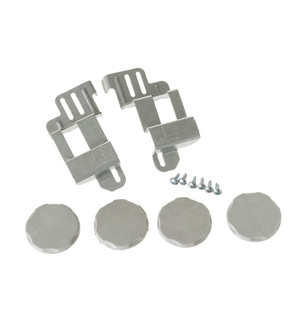
Specifications for GE24STACK with owner checks for this product design. Use the matching manual for control sequences and replacement parts.
Specifications & model details
GE24STACK: model-specific checks
Start with the source identity
GE GE24STACK is the exact code in this catalog record. This topic should be evaluated for that code and dryers category. The original source record is linked below; unrecorded settings, dates and compatibility remain unknown.
Establish a dryer’s identity and timeline from labels and documents, then use official model records to understand what is known without guessing age from styling.
Owner guide: Model age & history
Category & symptom guidance
Model age & history
5 minute read · Shared guidance for clothes dryers
Identify the exact dryer
Use the rating label as the starting point for identifying a dryer. Find it where the owner documentation says, commonly around the door opening or cabinet, without removing panels. Photograph it and copy the full model and serial exactly, including punctuation and suffix letters. Those details can distinguish fuel, finish, market, or revision. Record any country or certification information shown, and keep the label image with the receipt and installation record.
Do not estimate a manufacture date from styling or a model number unless the manufacturer publishes a decoding method for that product family. Serial formats vary by brand and year, and unofficial charts may be incomplete. If a stacked dryer makes the label hard to reach, use purchase or installation paperwork rather than moving or dismantling the unit.
Record the full model and serial as printed.
Note label details and keep a clear photo with appliance records.
Build a timeline from records
Purchase, delivery, and installation dates answer different questions. A receipt supports the sale date, a delivery record shows when the dryer arrived, and an installer’s invoice may document setup or a fuel conversion. Gather these before estimating how long the dryer has been in service. When considering a used dryer, ask for original paperwork and a clear label photo instead of relying on the seller’s approximate age.
A model’s introduction date is not the age of an individual unit. Retailers may sell old stock after a model is replaced, and similar codes can continue across variants. Treat manufacture date as unknown unless the maker confirms it from the serial or a reliable product record. If that date matters, ask the manufacturer to interpret the exact serial.
Keep service records with the timeline. Note major repairs, the date, and what was replaced; this helps distinguish an older unit with documented care from one with unexplained interruptions or faults. Warranty terms and proof requirements depend on the applicable warranty, so save purchase evidence and the version of the terms that applied.
Collect receipt, delivery, installation, and service documents.
Separate purchase, delivery, setup, and repair dates.
Request manufacturer confirmation if a verified manufacture date matters.
Read model literature within its scope
A specification sheet documents claims for a model family at the time it was issued; it does not date a specific dryer. LG’s DLEX4000/DLGX4001 specification sheet is dated December 11, 2020, and lists capacity, venting, controls, energy figures, and a warranty summary. Use those details only for the family and document date covered.
Match the full label code and suffix before applying a feature claim. Do not assume a DLEX4000 detail applies to DLEX4070, DLEX5500, or a later family because the numbers look related. Likewise, the LG support record for DLEX4000W is one official product entry, not a complete history of every variant. Note whether a source is a brochure, manual, or support record, and check its date.
Match the document family and suffix to the rating label.
Record the document date and type.
Treat feature claims as scoped evidence, not a serial-date decoder.
Check notices and support history
For an unfamiliar or used dryer, search the official CPSC recall database by exact brand and model, then read the notice’s serial criteria. Model age alone does not show whether a dryer was recalled, repaired, or is currently safe. Ask the seller for records showing completion of any remedy and verify them through the party named in the notice.
Manufacturer support pages may provide manuals, parts, or service information, but records vary by market and model. A page for one suffix does not establish parts fit for another. Before ordering a component, confirm compatibility through the exact model’s official parts route or a supplier that checks the full model code.
Search official recall listings using the exact identifier.
Request service and remedy records from the seller.
Verify exact-model fitment before buying parts.
Assess condition and plan the handoff
Age alone cannot predict remaining service life. Ask about completed work, repeated drying or airflow complaints, and whether the exhaust or condensate system suits the dryer’s design. For a vented model, inspect the visible duct route and ask whether concealed sections have been cleaned. For condenser or heat-pump models, ask about owner-accessible filter and condensate maintenance and service history for persistent warnings.
If the seller can demonstrate a normal cycle with the installation complete, check that controls respond and the drum turns, and listen and smell for unusual noise or odor. A brief demonstration cannot rule out intermittent faults. Base the decision on documented condition, installation needs, and clear return or remedy terms rather than an unsupported age threshold.
For replacement, check local reuse and recycling options before pickup. Acceptance depends on the community and the dryer’s condition; ask the retailer, municipality, or recycler what they take and whether pickup includes removal. Disclose known faults and unresolved notice history to a recipient, and keep transfer or recycling proof with the appliance timeline.
Ask for repair records and explanations for replaced parts.
Confirm the dryer design fits the home and installation.
Check local reuse or recycling options and retain transfer records.
What to do with what you find
The serial format cannot be tied to an official date method.
A precise manufacturing date would be speculative.
Use the purchase timeline and request manufacturer confirmation if the production date matters.
A used dryer has no clear service history and shows airflow or overheating signs.
Age is less important than the unresolved condition and potential hazard.
Do not accept it as ready for use until the concern is evaluated and documented.
Have these details ready
Full model and serial label
Purchase, delivery, and installation records
Applicable dated specification sheet or manual
Recall eligibility and remedy documents
Service history and current condition observations
Common questions
Can the year on a brochure tell me when my individual dryer was made?
No. It dates the document or product information, not the production of a specific unit.
Does a matching family name prove parts compatibility?
No. Confirm parts against the exact model and suffix through an official or model-aware fitment source.
General background sources
These sources support the shared guide. Exact model specifications and matched family procedures have their own sources above.
Explicit product_first_distribution_date in exact OEM primary SKU record; not a manufacturing year or import date. Primary source: https://www.geappliances.com/appliance/GE-Washer-Dryer-24-Stack-Bracket-Kit-GE24STACK