What is recorded for FFBD2420US
Frigidaire FFBD2420US — Product type: Standard; Drying method: Heated Dry.
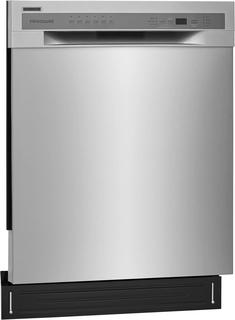
Frigidaire FFBD2420US
Dishwasher · US market · 48 owner topics
Guidance for Frigidaire dishwashers. Check the feature and control descriptions against your model.
Specifications & model details
Frigidaire FFBD2420US — Product type: Standard; Drying method: Heated Dry.
Frigidaire FFBD2420US lists Heated Dry for drying. Evaluate the result after the selected program finishes, considering rinse-aid instructions, load arrangement and plastics. Do not transfer a heated-dry, door-opening or fan-dry setting from another Frigidaire model.
The recorded water measurement for Frigidaire FFBD2420US is 3.2 gal/cycle. It describes the source test basis, not the amount every cycle will use. Compare the actual selected program, soil/loading conditions and interrupted operation before treating that number as a fill-volume diagnostic limit.
Use symptoms and safe observations to decide whether a dishwasher issue is a loading, supply, drain, drying, or service problem.
Category & symptom guidance
Start with what changed: cycle fails to start, dishes remain dirty, water stays in the tub, drying is poor, or water escapes. Note whether the issue happens every time, only on one cycle, or after a recent move or plumbing change. A symptom pattern is more useful than a broad label such as “broken.”
Look for a displayed code or indicator and photograph it before clearing anything. Codes are specific to model families, so do not interpret a number using a search result for another brand. Record the cycle and options selected; some wash and drying options intentionally add time or fan operation.
For poor cleaning, check whether dishes block spray-arm rotation, the detergent cup, or a lower wash path. Confirm the filter is clean and correctly seated. If a specific rack remains dirty, compare its spray coverage and loading pattern with an otherwise similar load rather than changing detergent and options together.
Use automatic-dishwasher detergent only. Consider cycle length and product form when a tablet remains partly dissolved. A rinse-only cycle may not dispense detergent, while a short wash may use a different placement on some models. Confirm the machine’s own instructions before diagnosing a dispenser failure.
If filling seems weak, compare the kitchen faucet flow with its usual flow and see whether other household fixtures are affected. A temporary supply issue can mimic an appliance fault. Do not open the dishwasher cabinet or manipulate the inlet valve. If the faucet is normal but the machine still does not fill, collect the cycle stage and any indicator for support.
If water remains after a cycle, inspect only accessible filter and air-gap areas, if present. A disposer connection or shared drain can be obstructed. A high drain loop or air-gap arrangement is installation-specific; do not change hose routing based on a generic diagram. Repeated standing water, sewage odor, or leakage needs prompt assessment.
Plastic items often retain droplets, and condensation drying may leave more moisture than heated drying. Open the door only as directed by the machine’s cycle guidance. Some fan-assisted models continue drying after the wash ends; other designs may open the door automatically. Do not treat a fan or door motion as universal behavior.
If glass and ceramic items are also wet, check rinse-aid supply, loading that traps water in cups, and the selected drying option. Use the exact product support page for design-specific advice. A change in sound or drying result after a filter clean can be useful evidence, but it does not prove a particular component failed.
Before contacting support, gather the model identifier, code or indicator, cycle, approximate point of failure, and whether water is present. Take a photo of a visible leak or damaged rack component. For a one-time poor-cleaning load, first correct an obvious obstruction and compare again; for a recurring drain, fill, or leak fault, do not keep rerunning cycles to see if it clears.
If repair is needed, ask what diagnosis and parts are included in the estimate, whether travel or inspection is charged, and whether tax or follow-up visits are separate. Compare the total quoted amount with replacement options using your own constraints and the Energy Department’s energy-use information, rather than relying on a generic repair-cost average.
A component or installation issue may require diagnosis beyond owner observations.
No. Use the code list for the exact model family.
If water is escaping, avoid further operation and use the owner’s cancel procedure only if it can be done safely.
These sources support the shared guide. Exact model specifications and matched family procedures have their own sources above.
Owner guidance by Specs & Parts, drafted with GPT-6 Luna. Sources and scope.
Recorded model facts
| Specification | Recorded value | Evidence |
|---|---|---|
| Maximum place settings | 8 | CertificationENERGY STAR — Dishwashers dishwashers.csv; row 271; ENERGY STAR ID 2453143 Certification dataset declaration; check manufacturer installation documents for fit and clearances. Observed Oct 31, 2026 |
| Connected capability | No | CertificationENERGY STAR — Dishwashers dishwashers.csv; row 271; ENERGY STAR ID 2453143 Certification dataset declaration; check manufacturer installation documents for fit and clearances. Observed Oct 31, 2026 |
| Drying method | Heated Dry | CertificationENERGY STAR — Dishwashers dishwashers.csv; row 271; ENERGY STAR ID 2453143 Certification dataset declaration; check manufacturer installation documents for fit and clearances. Observed Oct 31, 2026 |
| Listed features | Self-Cleaning Filter | CertificationENERGY STAR — Dishwashers dishwashers.csv; row 271; ENERGY STAR ID 2453143 Certification dataset declaration; check manufacturer installation documents for fit and clearances. Observed Oct 31, 2026 |
| Soil-sensing capability | Yes | CertificationENERGY STAR — Dishwashers dishwashers.csv; row 271; ENERGY STAR ID 2453143 Certification dataset declaration; check manufacturer installation documents for fit and clearances. Observed Oct 31, 2026 |
| Product type | Standard | CertificationENERGY STAR — Dishwashers dishwashers.csv; row 271; ENERGY STAR ID 2453143 Certification dataset declaration; check manufacturer installation documents for fit and clearances. Observed Oct 31, 2026 |
| Tub material | Stainless Steel | CertificationENERGY STAR — Dishwashers dishwashers.csv; row 271; ENERGY STAR ID 2453143 Certification dataset declaration; check manufacturer installation documents for fit and clearances. Observed Oct 31, 2026 |