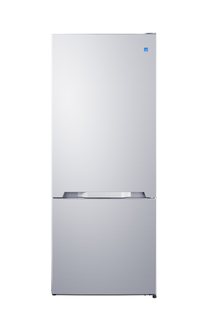
Specifications for FFBF151W with owner checks for this product design. Use the matching manual for control sequences and replacement parts.
Specifications & model details
FFBF151W: model-specific checks
Choose the recorded defrost branch
Summit FFBF151W is listed with Automatic defrost. Use the branch for the listed defrost system. Note whether frost is confined to a door edge, covers stored packages, or returns on an interior surface. Door closure, moisture entry and a defrost-system problem produce different patterns.
Use thermometer readings and compartment-specific observations to decide what to check externally, how to protect food, and when to arrange service.
Owner guide: Not cooling
Category & symptom guidance
Not cooling
5 minute read · Shared guidance for refrigerators
Measure before deciding what is warm
A refrigerator can feel cool to the hand while food is above a safe storage temperature. Place an appliance thermometer in the refrigerator and check the reading after it has had time to reflect the compartment conditions; use the thermometer instructions for placement and reading. The FDA recommends a refrigerator at or below 40°F and a freezer at 0°F. Note both readings, the time, and which shelf or area seems affected. A single reading describes that moment, so note whether it changes on a later check. Do not infer that a particular internal part has failed from a temperature alone. If food safety is uncertain, prioritize moving perishables to a reliably cold location while you investigate the external conditions.
Use an appliance thermometer and record the refrigerator and freezer readings.
Note the time and location of each reading.
Move vulnerable food to safe cold storage if temperatures are outside recommended limits.
Freezer cold, refrigerator warm
When the freezer remains cold but the refrigerator compartment is warm, first check what you can see without moving or dismantling internal parts. Look for food packages pressed against visible air outlets or blocking the path between shelves. Check whether the refrigerator door closes fully and whether a container or drawer is interfering with closure. Compare readings from more than one refrigerator shelf to see whether the warmth is limited to one area. A blocked outlet or uneven shelf reading is an observation that can guide rearranging food, but it does not prove the cause. If clearing visible obstructions and confirming door closure do not improve readings, record the pattern and arrange service rather than trying to inspect ducts or fans.
Check visible outlets and keep food from pressing against them.
Confirm containers and drawers do not prevent the door from closing.
Record whether one shelf or the whole refrigerator compartment is warm.
Both compartments warm
If both the refrigerator and freezer readings are high, confirm that the appliance appears powered and check whether its plug is visibly connected, if accessible without moving the refrigerator. Look for a tripped household breaker only if you can safely identify it and follow your household electrical guidance. Check that the doors were not left ajar and that large items are not preventing full closure. Do not pull the refrigerator out to inspect wiring or reach behind it. A power interruption or open door can explain the timing of a temperature rise, but persistent warmth after power and closure are restored still needs diagnosis. Protect food first: the FDA's recommended limits are 40°F or below for the refrigerator and 0°F for the freezer.
Confirm visible power and full door closure without accessing wiring.
Note any known outage or door-left-open event and its timing.
Protect food and arrange service if readings stay high.
Only one shelf or area is warm
When one shelf seems warmer than the rest, use the thermometer to check that shelf and another location under similar conditions. Note nearby food placement and whether packages cover a visible outlet. Avoid moving all the food at once before recording the original arrangement; the pattern can help a technician understand the report. If rearranging a visibly obstructed outlet changes the readings, continue monitoring with the thermometer and keep the airflow path clear. If temperatures remain uneven or outside safe limits, do not assume that the warm area is harmless because other shelves feel cold. Keep sensitive food at safe temperatures elsewhere and document the readings for service.
Compare thermometer readings from the affected shelf and another shelf.
Record nearby obstructions before rearranging them.
Recheck and document readings after clearing visible blockage.
Decide when to call for repair
Arrange service when measured temperatures remain above the recommended limits despite clear doors, unobstructed visible outlets, and apparent power. Tell the provider whether the freezer is cold, both compartments are warm, or only a specific shelf is affected. Include thermometer readings and when they were taken. This description is more useful than guessing at a compressor, fan, or control problem; component diagnosis requires inspection. While waiting, keep food in a dependable refrigerator or freezer and avoid repeatedly opening the warm appliance. If the issue follows a power interruption, record when power returned and whether the readings recover, but do not wait to protect food. The FDA temperature guidance gives an objective way to describe conditions and judge storage risk.
Share readings, timing, and the affected compartment with a technician.
Keep food in reliably cold storage while cooling is uncertain.
Avoid component diagnosis or internal inspection.
What to do with what you find
The freezer reading is near its recommended condition, but the refrigerator is above 40°F.
The cooling difference is compartment-specific; visible airflow or closure conditions are worth checking, but no component is identified.
Clear visible outlet obstructions, confirm door closure, compare shelf readings, and call for service if warmth persists.
Both compartment readings are high and the appliance appears to have lost power or a door was left open.
The event may explain the timing, but continued high readings mean cooling has not been confirmed as restored.
Confirm visible power and closure, protect food, and recheck with thermometers; arrange service if temperatures remain high.
One shelf reads warmer than another, with food covering a visible outlet.
A local obstruction coincides with the warm area, though the reading alone does not prove it is the only cause.
Clear the visible path and compare thermometer readings again; document persistent unevenness for a technician.
Have these details ready
Thermometer readings from refrigerator and freezer, with times.
Which shelf or compartment is affected and whether the pattern persists.
Door closure, visible outlet obstruction, and apparent power observations.
Common questions
What temperature should my refrigerator hold?
The FDA recommends 40°F or below for the refrigerator and 0°F for the freezer. Use an appliance thermometer.
Does a cold freezer prove the refrigerator is working properly?
No. Measure both compartments. If the refrigerator is warm while the freezer is cold, report that specific pattern and check visible airflow obstructions.
General background sources
These sources support the shared guide. Exact model specifications and matched family procedures have their own sources above.