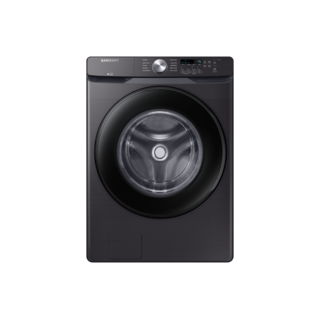
Samsung washer designs differ in drawer, drain filter, and control layouts. Find the exact owner guide before removing an accessible filter or starting a tub-clean program. Record an odor, suds, or drain symptom before cleaning, and note whether it returns. Do not assume every Samsung washer has the same pump-filter access; front-load and top-load models can differ in how water is contained and released.
Samsung WF45T6000AV/A5 is the exact code in this catalog record. This topic should be evaluated for that code and washers category. The original source record is linked below; unrecorded settings, dates and compatibility remain unknown.
A practical upkeep routine for washer surfaces, dispensers, hoses, and loading habits, with design-specific differences called out where they matter.
Owner guide: Preventive maintenance
Category & symptom guidance
Preventive maintenance
3 minute read · Shared guidance for washing machines
After a wash: let moisture escape
When unloading, look for wet laundry left behind, water pooled in a fold of the door seal, or detergent residue on the drawer and rim. Remove stray lint, hair, and small items you can reach without tools. Leave the door or lid ajar if the laundry area and household allow it; airflow helps the damp interior dry. Keep children and pets away from an open appliance.
For a front-load washer, wipe visible water from the door glass and the accessible folds of the door gasket. Check the folds for a sock, tissue, or debris, but do not pull, stretch, or pry the seal. For a top-loader, wipe the lid and basket rim. If your model has a detergent drawer, pull it out only as its manual allows and wipe visible spills; not every washer has a removable drawer.
Use products and loads that suit the washer
Use detergent labeled for the washer type and measure according to the detergent label, load soil, load size, and water conditions. Too much detergent can leave residue or create excess suds; adding more is not a dependable fix for poor cleaning. Follow garment care labels and the washer’s dispenser directions. Do not pour softener directly onto clothing if the model provides a dispenser.
Leave room for items to move, and distribute the load in the way the washer’s instructions describe. High-efficiency top-loaders may use less water than older conventional machines, so seeing laundry above the water surface does not by itself show a fault. On a GE PTWN6250M, the manual describes automatic load sensing and Infusor wash action; its low water level is expected for that exact design. Other top-loaders may behave differently.
Inspect water connections without disturbing them
Occasionally look at the visible supply hoses and their connections for cracking, bulging, dampness, corrosion, or water marks. Do not tug on a hose to test it or tighten a fitting that is not leaking. If you find moisture, close the household water valves if accessible and safe, then arrange diagnosis; a small leak can damage flooring or cabinets.
Hose replacement intervals are model-specific. GE’s PTWN6250M manual recommends replacing its hoses every five years, and LG gives the same interval in the WM4000H*A manual. Treat those as instructions for those listed products, not a universal rule for every washer. If your washer’s manual gives a different interval, follow that guidance. Where hoses are being replaced, the manuals call for new hoses rather than reusing old ones.
Choose cleaning by the symptom
A faint product film on a drawer or rim calls for wiping the affected surface, not pouring a stronger chemical into the washer. Use a soft cloth and the cleaner permitted by the appliance manual. Avoid abrasives and solvents that can scratch or damage finishes. If residue returns, check whether product is being overfilled or placed in the wrong compartment before repeating a cleaning cycle.
Odor and visible residue can have different causes. Remove damp items promptly, clear accessible debris, and use a washer-cleaning cycle or product only if the exact model’s instructions specify one. Do not mix chlorine bleach with vinegar, ammonia, or another cleaner. A recurring odor despite dry-out and correct product use, or water remaining where the manual says it should drain, is a reason to seek model-specific troubleshooting.
What to do with what you find
A top-load HE washer shows only part of the clothing covered by water.
Some sensing and low-water designs wash with less visible water; level alone does not establish a problem.
Compare behavior with the washer’s own manual and check whether the completed load is clean and rinsed.
A visible hose is wet, cracked, swollen, or leaving water marks.
The connection or hose may be leaking or deteriorating.
Avoid using the washer until the leak is contained and the connection is assessed.
Have these details ready
Washer model and design: front-load or top-load, and agitator or impeller if known.
Where residue, odor, or moisture appears and whether it returns after cleaning.
Visible condition of supply hoses and whether the washer completes a normal cycle.
Common questions
Should I clean the washer after every load?
Usually, routine unloading, wiping obvious spills, and allowing the interior to dry are enough. Follow the exact model’s schedule for deeper cleaning.
Is a quiet pause during sensing a failure?
Not necessarily. Some sensing washers pause while estimating a load. If the cycle does not proceed or repeatedly leaves laundry unwashed, use the model’s troubleshooting guidance.
General background sources
These sources support the shared guide. Exact model specifications and matched family procedures have their own sources above.