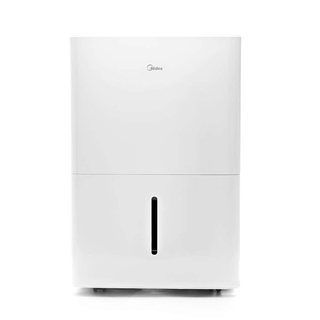
Specifications for MAD22C1AWS with owner checks for this product design. Use the matching manual for control sequences and replacement parts.
Specifications & model details
MAD22C1AWS: model-specific checks
What this model’s energy figure means
Midea MAD22C1AWS is listed at 278 kWh/year. Using an illustrative $0.20/kWh, that is $55.60 per year, or $4.63 per month, on the source’s annual test basis. For your rate, multiply 278 by your electricity price per kWh. Compare labels from the same test method; age, actual use, water heating and load choices can change the household result.
Midea MAD22C1AWS is rated at 22.31 pints/day. This is removal over a day under the source test conditions, not the size of its bucket or an expected amount in every room. Compare room humidity, temperature, run time and whether collected water is staying in the bucket or leaving through a permitted drain. Different test standards must be reconciled before comparing pint ratings.
Estimate electricity cost from energy use and your rate, then refine the estimate using realistic hours, cycling, and humidity demand.
Owner guide: Running cost calculator
Category & symptom guidance
Running cost calculator
4 minute read · Shared guidance for dehumidifiers
Choose the right energy figure
Start with the unit’s rating label or product documentation. If you have a power figure in watts, it describes power while operating under the stated conditions; it is not energy consumed over a billing period. If the product provides an ENERGY STAR annual energy figure, use it as a standardized product comparison or estimate on its stated basis, not as a promise of your household total.
Check the units and what the figure represents before calculating. Do not treat a rated moisture-removal capacity as electricity use. If you cannot find a usable energy figure, consult the manufacturer’s product page or documentation for the exact model. Keep the model and the source of the number with your estimate so you can revise it if the value or assumptions change.
Record the energy number, unit, and source.
Confirm whether it is power, energy over time, or an annual estimate.
Convert operating power into kilowatt-hours
For a power rating in watts, convert to kilowatts by dividing by 1,000. Multiply kilowatts by the hours the unit actually runs to estimate kilowatt-hours. For example, an illustrative 500-watt unit running for 4 hours uses 0.5 × 4 = 2 kWh for that operating period. The example is arithmetic only; use the rating and hours applicable to your unit.
A nameplate power value may not represent the unit’s average draw over every hour. Dehumidifiers can cycle as conditions and settings change. If you have a reliable energy meter reading, that can better reflect the measured period, provided the meter is appropriate for the appliance and used according to its instructions. Owners should not access internal wiring to obtain a measurement.
Convert watts to kilowatts by dividing by 1,000.
Multiply kilowatts by measured or reasonably estimated operating hours.
Apply your local electricity rate
Multiply the estimated kilowatt-hours by the rate on your electricity bill. Use the energy charge that applies to the relevant time period, and check whether the bill has time-of-use rates or additional charges that change the marginal cost. For an illustrative rate of 20 cents per kWh, 2 kWh costs 2 × $0.20 = $0.40 for the example period.
Keep the rate and time window together. If the rate differs by time of day or season, calculate separate periods instead of applying one blended number to every hour. Your utility bill is the best source for the applicable charges; a generic online rate may not match your plan. The result is an estimate of electricity cost, not the total cost of owning or servicing the appliance.
Find the applicable per-kWh rate on your bill.
Multiply estimated kWh by that rate and label the time period.
Adjust for cycling and humidity demand
The unit may not draw its rated power for every hour it is plugged in. Compressor cycling, the humidity target, the moisture load, room conditions, and how often doors open affect actual operation. Use run hours rather than total plugged-in hours when estimating from power, or use a measured energy total for a representative period if available.
To improve the estimate, record the room’s humidity and the unit’s run pattern for several ordinary days, including whether it cycles off. Multiply the period’s energy by the rate, then scale only if those days reflect the season you care about. A humid spell or unusual room use can make a short sample unrepresentative, so keep a range if operating conditions vary.
Track operating hours or measured kWh over representative days.
Note humidity target and unusual changes in room conditions.
Use annual ratings with their stated basis
An ENERGY STAR annual energy figure is useful when comparing qualifying products on the same standardized basis. Multiply the stated annual kWh by your applicable rate for a rough annual electricity comparison, and preserve the assumptions behind the published value. Do not multiply an annual figure by operating hours again; it already expresses energy over a year on its stated basis.
For a household estimate, you can also build a seasonal calculation from measured or estimated kWh and the number of comparable days. Keep the two methods distinct: standardized annual information supports product comparison, while measured use reflects your conditions. Neither accounts automatically for every utility fee, changes in humidity, or a different use schedule.
For an annual kWh figure, multiply once by the applicable rate.
Label standardized annual comparisons separately from measured household estimates.
What to do with what you find
The only figure available is a watt rating, with no operating-hour estimate.
The electricity cost cannot yet be calculated for a period.
Estimate or measure actual run hours, then convert watts to kW and multiply by hours and the local rate.
The figure is an annual kWh value from product information.
It already represents energy over a year on its stated standardized basis.
Multiply it by the applicable per-kWh rate once; do not multiply by hours again.
The unit cycles or room humidity varies substantially across the sample days.
A single run-hour estimate may not represent typical seasonal use.
Track a longer representative period or calculate a low-to-high range using observed conditions.
Have these details ready
Power or energy figure with units and source.
Operating hours or representative measured kWh.
Local applicable rate from the electricity bill.
Period, humidity target, cycling, and conditions represented by the estimate.
Common questions
Should I count all the hours the dehumidifier is plugged in?
For a calculation from power, use operating hours rather than plugged-in hours if the unit cycles off. A measured energy total can capture cycling during its measurement period.
Can I use the annual ENERGY STAR number for my bill?
You can multiply its stated annual kWh by your applicable rate for a standardized estimate, while remembering that your use and local charges may differ.
General background sources
These sources support the shared guide. Exact model specifications and matched family procedures have their own sources above.