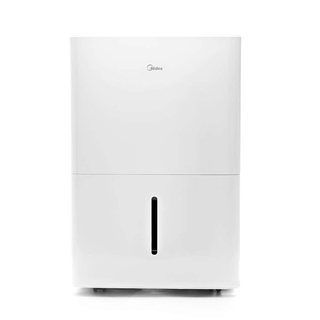
Specifications for MAD22C1AWS with owner checks for this product design. Use the matching manual for control sequences and replacement parts.
Specifications & model details
MAD22C1AWS: model-specific checks
Interpret this unit’s collection rating
Midea MAD22C1AWS is rated at 22.31 pints/day. This is removal over a day under the source test conditions, not the size of its bucket or an expected amount in every room. Compare room humidity, temperature, run time and whether collected water is staying in the bucket or leaving through a permitted drain. Different test standards must be reconciled before comparing pint ratings.
Identify when the sound occurs and where it seems to come from, then check only accessible placement and fit issues before contacting support.
Owner guide: Noise & vibration
Category & symptom guidance
Noise & vibration
4 minute read · Shared guidance for dehumidifiers
Map the sound to the operating cycle
A dehumidifier contains a fan and a refrigeration system, so sound can change as the unit starts, runs, cycles, and stops. Note whether the noise begins with the fan, appears after a delay, or happens only as the unit shuts down. A steady air-moving sound differs from a sudden scrape or repeated rattle. Record whether the sound changes when the bucket fills or when the unit switches between active and idle periods. These details make a useful description for support and help you compare the behavior with the normal-operation section of the manual. Do not remove a cover to locate a sound.
Listen from a safe distance and note when the sound starts and ends.
Record whether the unit is collecting, idle, or displaying a status indicator.
Compare the behavior with the exact model manual’s normal-operation notes.
Check airflow whistles and nearby objects
A high airflow whistle can come from air moving through an obstructed intake or outlet, or from something placed close enough to vibrate in the airflow. With the appliance switched off as directed, check for a curtain, paper, or object touching the grille. Inspect the user-accessible filter and clean it only as specified in the manual. Make sure the appliance has the placement space required by its own instructions. Do not apply a clearance number from another product. After restoring open airflow, restart and note whether the whistle changes. If the sound stays, record its character and operating state rather than inserting tools or reaching into a grille.
Switch off the unit and remove objects touching or blocking the air openings.
Check and clean only the accessible filter using the manual’s method.
Restart and compare the sound with the original observation.
Reseat a rattling bucket or loose item
A bucket that is slightly out of position can vibrate against the cabinet as the fan runs. Empty it if needed, then remove and reinstall it following the manual. Check that no loose item rests on the top or against the sides of the appliance. Do not place objects on the unit to damp a vibration. If the rattle stops after reseating the bucket, the fit was a likely source; if it continues, note whether the noise is localized to the cabinet or travels with the airflow. Keep hands away from moving air openings while the unit is operating.
Turn the unit off before handling the bucket.
Reinstall the bucket until it sits as the manual describes.
Remove loose nearby objects and listen again from a safe distance.
Distinguish water sounds from mechanical changes
Drips or splashes can occur as water enters the bucket, and a pump-equipped model may make a transfer sound when it moves water. Check the manual to confirm whether your unit has a pump and when it normally runs. For gravity drainage, inspect the accessible hose path for movement against a nearby surface. Do not assume every model has the same pump or drainage arrangement. A new grinding scrape, repeated hard impact, or worsening vibration is different from occasional water movement; document when it occurs and stop if the unit appears unstable or damaged.
Identify whether water is routed to a bucket, gravity drain, or pump.
Compare water-transfer sounds with the manual’s description for the exact model.
Note any new scrape, impact, or vibration and when it happens.
Use placement observations to guide support
Confirm the unit stands on a firm, level surface and that the bucket and accessible filter are correctly fitted. A rocking floor or contact with a wall can amplify vibration. Do not wedge objects under the cabinet unless the manufacturer explicitly instructs it. If the noise remains after the external fit and placement checks, provide support with a short recording made from a safe distance, the model number, and the operating state when it occurs. Never open the casing to tighten internal parts. Check the CPSC dehumidifier recall information if the exact model is named in a product notice.
Check from outside that the unit is stable and does not touch nearby objects.
Record the sound and operating state without moving the unit while running.
Contact manufacturer support if a new mechanical sound persists.
What to do with what you find
A whistle changes after an object is moved away from the intake or outlet.
The sound was likely related to airflow obstruction or nearby material.
Keep the air path open according to the model manual and recheck during operation.
A rattle stops after the bucket is removed and correctly reinstalled.
The bucket fit was a likely source of vibration.
Continue using the bucket in its documented position and monitor for recurrence.
A new scrape or repeated hard impact continues on a stable surface with the bucket seated.
Accessible placement checks have not explained the sound.
Stop if damage or instability is present and contact manufacturer support with a recording.
Have these details ready
Model number and whether pump drainage is fitted
When the sound occurs in the operating cycle
Whether reseating bucket or clearing airflow changes it
Recording made from a safe distance, if available
Common questions
Is a pump sound normal on every dehumidifier?
No. Check whether the exact model includes a pump and what sound or timing its manual describes.
Can I open the cabinet to tighten a rattling part?
No. Limit checks to external placement, bucket fit, filter, and nearby objects; refer persistent internal-sounding noise to support.
General background sources
These sources support the shared guide. Exact model specifications and matched family procedures have their own sources above.