Appliance & electronics support
Find your model numberAbout our sources
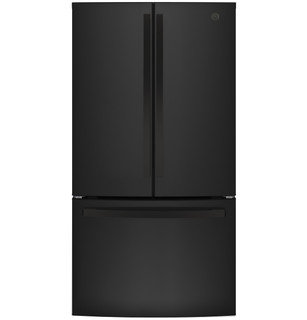
GE GNE27JGMBB product photo
Photo: GNE27JGMBB. Photo source
Manufacturer sources

GE GNE27JGMBB

All topics for your model

Refrigerator · US market · 45 owner topics

Owner help

Help with your GNE27JGMBB

GE refrigerator records span top-freezer, side-by-side, bottom-freezer, compact, manual/cycle-defrost, and automatic-defrost products. The support pages distinguish control layouts by era and configuration; use them to locate the right owner check, not to assume a shared panel or drain path.

Capacity Total Capacity Cubic Feet
27.00 cu ft
Energy Consumption (kWh/year)
633 kWh/year
Weights Dimensions Overall Width
35.75 in
0 detailed family articles12 short family notes45 detailed owner guides

Detailed articles use sources for the named brand and product family. Short notes add family details to shared guidance. Owner guides cover the product category and recorded design, with this model’s measurements and brand details shown separately. Exact controls and part fitment require a matching manufacturer source.

Product & documents

Detailed owner guide

Specifications

Compare refrigerator capacity, layout, energy information, and features against household routines, recognizing that published capacity and practical storage are not the same thing.

  • Translate capacity into household use
  • Read the configuration as a storage map
  • Compare energy information carefully
Read specifications
Detailed owner guide

Manuals & documents

Use the full refrigerator model and serial information to find documentation, then choose the document that matches the job. Check applicability and revision before using instructions, especially for installation or service.

  • Record model and serial information
  • Choose the document for the task
  • Confirm the document applies
Read manuals & documents

Installation & connections

Detailed owner guide

Dimensions & fit

Survey the delivery route and kitchen opening before purchase, including turns, handles, door swing, and manufacturer-specific clearance requirements.

  • Start at the curb and trace the route
  • Measure the kitchen opening and cabinet space
  • Account for doors, handles, and drawers
Read dimensions & fit
Detailed owner guide

Installation planning

Plan the refrigerator’s location, support, leveling, access, exposure, and required connections using the exact model instructions and qualified help where work exceeds owner capability.

  • Choose a location before delivery
  • Check the floor and support
  • Plan leveling and door access
Read installation planning
Detailed owner guide

Electrical requirements

Compare the refrigerator’s own electrical rating with the receptacle and the information your installer or electrician can verify. The nameplate describes the appliance; it does not certify the wiring in your home.

  • Read the refrigerator’s rating
  • Inspect the outlet markings from outside
  • Compare information, not assumptions
Read electrical requirements
Detailed owner guide

Water supply & connections

First establish whether the refrigerator has a plumbed ice or water feature. For an installed feature, identify the shutoff and route, follow the exact model’s connection instructions, and inspect for visible leaks after connection.

  • Decide whether a water line is needed
  • Locate the shutoff and trace the route
  • Follow the exact connection instructions
Read water supply & connections
Detailed owner guide

Delivery & moving

Plan a refrigerator move around food safety, removable interior parts, the route and lifting method, and any connected water line. Follow the exact model’s transport and restoration instructions, then verify food-safe temperatures...

  • Move food before the appliance
  • Empty and secure the interior
  • Measure the route and protect surfaces
Read delivery & moving

Controls & operation

Detailed owner guide

First use & setup

Set up the refrigerator from its exact model instructions: remove only identified transport materials, clean permitted surfaces, confirm level and door closure, connect specified features, and verify temperatures with thermometers...

  • Unpack identified transport materials
  • Clean only permitted surfaces
  • Level the cabinet and check door closure
Read first use & setup
Detailed owner guide + family notes

Controls & settings

GE support documents several legacy schemes: single or dual knobs, numbered/lettered controls, and later electronic pads. On older side-by-side models the freezer setting can control compressor run time while the fresh-food setting...

  • Read the labels before changing anything
  • Compare the target with measured temperature
  • Change one setting and track the result
Read controls & settings
Detailed owner guide + family notes

Temperature settings

GE’s guidance says to wait 24 hours after initial startup or an adjustment before evaluating temperatures. Use an appliance thermometer in each compartment rather than interpreting a dial number as degrees. For older controls, “5 and...

  • Use thermometer readings as the reference
  • Check more than one shelf
  • Interpret readings after ordinary use
Read temperature settings
Detailed owner guide

Restart & reset

Distinguish a temporary power restart from a settings reset, preserve food, and document the current state before taking action.

  • Identify what you mean by reset
  • Protect food before interrupting power
  • Use only an accessible disconnect
Read restart & reset
Detailed owner guide

Special modes

Identify an active mode from the exact manual and verify its effect through compartment temperatures before relying on stored food.

  • Identify the mode from the exact manual
  • Check temperatures before relying on food
  • Understand vacation or away settings
Read special modes

Care & consumables

Detailed owner guide

Cleaning & odor

Clean refrigerator surfaces and removable parts without soaking electrical areas, and use where odors or moisture collect to guide prevention.

  • Prepare the refrigerator and protect the food
  • Wash removable shelves, bins, and drawers
  • Clean fixed walls and interior surfaces
Read cleaning & odor
Detailed owner guide + family notes

Preventive maintenance

GE notes that frost/ice is expected in manual- or cycle-defrost refrigerators, while a frost-free model should not build ice on a freezer wall. Frequent openings, warm uncovered food, packages against the rear wall, or a door held ajar...

  • Inspect door seals and closure
  • Keep interior airflow paths clear
  • Use a thermometer and condition-based checks
Read preventive maintenance
Detailed owner guide

Filters & consumables

Identify whether your refrigerator uses water or air filters, then verify the exact accessory code and fit before buying replacements.

  • Inventory the filter systems on your model
  • Confirm exact accessory identity before ordering
  • Evaluate third-party claims by evidence
Read filters & consumables
Detailed owner guide

Consumable replacement

Replace a refrigerator filter only after confirming the exact model and filter code, then follow the model-specific removal, installation, flushing, and leak checks.

  • Match the filter to the refrigerator first
  • Prepare for the documented removal method
  • Install using the exact instructions
Read consumable replacement
Detailed owner guide

Storage & seasonal care

Prepare a refrigerator for a power outage or planned absence by protecting food, cleaning and drying it appropriately, and checking operation when power returns.

  • Separate an outage from planned unplugging
  • Empty and clean before long storage
  • Protect the door seal and prevent entrapment
Read storage & seasonal care

Troubleshooting

Detailed owner guide

Troubleshooting & repair

Use measured temperatures and visible airflow, door, frost, water, and sound clues to decide what you can safely correct and when a technician is needed.

  • Separate a cooling problem from an accessory problem
  • Measure both compartments before changing controls
  • Check closure and loading from the outside
Read troubleshooting & repair
Detailed owner guide + family notes

Not cooling

If both sections are warm, first note whether the compressor control is at OFF and whether the unit recently lost power. If only fresh food is warm while the freezer is cold, blocked airflow or the damper/control path is a more useful...

  • Measure before deciding what is warm
  • Freezer cold, refrigerator warm
  • Both compartments warm
Read not cooling
Detailed owner guide + family notes

Water dispenser not working

If both sections are warm, first note whether the compressor control is at OFF and whether the unit recently lost power. If only fresh food is warm while the freezer is cold, blocked airflow or the damper/control path is a more useful...

  • Confirm the dispenser and compare water flow
  • Inspect the filter and its housing
  • Check accessible supply and visible leaks
Read water dispenser not working
Detailed owner guide + family notes

Error codes & indicators

Older GE refrigerators can have mechanical knobs without a digital code display, while later electronic models show messages or indicators. Photograph the entire display and model/serial label, then search the exact GE support page. A...

  • Capture the display before changing anything
  • Separate alarms from numeric codes
  • Check door and temperature messages
Read error codes & indicators
Detailed owner guide + family notes

Noise & vibration

GE describes automatic defrost as a period when the defrost heater operates while compressor and fans stop; duration varies by model. A quiet interval followed by resumed cooling can fit normal defrost behavior. Persistent silence with...

  • Describe the sound and its timing
  • Check for loose items and contact
  • Relate hums and airflow sounds to operation
Read noise & vibration
Detailed owner guide + family notes

Frost & ice buildup

GE says many side-by-side automatic-defrost refrigerators route meltwater through a defrost drain; ice under the lower freezer basket or water escaping near the freezer door can indicate a blocked drain. Some models have an...

  • Map the frost before changing the load
  • Thin frost after a door opening
  • Frost concentrated at an edge or chute
Read frost & ice buildup
Detailed owner guide + family notes

Leaks, moisture & condensation

GE says many side-by-side automatic-defrost refrigerators route meltwater through a defrost drain; ice under the lower freezer basket or water escaping near the freezer door can indicate a blocked drain. Some models have an...

  • Map where the water first appears
  • Compare feature-related timing
  • Separate condensation from a leak
Read leaks, moisture & condensation
Detailed owner guide

No power & starting

Use visible signs to distinguish a refrigerator with no apparent power from one whose controls are unresponsive. Check accessible household power safely and stop if wiring is damaged.

  • Tell a dark refrigerator from an unresponsive control
  • Inspect the plug and cord from a safe position
  • Check the household outlet without improvising
Read no power & starting
Detailed owner guide + family notes

Poor performance

GE’s support guide separates numbered/dial controls from actual-temperature displays: dial models use their own scale, while an actual-temperature panel is adjusted by changing the setpoint. Do not assume a higher displayed number...

  • Measure before changing the setup
  • Look for an uneven load or blocked air path
  • Account for door openings and new groceries
Read poor performance

Parts & accessories

Detailed owner guide + family notes

Parts & components

GE’s legacy records include refrigerators with different dispenser, filter, and storage configurations; a generic “GE filter” or visually similar shelf is not a fit confirmation. Use the full rating-label code in the manufacturer parts...

  • Start with the complete model identity
  • Use the diagram to identify the position
  • Separate owner-removable items from internal parts
Read parts & components
Detailed owner guide

Component replacement planning

Plan replacement only when the component is documented as owner-serviceable. Verify identity and return terms first, and route internal plumbing, wiring, and cooling work to a qualified servicer.

  • Define the task before buying anything
  • Verify part number and revision
  • Plan power and water safely
Read component replacement planning
Detailed owner guide

Accessories & installation kits

Check what an accessory includes, whether it fits your exact refrigerator, and what installation or ongoing costs affect its usefulness.

  • List what you need the accessory to do
  • Separate included equipment from optional kits
  • Check installation dependencies before ordering
Read accessories & installation kits
Detailed owner guide

Compatibility & substitutions

Verify replacement refrigerator parts by model, part number, revision, dimensions, interface, and certification where relevant; appearance alone is not enough.

  • Begin with the refrigerator’s complete identity
  • Compare more than dimensions
  • Treat substitutions as a documented claim
Read compatibility & substitutions
Detailed owner guide

Diagrams & wiring references

Use parts illustrations to identify components and installation drawings to understand placement; leave wiring and service schematics to qualified technicians.

  • Choose the drawing that answers your question
  • Match the diagram to the exact model
  • Read an exploded view and its legend
Read diagrams & wiring references

Ownership decisions

Detailed owner guide

Repair cost & service quotes

Compare written refrigerator repair estimates by scope, fees, parts, labor, warranty, downtime, and household costs without relying on unsupported price averages.

  • Ask for a complete written scope
  • Separate parts, labor, and visit charges
  • Ask carefully about sealed-system work
Read repair cost & service quotes
Detailed owner guide

Repair or replace?

Use a household worksheet that weighs condition, repair scope, replacement cost, energy use, fit, food needs, and downtime rather than relying on a simple age cutoff.

  • Describe the decision in household terms
  • Build the repair side of the worksheet
  • Build the replacement side fairly
Read repair or replace?
Detailed owner guide

Energy, water & efficiency

Use the EnergyGuide estimate as a comparison point, then account for your household’s habits and electricity rate. Compare usable capacity and configuration alongside annual energy use, and avoid treating a label as a promise about your bill.

  • Read the annual energy estimate in context
  • Compare capacity and configuration together
  • Look at loading and door routines
Read energy, water & efficiency
Detailed owner guide

Running cost calculator

Estimate refrigerator electricity cost from the annual kWh label and your utility rate. Keep label-based estimates distinct from actual use, account for billing periods and variable rates, and compare models with matching assumptions.

  • Use the label and rate in one formula
  • Keep label estimate separate from actual bills
  • Handle billing days instead of assuming a month
Read running cost calculator
Detailed owner guide

Warranty & official support

Verify coverage using the exact model, serial number, purchase date, and warranty document. Separate parts, labor, and sealed-system terms; preserve proof and make a clear support case through the retailer or manufacturer.

  • Identify the exact refrigerator and purchase date
  • Read parts, labor, and sealed-system terms separately
  • Check exclusions and ownership rules
Read warranty & official support
Detailed owner guide

Recalls & safety notices

Search official recall information using the exact model and serial details, then follow the notice’s stop-use and remedy instructions. Distinguish a formal recall from a general support alert and preserve evidence of the product identity.

  • Find the model and serial before searching
  • Tell a recall from a support alert
  • Follow stop-use instructions first
Read recalls & safety notices
Detailed owner guide

Model age & history

Establish a refrigerator’s history from its label, dated purchase records, and official brand support. Serial formats vary, so decode a manufacture date only when the brand provides a reliable official method.

  • Start with the product label and records
  • Decode a serial only with official guidance
  • Do not infer age from a discontinued listing
Read model age & history
Detailed owner guide

Specification review

Read a refrigerator listing by separating its published specifications from your own assessment of layout, operating cost, fit, features and support.

  • Start with the space the refrigerator must serve
  • Judge capacity through the actual layout
  • Separate energy facts from cost estimates
Read specification review
Detailed owner guide

Compare similar models

Build a fair comparison of two or three exact refrigerator configurations using consistent capacity, energy, feature, fit and warranty evidence.

  • Choose the candidates and comparison basis
  • Compare compartment capacity and storage layout
  • Put energy figures on equal footing
Read compare similar models
Detailed owner guide

Replacement appliances & fit

Plan a refrigerator replacement by measuring the opening and route, checking the exact model drawing, and matching configuration and utility needs.

  • Measure the kitchen opening at several points
  • Check doors, drawers and depth in use
  • Walk the delivery route before ordering
Read replacement appliances & fit
Detailed owner guide

Price & availability

Compare refrigerator quotes by usable capacity, included features, delivery and installation charges, and condition to see the actual total.

  • Compare configuration and usable capacity
  • Put included features and accessories on the same basis
  • Add delivery, fit, haul-away, and installation charges
Read price & availability
Detailed owner guide + family notes

Professional service

Provide the full code, control labels, measured temperatures in both compartments, visible frost or water, and whether the freezer is colder than the fresh-food section. Include a recent outage, move, or large warm food load. These...

  • Find a qualified provider for your exact brand
  • Ask what the diagnostic visit includes
  • Keep sealed-system and electrical work professional
Read professional service
Detailed owner guide

Recycling & disposal

Arrange a refrigerator’s removal through a retailer, municipal program or appliance recycler that can handle refrigerant and secure the appliance safely.
  • Choose a documented pickup path
  • Confirm refrigerant handling and service scope
  • Make the appliance safe while you wait
Read recycling & disposal

Topics that need a feature match

Some topics apply to other categories or need a feature that this record has not established.

Drainage & water removal

Outside this product category.

Venting & exhaust

Outside this product category.

Cycles & programs

Outside this product category.

Control lock & access

A control-lock feature has not been established.

Wi-Fi & connectivity

Connected capability is absent or has not been established.

Software, drivers & firmware

Outside this product category.

Water quality & scale

Outside this product category.

Sources for GNE27JGMBB

GE — GNE27JGMBB Observed Oct 26, 2026
Suggest a correction