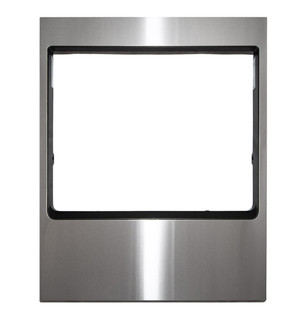
Specifications for PCDUS01KITFS with owner checks for this product design. Use the matching manual for control sequences and replacement parts.
Specifications & model details
PCDUS01KITFS: model-specific checks
Start with the source identity
GE Profile PCDUS01KITFS is the exact code in this catalog record. This topic should be evaluated for that code and dishwashers category. The original source record is linked below; unrecorded settings, dates and compatibility remain unknown.
Read dishwasher specifications as a matched set of capacity, energy, water, sound, and feature details, and verify what applies to the exact model.
Owner guide: Specifications
Category & symptom guidance
Specifications
3 minute read · Shared guidance for dishwashers
Start with the exact product record
Open the manufacturer’s product page for the complete model number and compare the specification table with the appliance label. Similar names may describe different finishes or configurations. Treat broad retailer descriptions as discovery aids; confirm the details that affect purchase, use, or installation on the manufacturer’s record and the installation document.
Separate stated facts from marketing terms. A feature name such as “quiet,” “efficient,” or “advanced drying” does not give you a comparable measurement by itself. Look for a stated sound rating, energy-use figure, water-use figure, dimensions, and the conditions or standard under which each is reported.
Compare capacity with your dishes
Place settings are a standardized way to compare loading capacity, not a promise that every household’s dishes will fit. Oversized dinner plates, tall stemware, deep bowls, large pans, and utensils can use rack space differently. Look at rack diagrams or an in-person display if your everyday items have unusual dimensions.
Check what the stated capacity includes and whether the machine has a third rack, adjustable upper rack, or removable basket. Those details affect how you arrange cutlery and tall items, but do not assume a rack shown for a related model is included with the one under consideration.
Interpret energy and water figures
Use comparable figures when comparing operating efficiency. The Department of Energy’s dishwasher guidance explains how to compare efficient residential models; make sure the values refer to the same measurement basis and do not substitute a cycle’s marketing claim for the reported annual or standardized figure. Actual household use can vary with cycle selection, load size, and frequency.
A lower-use rating is most useful when the machine can handle your typical load in one run. Consider whether your dishes often need intensive cleaning or extra drying options, since those choices can change how you use the appliance. Do not infer a household bill directly from a rating without your local utility rates and actual usage.
Understand drying and wash options
Drying systems vary. Some dishwashers use a heated element; others rely more on heat retained during rinsing, airflow, or a door that opens automatically. Read the exact product description and owner information to learn whether an option changes the rinse, adds fan operation, or expects the door to be opened after the cycle. Do not assume that one drying method or option is present across a product family.
Cycle names also vary in meaning. A “normal” cycle, quick wash, or sanitize option should be interpreted through that model’s documentation, including restrictions, extra time, and the indicator that confirms completion. The GE shared manual, for listed GD/PD models only, describes multiple cycles and conditional options; that material is not a generic control guide.
Use sound ratings in context
A sound rating lets you compare models when the measurement basis is the same. Noise heard in a kitchen also depends on cabinetry, installation, room acoustics, and the stage of a wash. If sound matters, compare stated ratings first and listen to a running example where possible; do not assume a quiet rating means no pump, fill, or drain sounds will be audible.
When checking a product sheet, make sure you are looking at a numeric rating rather than a seller’s adjective. If the manufacturer does not publish a value, note that as missing instead of estimating from a related model.
What to do with what you find
The manufacturer’s product record gives a figure and measurement basis for two candidate models.
Those values can support a direct comparison, subject to the stated test conditions.
Compare matching measures and check whether the capacity and rack configuration suit your dishes.
A listing describes a drying or sanitation feature without confirming it for the exact model.
The feature is not established by the listing language alone.
Verify it in the exact model’s owner or product documentation before relying on it.
Have these details ready
Complete model numbers for comparison
Manufacturer specification pages or matching installation and owner documents
Common-basis energy, water, and sound figures where available
Dimensions of unusually large everyday dishware
Common questions
Does stated place-setting capacity tell me whether my pots fit?
No. Check rack geometry and the dimensions of your own dishes, especially tall or wide items.
Can I compare energy figures from two listings directly?
Only if they use the same measurement basis. Prefer the manufacturer or DOE comparison information for the matching model.
General background sources
These sources support the shared guide. Exact model specifications and matched family procedures have their own sources above.
Explicit product_first_distribution_date in exact OEM primary SKU record; not a manufacturing year or import date. Primary source: https://www.geappliances.com/appliance/Optional-Undersink-Trim-Kit-for-Compact-Dishwasher-PCDUS01KITFS
Observed Oct 30, 2026
A comparison group built from recorded designs
GE Profile dishwashers
32 records in this manufacturer/public-source group. The group uses the brand, category and recorded design, rather than a guessed series or production year.
17.75–23.81 width · 17 source values
20.12–24.0 depth · 17 source values
17.3–34.0 height · 17 source values
These are source-record ranges. They do not establish current availability, a shared repair platform or installation compatibility.