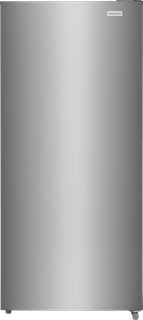
Guidance for Frigidaire refrigerators. Check the feature and control descriptions against your model.
Specifications & model details
FFUV2126AV: model-specific checks
Choose the recorded defrost branch
Frigidaire FFUV2126AV is listed with Automatic defrost. Use the branch for the listed defrost system. Note whether frost is confined to a door edge, covers stored packages, or returns on an interior surface. Door closure, moisture entry and a defrost-system problem produce different patterns.
Keep up with refrigerator maintenance by inspecting seals, airflow, temperature, and only the service areas your manual permits you to access.
Owner guide: Preventive maintenance
Category & symptom guidance
Preventive maintenance
5 minute read · Shared guidance for refrigerators
Inspect door seals and closure
Look along the full door gasket for food residue, tears, sections pulled loose, or areas folded inward. A seal that cannot sit evenly can let warm room air enter and allow moisture or frost to collect. Clean it only by the method permitted in your manual, then dry it and inspect the door again. Close the door on a thin paper strip at several points: if the strip slides out with little resistance in one area, compare that spot with the rest of the gasket and check for a visible obstruction.
Check that shelves, bins, and packages do not prevent the door from closing. A gasket should not be stretched, glued, or replaced based solely on one paper-strip result. If the seal is damaged or the door is misaligned, consult model-specific service guidance.
Inspect the gasket perimeter and remove visible debris using the manual-approved cleaning method.
Check for items or bins that keep the door from closing fully; record any visibly torn or displaced seal area.
Keep interior airflow paths clear
Refrigerator compartments need room for air to circulate. Do not press food or containers against vents, and leave space around openings identified in the manual. A blocked outlet can create uneven temperatures even when the control setting has not changed. Review the shelves after grocery loading: tall cartons, large trays, and tightly packed bags are common reasons an opening becomes covered.
Observe whether items near a vent are colder or warmer than the rest, but do not infer a failed component from one location alone. Place an appliance thermometer in a representative area and compare readings over time. When you rearrange food to uncover an opening, keep raw foods contained and avoid allowing refrigerated items to warm while sorting.
Locate airflow openings using the manual and keep containers from covering them.
After rearranging a crowded shelf, use a thermometer to check the refrigerator’s temperature rather than judging by touch.
Use a thermometer and condition-based checks
A control display or dial setting is not the same as a measured food-storage temperature. Put an appliance thermometer where the manual recommends, read it after the refrigerator has had time to settle following a door opening or loading, and record the result with the date. The FDA recommends a refrigerator at or below 40°F and a freezer at 0°F. A reading above the recommended refrigerator limit calls for prompt attention to the storage condition and food safety; repeated readings help distinguish a brief disturbance from a persistent issue.
Check more often after a long door opening, a large grocery load, or a power interruption. These are useful condition-based occasions, not a universal calendar interval. Follow the manual if it gives a specific monitoring or adjustment procedure.
Record thermometer readings in the refrigerator and freezer and compare them with FDA targets.
Repeat a questionable reading after conditions stabilize and consult the manual if the result remains outside target.
Clean only service areas the manual allows
Some refrigerators have a condenser area that an owner can access for cleaning; others require service or have different arrangements. Find the exact model’s instructions before moving a unit or removing a cover. If the manual permits owner cleaning, follow its directions about access and tools, and avoid touching wiring, tubing, fans, or other components. Dust buildup may be visible around an allowed grille, but appearance alone does not justify opening a sealed or guarded compartment.
If access requires removing a panel not identified as owner-serviceable, stop and contact the manufacturer or a qualified technician. Keep a record of the date and what was cleaned. This helps the next owner or technician understand the maintenance history without assuming that every model has the same condenser layout.
Check the model manual for owner-accessible condenser instructions before cleaning or moving the refrigerator.
Clean only the areas and by the methods the manual identifies as owner maintenance.
Maintain optional water and ice components
Some refrigerators have a water drain, removable ice bin, or other components that owners can maintain; availability and removal methods vary. Check the manual first. If the ice bin is explicitly removable, follow its cleaning and drying directions, then reinstall it as described. Do not pry at a stuck bin or reach into an ice mechanism. If the manual describes a drain or accessible channel, use only its stated cleaning method rather than inserting tools into an opening.
Build maintenance around observed conditions: spills, residue, odors, reduced airflow, or a manual’s stated schedule. A universal interval does not fit every household or design. If you find a damaged hose, persistent water, or an inaccessible blockage, stop owner cleaning and arrange service.
Confirm whether your model has an owner-maintainable drain or removable ice bin.
Use the manual’s method and schedule; stop if a part resists removal or water persists after permitted cleaning.
What to do with what you find
A gasket section is visibly torn or will not sit against the cabinet after removing an obstruction.
The door may not seal reliably, allowing warm air and moisture into the compartment.
Use model-specific support to arrange seal or door evaluation; do not stretch or glue the gasket.
A thermometer reading remains above 40°F in the refrigerator after conditions stabilize.
Food may be held warmer than FDA’s recommended refrigerator limit.
Protect food safety, check airflow and closure, and consult the manual or manufacturer if readings stay high.
Condenser cleaning would require removing a cover not designated for owner maintenance.
The area is outside the owner-access instructions for this model.
Stop and contact manufacturer support or a qualified technician.
Have these details ready
Complete model number and owner manual
Dated refrigerator and freezer thermometer readings
Observations of gasket, airflow openings, and visible residue
Manual confirmation of owner-accessible service areas
Common questions
How often should I clean the condenser?
Use the schedule in your exact model’s manual and adjust based on conditions such as visible dust. There is no single interval that fits every refrigerator.
Does every refrigerator have an owner-cleanable drain or removable ice bin?
No. Check the model manual; perform maintenance only on components it identifies as owner-accessible.
General background sources
These sources support the shared guide. Exact model specifications and matched family procedures have their own sources above.