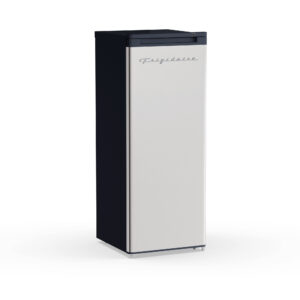
The manufacturer identifies an ajar lid/door and high humidity as possible causes of moisture on freezer exteriors. On an upright, inspect the full door gasket and make sure stored items do not prevent closure; distinguish condensation from water inside the cabinet.
Frigidaire EFRF694 is listed with Manual defrost. Use the manual-defrost branch below: plan cold storage for the food before melting accumulated ice, protect the floor, and use the documented drain arrangement. Keep sharp tools and direct heat away from the liner and refrigerant path.
Frigidaire EFRF694 is recorded as upright. Check the door swing, shelf or drawer seating, and packages projecting into the seal. For uneven cooling, keep the source-listed defrost design in view: airflow checks apply to a fan-cooled layout, while a manual-defrost layout has its own unloading and defrost procedure.
Trace the moisture before deciding whether it is normal condensation, a spill, or a service issue.
Owner guide: Leaks, moisture & condensation
Category & symptom guidance
Leaks, moisture & condensation
3 minute read · Shared guidance for freezers
Locate and document the moisture
Dry the visible water, then note where it returns: inside the compartment, beneath the cabinet, at a drain opening, or around the door or lid. Check whether the moisture is clear water, food liquid, or residue, and whether it follows loading, cleaning, defrosting, or humid weather. This record helps identify the next check without assuming the appliance has a leak.
Keep water away from the plug, outlet, and electrical controls. If water is pooling near electrical parts, avoid touching the appliance or standing water; disconnect power only if the plug and area are dry and safely accessible. Otherwise keep clear and contact a qualified service provider. Protect nearby flooring with towels only when it is safe to do so.
Check door, lid, and condensation
Inspect the gasket visually for crumbs, folds, or a section held open by a package. Wipe the sealing surface with a clean damp cloth and dry it; do not use sharp tools or pull the gasket from its channel. Confirm that stored food is not obstructing closure. If the door or lid no longer closes evenly, consult the model manual before attempting an adjustment.
Moisture on the exterior can result from humid air contacting a cold surface, and moisture inside may follow frequent openings or warm, damp items. Dry the area and observe whether it returns when conditions change. Do not assume all condensation is harmless: persistent pooling, a damaged seal, or moisture accompanied by loss of cooling merits further checks or service.
Identify defrost and drain design
Determine whether the freezer is manual defrost or automatic defrost by checking its label and owner’s guide. GE guidance distinguishes chest and upright designs: its chest models are manual defrost, while current GE uprights are automatic and older uprights may vary. These statements apply to GE and Hotpoint guidance; another brand or model may differ. Do not look for a drain until the manual confirms one exists.
For a manual defrost freezer, water during defrost may be expected, but the drain hardware and procedure are model specific. Some models have a plug or hose; others do not. Follow the exact owner’s manual for unplugging, protecting food, collecting meltwater, and replacing caps or plugs. Never tip a loaded freezer or improvise a drain connection.
Check recent spills and cleaning
If moisture is inside the cabinet, inspect nearby packages for leaks and check whether a container spilled. Remove food safely, clean the affected surface using the cleaner permitted by the manual, then dry it thoroughly. Keep food in a suitable cold location while the door is open. Avoid pouring water into seams, vents, or openings where it could reach electrical parts.
If moisture appeared after defrosting, confirm that the specified drain plug, cap, or hose connection was reinstalled and that any collected water was removed. Do not use this check to assume that every freezer has drain hardware. The listed Danby chest family and DUFM085A2BSLDD upright have their own documented procedures; those examples do not establish fittings or steps for other models.
Decide whether to monitor or call
After drying and correcting an obvious spill or closure obstruction, monitor the same area. If water returns repeatedly, grows, or appears with frost buildup, door-seal damage, unusual operation, or warming food, record the timing and temperature and contact manufacturer support. A general support article offers owner checks and service direction; it does not confirm a blocked drain or failed internal component.
If the freezer is no longer keeping food frozen, keep the door closed and use a thermometer to assess conditions. FoodSafety.gov advises a freezer target of 0°F or below and provides outage guidance for deciding what food to keep; never taste food to judge safety. Arrange service promptly when the appliance continues to leak or cool poorly after the manual’s owner checks.
General background sources
These sources support the shared guide. Exact model specifications and matched family procedures have their own sources above.