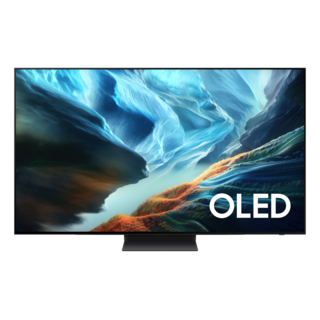
Guidance for Samsung televisions. Check the feature and control descriptions against your model.
Specifications & model details
QN55S90HAE: model-specific checks
What this model’s energy figure means
Samsung QN55S90HAE is listed at 199 kWh/year. Using an illustrative $0.20/kWh, that is $39.80 per year, or $3.32 per month, on the source’s annual test basis. For your rate, multiply 199 by your electricity price per kWh. Compare labels from the same test method; age, actual use, water heating and load choices can change the household result.
Compare TV energy data using the same screen size, brightness, viewing hours, and standby assumptions.
Owner guide: Energy, water & efficiency
Category & symptom guidance
Energy, water & efficiency
3 minute read · Shared guidance for televisions
Understand what the energy label measures
A TV’s electricity use depends on the model, brightness, picture mode, screen size, content, and hours watched. ENERGY STAR’s television information explains that certified models meet efficiency criteria and identifies features such as automatic brightness control and efficient preset modes. Compare labels for the exact models you are considering; a larger screen or brighter setting can use more energy even when the television carries an efficiency certification.
Use the yellow EnergyGuide label or official product data to compare estimated annual use under its stated assumptions. Treat the figure as a standardized comparison, not a promise for your household. Your real viewing hours and settings may differ. Keep the label’s model code with your notes so you do not mix data between close variants.
Use settings that fit the room
A brighter picture often uses more power. Set the picture mode and backlight or OLED brightness for the room rather than leaving a store-display mode enabled. If the TV offers automatic brightness control, test it in the room where you watch and decide whether its changes are comfortable. ENERGY STAR describes room-light control as a feature that can reduce energy while adjusting the image to ambient light.
Do not assume that every “eco” mode looks the same. Some reduce brightness or change motion and image processing. Compare the picture at your usual seating position using the same content. If the setting dims too much, use a moderate value rather than making the screen difficult to see. Record the selected mode so a reset or input change does not silently undo it.
Manage standby and connected devices
Modern TVs may use different amounts of power while displaying a picture, idle, or waiting for a remote or network command. ENERGY STAR criteria distinguish standby modes; the product specification explains which behavior is being measured. Quick-start, network wake, voice-assistant, and connected-device features can change standby behavior, so check the model’s manual and energy data if overnight consumption matters.
Connected devices also consume electricity. If a game console or streaming box is left on to watch video, compare using the TV’s built-in app where convenient. ENERGY STAR consumer guidance notes that smart-TV streaming can use less power than streaming through a game console. This is a general comparison, not a guarantee for every device and viewing mode.
Estimate your own use consistently
To compare two TVs, use the same hours-per-day assumption and the same electricity rate. If the label reports annual kilowatt-hours, multiply that value by your local cost per kilowatt-hour for a rough annual estimate, keeping the label’s test assumptions visible. If you meter a television, record the picture mode, brightness, content, and whether external devices are included; otherwise readings are not comparable.
Do not compare a bright HDR scene on one screen with a dark menu on another. Repeat the same content and display mode, and do not interpret a short measurement as a full-year forecast. The useful result is the relative difference under your viewing setup, not a precise bill prediction.
General background sources
These sources support the shared guide. Exact model specifications and matched family procedures have their own sources above.
Certification dataset declaration; check manufacturer installation documents for fit and clearances.
Observed Oct 30, 2026
A comparison group built from recorded designs
Samsung oled televisions
37 records in this manufacturer/public-source group. The group uses the brand, category and recorded design, rather than a guessed series or production year.
128.0–399.01 kWh/yearannual energy · 37 source values
41.5–83.5 inscreen size · 37 source values
These are source-record ranges. They do not establish current availability, a shared repair platform or installation compatibility.