Appliance & electronics support
Find your model numberAbout our sources
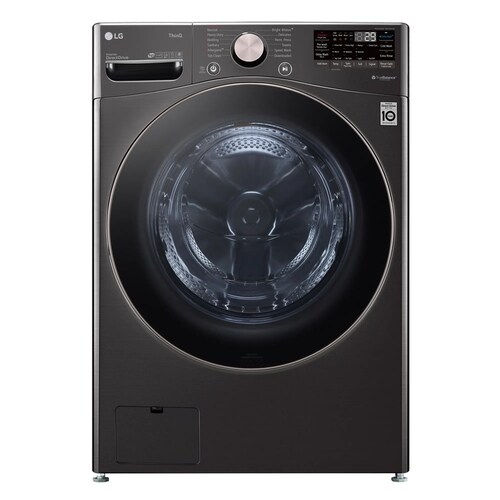
LG WM4000HBA washer — manufacturer product image
Photo: WM4000HBA. Photo source
Manufacturer sources

LG WM4000HBA

Not draining

Washing machine · US market · 50 owner topics

LG WM4000HWA / WM4000HBA front-load washers

Covers WM4000HBA and the manufacturer-listed models in this family.

LG WM4000HWA / WM4000HBA front-load washers

Work through a WM4000 washer that retains water

The LG WM4000HWA and WM4000HBA are 4.5 cu. ft. front-load washers. When water remains after a cycle, distinguish a small amount near the door seal from a tub that is still holding wash water, and note whether the display shows OE. LG’s WM4000 manual explains the drain pump filter and hose checks; front-load access can release retained water, so prepare before opening anything.

Begin with the visible drain hose, cycle result, and error display. If the washer is full, hot, or leaking, do not open the pump filter immediately. The manufacturer’s general front-load guidance describes draining residual water through the small hose before removing the filter. Follow the WM4000 manual and stop if the access cover or hose differs from the instructions.

Describe what remains and when

Look through the door and note whether water covers the bottom of the drum, whether only damp laundry remains, and whether the cycle ended normally or paused. Photograph any OE code before restarting. Record the cycle, load type, approximate time it stopped, and whether a humming or repeated pump sound occurred. A small amount of residual moisture differs from a tub that did not drain enough to spin.

Check the visible portion of the drain hose for a kink, crushing, or a hose end that has slipped. Do not pull the washer forward while it is full or connected. LG identifies a pinched/kinked hose and household drain restriction among possible drain conditions; these are external checks you can report without opening the machine.

  1. Photograph the display and water level; note whether the issue repeats on another cycle.

Make the situation safe before filter care

If water is hot, allow it to cool. Turn the washer off and have a shallow pan, towels, and enough room ready before using the residual drain hose. LG’s manual warns that opening the pump filter with water in the tub can spill water. Do not proceed if the appliance is unstable, the access panel is damaged, or the amount of water exceeds what you can contain.

The WM4000 owner manual includes a lower-front drain pump filter and residual drain procedure. Use the manual’s drawings for the access cover and caps; exact locations can vary by finish or market variation. Empty the small hose in controlled portions, then securely recap it before removing the filter. Keep children and pets away from the open panel and collected water.

  1. Prepare towels and a low container; let hot water cool before opening the residual drain path.

Inspect the owner-cleanable filter

Once residual water has been drained as the manual directs, check the filter for lint, coins, buttons, hairpins, and other small objects. Remove debris and rinse the filter according to the WM4000 manual. Do not reach beyond the accessible opening or pry at an impeller. If an object is lodged where you cannot remove it without force, close the filter and request service.

Reinstall the filter fully and close the drain hose cap and access cover. LG warns through its leak guidance that a loose residual-hose cap or filter can leak after cleaning. Run a supervised short test and watch the access area and drain hose. If water appears, stop the cycle and correct only a clearly loose owner-accessible cap; a continued leak needs service.

  1. After reassembly, stay nearby for the first drain and inspect the access cover for moisture.

Use Spin Only as a diagnostic separator

The WM4000 manual documents a Spin Only operation that can help show whether the washer can drain and spin outside the original wash program. Follow the sequence in the WM4000 manual: power on without selecting a cycle, hold Spin for three seconds, then press Start/Pause. A control-lock state can prevent command entry, so check the displayed lock indicator first and use the manual’s exact Rinse+Spin hold sequence to toggle it if needed.

Observe whether water drains, whether the drum reaches spin, and whether OE returns. A successful separate spin suggests the initial cycle conditions or load may matter; it does not prove every drain component is fault-free. If Spin Only also leaves water or produces OE after the accessible filter/hose checks, report that outcome to LG rather than repeating the test.

  1. If controls do not respond, photograph the indicator and consult the WM4000 manual before retrying.

Escalate with useful facts

Arrange service if OE returns after checking the visible hose and owner-cleanable filter, if the washer cannot drain safely, or if the pump makes abnormal repeated sounds. Also stop if a leak appears at the filter after correct reassembly. Share how much water remained, code, load, cycle, drain-hose position, and what happened during Spin Only.

Do not tip the appliance, bypass the door lock, reach into a moving drum, or open an energized panel. If the washer is under warranty, ask LG whether filter cleaning or any next step should be completed by an authorized technician. Keep a photo of the label and the symptom record with the request.

  1. Request service when the owner-accessible path is clear but the symptom persists.

Common questions

Does OE tell me which part failed?

No. LG defines OE as a water outlet/drain error and lists several possible external and owner-check conditions. The code does not identify a failed component by itself.

Can I open the pump filter with water in the tub?

Prepare to drain water through the residual hose first and let hot water cool. The manual warns that water can spill if the filter is opened while water remains.

Specifications & model details

WM4000HBA: model-specific checks

Start with this washer’s layout

LG WM4000HBA is listed as Front-load washer. For this recorded front-loading LG design, inspect the accessible door glass and seal, drawer opening and visible hose connections. For a wet load, first establish whether water remains in the drum. Door locking, spin selection and pump-filter access are distinct checks; use only the access points described for the actual unit.

Interpret the spin rating correctly

LG WM4000HBA lists a maximum spin speed of 1300 RPM. That maximum is not a promise for every program or load. Compare the selected spin option and load balance before interpreting a lower observed speed as a motor fault. Save the exact code and cycle name if the machine stops.

Recorded model facts

Model details relevant to this topic

SpecificationRecorded valueEvidence
Child lockYes
Manufacturer
LG — WM4000HBA specification sheet

Exact-model manufacturer resource; WM4000H_A sheet, SUMMARY, POWER SOURCE, DIMENSIONS and explicit UPC model rows

LG WM4000H_A specification sheet, Convenience Features, Child Lock: Yes. Exact unlock sequence is not supplied here.

Observed Oct 26, 2026
ConnectivityWi-Fi ThinQ
Manufacturer
LG WM4000H_A Pro Builder specification sheet

Features

Listed for the explicitly named WM4000HWA and WM4000HBA pair.

Observed Oct 27, 2026
Cycles12
Manufacturer
LG WM4000H_A Pro Builder specification sheet

Features / cycles

Sheet explicitly lists WM4000HWA and WM4000HBA. Original source value: 12 cycles.

Observed Oct 27, 2026
Maximum spin speed1300 RPM
Manufacturer
LG — WM4000HBA specification sheet

Exact-model manufacturer resource; WM4000H_A sheet, SUMMARY, POWER SOURCE, DIMENSIONS and explicit UPC model rows

LG WM4000H_A specification sheet, 7/22/20. Explicitly lists WM4000HBA. Non-metric measurements are approximate; installation clearances are separate.

Observed Oct 26, 2026
Options13
Manufacturer
LG WM4000H_A Pro Builder specification sheet

Features / options

Sheet explicitly lists WM4000HWA and WM4000HBA. Original source value: 13 options.

Observed Oct 27, 2026
Wi-FiYes
Manufacturer
LG — WM4000HBA specification sheet

Exact-model manufacturer resource; WM4000H_A sheet, SUMMARY, POWER SOURCE, DIMENSIONS and explicit UPC model rows

LG WM4000H_A specification sheet, 7/22/20. Explicitly lists WM4000HBA. Non-metric measurements are approximate; installation clearances are separate.

Observed Oct 26, 2026
ConfigurationFront-load washer
Manufacturer
LG — WM4000HBA specification sheet

Exact-model manufacturer resource; WM4000H_A sheet, SUMMARY, POWER SOURCE, DIMENSIONS and explicit UPC model rows

LG WM4000H_A specification sheet, 7/22/20. Explicitly lists WM4000HBA. Non-metric measurements are approximate; installation clearances are separate.

Observed Oct 26, 2026
Product weight187.4 lb
Manufacturer
LG — WM4000HBA specification sheet

Exact-model manufacturer resource; WM4000H_A sheet, SUMMARY, POWER SOURCE, DIMENSIONS and explicit UPC model rows

LG WM4000H_A specification sheet, 7/22/20. Explicitly lists WM4000HBA. Non-metric measurements are approximate; installation clearances are separate.

Observed Oct 26, 2026
More background: Not draining

Category & symptom guidance

Not draining

Confirm what remains in the washer

Look through the lid or door to see whether water is standing in the tub or drum, or whether only clothes are wet. Note whether the cycle stopped before the drain stage, whether a code appeared, and whether you hear a drain sound. Wet clothes without standing water can indicate a spin issue rather than a drain failure.

If water is present, do not force the door or reach into moving parts. Use the normal pause or cancel control as described for the washer. A front-loader may retain water behind a locked door; follow its model-specific emergency or drain instructions rather than prying the door open.

Inspect the visible drain route

With the washer stopped, check the visible drain hose for a kink, crushing, or a section trapped behind the appliance. Look where the hose enters the standpipe or laundry tub for displacement or overflow. Do not pull the machine forward if that could strain water or power connections; correct only an obvious accessible obstruction or dislodged hose.

Drain height, hose insertion, and air gap requirements vary. The GE PTWN6250M installation sheet gives a model-specific standpipe height range, while the LG WM4000H*A instructions specify a different hose arrangement. Use the exact installation directions for your washer rather than copying either set of dimensions.

Check household drainage and cycle selection

If the laundry sink or nearby drain is also slow, the household drain may be contributing. If the standpipe overflows only when the washer pumps out, stop the cycle and have the drain path assessed; a washer fault cannot be assumed from that symptom alone.

Check that the selected program includes draining and has not been paused. Some models provide a labeled drain or spin-only cycle. On the GE PTWN6250M, the owner guide identifies Drain & Spin for removing water from the tub. Use that named example only for the model; on another washer, use its own labeled function.

Set a boundary for troubleshooting

If the visible hose is clear and correctly placed but the washer repeatedly leaves water, the issue may be at the pump, filter, or internal drain path. Use an owner-accessible filter only if the exact manual explains how to access it and how to manage retained water. Never remove a panel or put hands into a pump opening without explicit owner instructions.

Stop using the washer if water leaks beneath the cabinet, the drain hose repeatedly jumps free, or a fault message returns after the manual’s owner step. Give support the amount of remaining water, cycle stage, and any pump sound or display message.

Look for a siphoning or discharge setup clue

A washer can appear unable to drain if water flows out while it is filling, or if discharged water returns or spills at the household drain. Watch from a safe distance during the next supervised cycle: note whether the tub level rises, stays unusually low, or water appears around the standpipe or laundry tub. Stop the cycle if water spills or the hose shifts.

Drain hose placement and standpipe requirements are model-specific. If the appliance was recently installed or the symptom began after a move, compare the visible hose arrangement with the exact installation instructions, including how securely the hose is held and how it enters the drain. Do not seal the standpipe or push the hose deeper based on guesswork; incorrect placement can cause siphoning or overflow. Ask an installer or plumber to correct an uncertain drain setup.

What to do with what you find

Only clothes are wet and no water remains in the tub.

The washer may have a spin or balance issue rather than a drain failure.

Use the not-spinning checks and inspect the load and selected spin setting.

Drain hose is visibly kinked or displaced.

The external drain route may be obstructing or spilling the discharge.

Correct the accessible routing according to the model’s installation guide.

Standing water returns despite a clear visible hose and proper household drain.

An internal drain issue may need service or documented owner-filter cleaning.

Follow only exact-model owner instructions or request diagnosis.

Have these details ready

  • Standing water or only wet clothing
  • Cycle stage and display message
  • Visible drain hose routing and household drain behavior
  • Whether a labeled drain cycle changes the result

Common questions

Can I open the pump filter to drain the water?

Only if the exact washer’s owner manual describes that owner task and the steps for managing retained water. Filter locations and procedures differ.

The laundry sink is draining slowly too. Is the washer pump broken?

Not necessarily. A slow household drain or standpipe can cause discharge problems. Have the shared drain path assessed before concluding the appliance has failed.

General background sources

These sources support the shared guide. Exact model specifications and matched family procedures have their own sources above.

  1. images.salsify.com/image/upload/s--4zVee-ir--/3f58f84eaa9d207a6fdadfa3a955c70b28005ee2.pdf
  2. images.salsify.com/image/upload/s--4zVee-ir--/44e1044e71329cd6678e18edc3950e53c5694077.pdf
  3. media.us.lg.com/m/6d5d734b0871fbdf/original/WM4000_Owners-Manual.pdf
  4. images.salsify.com/image/upload/s--dBhUJ9s5--/3f58f84eaa9d207a6fdadfa3a955c70b28005ee2.pdf

Owner guidance by Specs & Parts, drafted with GPT-6 Luna. Sources and scope.

Sources for WM4000HBA

LG WM4000H*A Owner’s Manual Observed Oct 27, 2026
Suggest a correction