Appliance & electronics support
Find your model numberAbout our sources
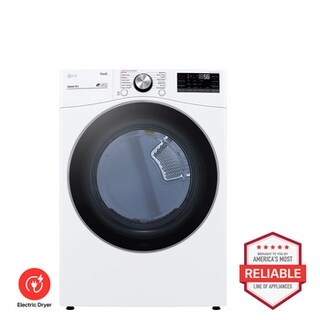
LG DLEX4200W Electric Dryer Brought to You by Americas Most Reliable Line of Appliances - Front View
Photo: DLEX4200W. Photo source
Manufacturer sources

LG DLEX4200W

Venting & exhaust

Clothes dryer · US market · 47 owner topics

LG DLEX4200 / DLGX4201 front-load dryer family

Covers DLEX4200W and the manufacturer-listed models in this family.

LG DLEX4200 / DLGX4201 front-load dryer family

Install the 4200 family with separate electric and gas connection plans

The DLEX4200/DLGX4201 spec sheet lists 7.4 cu. ft. capacity and product dimensions of 27 x 39 x 30 1/8 inches, with 51 3/8 inches depth when the door is open. Use those product dimensions for fit planning, then follow the installation manual for required spacing, clearances, outlet placement, vent route, and gas service. Door-open depth is not the same as the clearance needed in a closet.

The electric DLEX4200 uses a 240 V, 30 A connection; the gas DLGX4201 uses 120 V, 15 A and a gas supply. The specification sheet lists electric four-way and gas three-way venting options. Do not apply the electric rating or electric venting directions to the gas code.

  1. Confirm the exact DLEX/DLGX code, fuel, electrical rating, outlet, venting option, and steam-water connection before installation.
  2. Check product fit including open-door depth; use the manual for closet clearances and duct tables.
  3. Have a qualified installer complete electric/gas connections and concealed vent changes.

Measure the laundry opening and path

Measure the route through doorways and turns, and measure the final opening with the door open. The product depth grows to 51 3/8 inches when open, so check that a closet door, hallway, or laundry room door does not collide with the dryer door. The installation manual provides clearances and closet-air requirements; use those values for the final design rather than the product dimension alone.

Confirm the floor supports the unit and that the dryer can be leveled. If stacking, use only the listed compatible kit and follow the matched washer/dryer instructions. Keep access to the plug, gas shutoff for DLGX, water inlet for steam models, and exhaust connection. Do not pull the dryer forward while connected to gas or venting.

Select vent direction by model fuel

The spec sheet lists electric DLEX4200 models with four-way venting options and gas DLGX4201 models with three-way venting options. That means the available transition directions differ by fuel configuration. Check the manual drawings and the correct vent kit before planning a side or bottom exit; do not infer that a kit listed for one variant works on every family member.

The manual requires metal exhaust ducting of the specified diameter and says not to use plastic or combustible material. Gas models must exhaust outdoors. Keep the run short and free of sharp bends; the exact allowed duct length depends on elbows and termination type in the installation table. A vent route inside walls or ceilings should be laid out by a qualified installer.

Keep electric and gas service distinct

For DLEX4200, use the electric installation requirements and cord configuration in its manual. The family sheet identifies 240 V, 30 A. Do not test live terminals or improvise an adapter. A mismatch, damaged cord, or repeated breaker trip calls for a qualified electrician.

For DLGX4201, use the 120 V, 15 A electrical connection plus the manual’s gas connection requirements. Gas must be supplied through the specified connector and shutoff, and the dryer must vent outdoors. Do not connect or leak-test gas piping yourself if you are not qualified; have a licensed installer perform the work.

Set up the steam inlet when present

The 4200 family has SteamFresh/TurboSteam features and its manual provides an inlet hose installation for steam models. Confirm that the unit is connected to the correct household water supply through the supplied Y connector arrangement described by the manual. Keep water lines away from hot exhaust and sharp bends. Check the connections for leaks after installation without opening the dryer cabinet.

If the steam feature is not used, do not assume the inlet hose is absent or incorrectly connected; follow the installation manual. If water leaks from a fitting or the line is damaged, turn off the supply if safely accessible and contact the installer. Do not run a steam cycle with a leaking line.

Commission and verify airflow

Before first use, remove packaging and clear the drum. The installation manual includes a final check and duct test. Use the specified procedure only after the unit is installed and connected; it verifies exhaust airflow and may illuminate Flow Sense when a restriction is present. Do not treat this installation test as a way to diagnose internal electrical or gas components.

After the installer demonstrates operation, check one small load with a documented cycle and verify the outside damper opens. If the DLEX/DLGX unit rocks, the vent is crushed, a gas smell is present, or water leaks, stop and have the installer correct the setup before normal use.

The dryer is DLEX4200W/B.

This is the electric variant with a listed 240 V, 30 A connection.

Use only the DLEX electrical instructions and matching vent-direction options.

The dryer is DLGX4201W/B.

This is the gas variant with a listed 120 V, 15 A electrical supply plus gas service.

Use the DLGX installation instructions and have gas connections completed by a qualified installer.

Drying is slow immediately after installation.

The manual’s installation test and Flow Sense help identify restricted exhaust.

Inspect the visible duct route and have concealed duct restrictions professionally corrected.

Common questions

Does 51 3/8 inches give me the closet clearance?

No. It is the listed depth with the door open. Use the installation manual for required spacing, closet ventilation and service access.

Can the gas dryer use the electric connection listed for DLEX?

No. The gas model is listed at 120 V, 15 A; the electric DLEX model is 240 V, 30 A. Follow the exact model’s plate and manual.

Specifications & model details

DLEX4200W: model-specific checks

Use the recorded energy source

LG DLEX4200W is listed as Electric. Record power-on, tumbling and heat as three separate observations. Start a slow-drying check with the selected program, load and owner-accessible lint path. The supply rating and any burner or heating-circuit diagnosis require the original requirements for this model.

Recorded model facts

Model details relevant to this topic

SpecificationRecorded valueEvidence
Electrical requirements240V 30 Amps
Manufacturer
7.4 cu. ft. Front Load Electric Dryer - DLEX4200W | LG USA

Individual LG USA PDP: page title and main product heading identify DLEX4200W. Exact specification values are cross-checked against the linked family sheet; see documents and fact contexts.

Official LG US product page visibly names DLEX4200W; family specification sheet DLEX4200_ / DLGX4201_ Spec Sheet lists the same literal model code. Exact family sheet provides the electric/gas rating rows; use only the half corresponding to this code’s stated fuel type. Displayed rating selects the source row for this model’s electric fuel type. Supporting manufacturer sheet: https://www.lg.com/us/support/products/documents/DLEX4200_%20DLGX4201_%20Spec%20Sheet.pdf

Observed Oct 27, 2026
Fuel typeElectric
Manufacturer
7.4 cu. ft. Front Load Electric Dryer - DLEX4200W | LG USA

Individual LG USA PDP: page title and main product heading identify DLEX4200W. Exact specification values are cross-checked against the linked family sheet; see documents and fact contexts.

Official LG US product page visibly names DLEX4200W; family specification sheet DLEX4200_ / DLGX4201_ Spec Sheet lists the same literal model code. Family specification lists the literal model in the electric model row. Supporting manufacturer sheet: https://www.lg.com/us/support/products/documents/DLEX4200_%20DLGX4201_%20Spec%20Sheet.pdf

Observed Oct 27, 2026
Venting option4 Way Venting
Manufacturer
7.4 cu. ft. Front Load Electric Dryer - DLEX4200W | LG USA

Individual LG USA PDP: page title and main product heading identify DLEX4200W. Exact specification values are cross-checked against the linked family sheet; see documents and fact contexts.

Official LG US product page visibly names DLEX4200W; family specification sheet DLEX4200_ / DLGX4201_ Spec Sheet lists the same literal model code. Family sheet distinguishes electric and gas outlet arrangements; this is not a duct-length or installation-clearance finding. Supporting manufacturer sheet: https://www.lg.com/us/support/products/documents/DLEX4200_%20DLGX4201_%20Spec%20Sheet.pdf

Observed Oct 27, 2026
More background: Venting & exhaust

Category & symptom guidance

Venting & exhaust

Confirm the dryer design

Check the label and model instructions to determine whether the dryer is vented, condenser, or heat-pump. A vented dryer moves damp air through a duct to an outdoor termination. Condenser and heat-pump models remove moisture through a different process and may use a collection tank or drain; they do not use the same exhaust-duct plan. The Department of Energy’s consumer guidance describes these broad design differences.

Do not infer the design from the room’s existing wall opening or the appliance’s appearance. If the model information is unclear, find the full code on the product label and the matching owner documentation before changing ductwork. A vent route installed for an older dryer may be unsuitable for a replacement even when both machines fit the same space.

Route vented exhaust to the outdoors

For a vented model, trace the complete path from the dryer outlet to the outside hood. The outlet must terminate outdoors; do not release lint and moisture into an attic, crawlspace, wall cavity, garage, or laundry room. Check that the exterior termination opens freely and is not blocked by debris, a screen, snow, or nearby stored items.

Use the duct type, diameter, maximum route length, and bend limits specified by the exact dryer’s installation instructions. Keep the path smooth and supported, and avoid excess turns or a connector that collapses when the dryer is pushed back. If the route passes through a concealed space or has an unknown termination, have it inspected rather than assuming it is clear.

Choose outlet direction only where permitted

Some vented dryers support side or bottom exhaust with a compatible kit, while others may not allow the same arrangement. Confirm the direction options for the exact model and the kit number, then account for the space the new route needs. LG’s DLEX4000/DLGX4001 sheet lists four-way venting for its electric version and three-way for its gas version; this is an example for those models only.

Do not cut a cabinet opening or reroute the duct based on a family resemblance. The route must preserve the manufacturer’s required clearances and should remain accessible enough to inspect and clean. If the chosen direction would pinch the duct or put a joint out of reach, adjust the layout before operating the dryer.

Maintain the lint filter and duct

Clean the lint screen as the owner instructions direct, generally before or after each load according to the model. Check that it seats fully and that lint has not collected around its housing. A screen does not catch every fiber: lint can accumulate in the duct and at the outdoor hood, so inspect the full route periodically and clean it when buildup is present or airflow declines.

The CPSC identifies lint accumulation and restricted exhaust as fire hazards. If the dryer takes longer than usual, the exterior hood has weak airflow, the laundry area becomes unusually warm, or a duct-clogging indicator appears, stop treating longer cycles as normal. Clean accessible lint and arrange duct inspection if the restriction persists. Do not reach into the appliance cabinet or dismantle the blower path.

For condenser and heat-pump designs

If the dryer is condenser or heat-pump type, follow its instructions for emptying the water container or connecting the drain, cleaning the user-accessible filters, and keeping air passages clear. These steps are specific to that design; do not search for an exterior exhaust hood or apply a vented model’s duct-length rule unless the exact instructions call for it.

A warning, unusual moisture leak, or repeated drying problem after the owner maintenance steps calls for model-specific troubleshooting. Record what indicator appears and whether the tank or drain arrangement is correct. Avoid removing panels to reach internal heat exchangers or fans; use the manufacturer’s support path if the accessible checks do not resolve the condition.

What to do with what you find

A vented dryer has a clear duct terminating outdoors and the screen and route are maintained.

Airflow conditions support normal operation, subject to the exact model instructions.

Continue routine lint-screen care and periodically inspect the duct and outdoor hood.

Drying time rises, airflow weakens, or lint warning persists after accessible cleaning.

A restriction may remain in the exhaust system or appliance airflow path.

Stop relying on extended cycles and arrange inspection of the full duct route.

Have these details ready

  • Full model code and dryer design
  • Duct route and outdoor termination condition for vented models
  • Observed airflow, drying change, or indicator after lint-screen cleaning
  • Tank or drain and accessible filter status for condenser or heat-pump models

Common questions

Can I vent a dryer into the laundry room?

No for a vented dryer; its exhaust must terminate outdoors. Condenser and heat-pump designs handle moisture differently.

Does cleaning the lint screen mean the duct is clear?

No. Fibers can collect farther along the duct and at the exterior termination, so check the full route.

General background sources

These sources support the shared guide. Exact model specifications and matched family procedures have their own sources above.

  1. www.energy.gov/cmei/buildings/consumer-clothes-dryers
  2. www.cpsc.gov/Safety-Education/Safety-Guides/Home-Fire-Electronics-and-Electrical/Overheated-Clothes-Dryers-Can-Cause-Fires
  3. www.cpsc.gov/s3fs-public/5022.pdf
  4. www.lg.com/us/support/products/documents/DLEX4000_%20DLGX4001_%20Spec%20Sheet.pdf
  5. www.lg.com/us/support/product/lg-DLEX4000W.ABWETUS?tab=1

Owner guidance by Specs & Parts, drafted with GPT-6 Luna. Sources and scope.

Sources for DLEX4200W

Suggest a correction