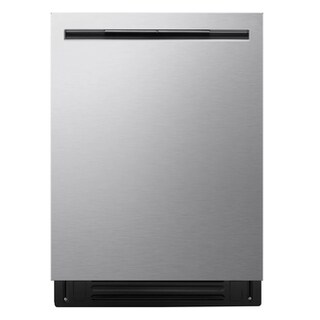
Potential replacements. Compatibility is not guaranteed. Confirm the complete model, suffix, serial/version, diagram position and current part number with the seller or manufacturer before ordering. Seller links open their listings for current price, stock and returns.
We do not have a current, reviewed individual part suggestion for this model. Use the official lookup below with the full appliance label.
Continue with LG Parts
Use the full model and version from your appliance label. This link opens the manufacturer’s parts or support site.
How these suggestions are reviewed · Seller links are unpaid. Specs & Parts does not sell these parts or guarantee fit, performance, or a repair outcome.
LG dishwashers
Specifications for LDNPM545S with owner checks for this product design. Use the matching manual for control sequences and replacement parts.
Specifications & model details
LDNPM545S: model-specific checks
Start with the source identity
LG LDNPM545S is the exact code in this catalog record. This topic should be evaluated for that code and dishwashers category. The original source record is linked below; unrecorded settings, dates and compatibility remain unknown.
Understand what is a reusable filter, what is replenished during use, and how to choose detergent and rinse aid without assuming all machines use the same setup.
Owner guide: Filters & consumables
Category & symptom guidance
Filters & consumables
3 minute read · Shared guidance for dishwashers
Separate reusable parts from supplies
A dishwasher filter is normally a washable component, not a routine disposable cartridge. Many machines have a screen and a finer filter that capture food particles; some add a removable basket. Inspect the tub bottom to identify your arrangement, then use the owner instructions for removal and cleaning. Do not order a replacement just because the filter looks dirty.
Detergent and rinse aid are consumables. Salt is used only by dishwashers designed with a water-softening reservoir; it is not a universal dishwasher supply. A water softener in the home does not automatically mean the appliance has a salt compartment. Check the detergent dispenser and the exact model’s owner material before buying specialty products.
Choose detergent for the machine
Use a product labeled for automatic dishwashers. Hand dish liquid creates suds and can spill from the machine. Available forms include powder, gel, tablets, and packets; the dispenser and cycle determine where a dose should go. Do not assume a single-dose packet is suitable for every short cycle, since it may not dissolve or release at the intended point.
For a short wash, check whether the manufacturer directs detergent into a prewash compartment or another specified location. For a longer cycle, many designs use the main detergent cup. Keep detergent dry, close its container, and store it apart from hand dish soap so another household member does not accidentally substitute the wrong product.
Use rinse aid as a drying aid
Rinse aid helps water sheet from dish surfaces and can reduce spots. It is dispensed from a dedicated reservoir on machines equipped with one; its setting and refill indicator vary. Start with the manufacturer’s recommended setting, then adjust only if the pattern is clear: widespread droplets may call for more aid, while blue or slick residue may suggest excess.
Rinse aid does not repair a blocked spray arm or replace detergent. If glasses remain cloudy, distinguish removable mineral film from permanent etching before changing several things at once. Etching is irreversible and can be encouraged by too much detergent combined with very soft or hot water. Make one controlled adjustment and compare similar loads.
Know whether water softener salt applies
If the machine has a marked salt reservoir, follow its fill instructions and use dishwasher salt specified for that purpose. Do not pour table salt into a detergent cup or rinse-aid dispenser. If there is no salt reservoir, do not add salt anywhere in the tub; manage mineral spotting through the options and products your model supports.
Hardness varies by location and household treatment. A local water report or test can help explain repeated mineral spots, but it does not identify the dishwasher’s internal design. When water is extremely hard, a household softener may be relevant; check both the appliance instructions and the home system setup before making changes.
Buy only after identifying the part
If a filter, basket, cap, or dispenser component is physically broken, use the full model identifier from the appliance label when checking parts information. Similar-looking assemblies can have different locks and dimensions. A product listing that says “fits many dishwashers” is not proof that a part matches your unit.
For routine upkeep, clean and reinstall intact filter pieces rather than replacing them on a calendar. Replace consumables when their reservoir or supply is depleted, following the machine’s indicator and fill limits. Keep the packaging or product name if a wash result changes after switching detergent; that makes the comparison practical.
What to do with what you find
There is no salt reservoir or marked salt-fill location.
The appliance may not use dishwasher salt.
Do not add salt; consult exact-model supply guidance.
Have these details ready
Full appliance model number for any part inquiry
Photo of the filter and dispenser layout
Water hardness information if mineral film is recurring
Common questions
Is the filter replaced every year?
There is no universal replacement interval. Clean an intact reusable filter and replace it only if damaged or the model instructions specify otherwise.
Can I use hand dish soap if I run out of detergent?
No. It can create excess suds. Wait until you have detergent labeled for automatic dishwashers.
General background sources
These sources support the shared guide. Exact model specifications and matched family procedures have their own sources above.