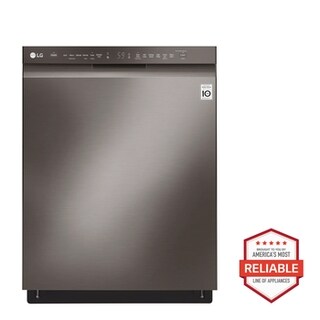
Specifications for LDF5545BD with owner checks for this product design. Use the matching manual for control sequences and replacement parts.
Specifications & model details
LDF5545BD: model-specific checks
Start with the source identity
LG LDF5545BD is the exact code in this catalog record. This topic should be evaluated for that code and dishwashers category. The original source record is linked below; unrecorded settings, dates and compatibility remain unknown.
Evaluate a dishwasher’s published specifications against kitchen fit, household loads, cleaning needs, drying design, and operating costs.
Owner guide: Specification review
Category & symptom guidance
Specification review
4 minute read · Shared guidance for dishwashers
Verify the exact product variant
Begin with the full model identifier, not a shortened family name. Compare the exact identifier on the manufacturer’s product page with the retailer listing and any specification sheet. Suffixes can distinguish finish, configuration, or other variants, and a feature shown for a family may not be included on every version. GE’s GDT650SYVFS support page is a specific example; it cannot establish the options on another GE model or another brand.
Save the source and date for each specification you rely on. If two listings disagree, prioritize a manufacturer document for the exact model and ask the maker to resolve the discrepancy. Do not treat a marketing phrase such as “quiet,” “smart,” or “efficient” as a complete specification without the measurable detail and its test basis.
Check the physical fit and loading pattern
Measure the installation opening, available depth, door swing, nearby cabinet fronts, and clearance for hoses or an open door. Compare these measurements with the exact installation requirements rather than the exterior dimensions alone. If a model has an automatically opening door, confirm that the door has room to move and will not strike a cabinet, island, or nearby appliance.
Think through the dishes you actually wash: large plates, pots, stemware, tall bottles, plastics, cutlery, or a third-rack load. Rack flexibility matters only if the advertised adjustment and accessory are present on the specific variant. The GE shared manual describes different rack layouts across covered families and marks some features conditional; use that as an example of why a family-wide illustration should not be assumed to match every unit.
Compare cleaning programs to real needs
Review the actual cycle list and what each program is designed to handle. A household with frequent baked-on cookware may value a suitable heavy program; a mostly lightly soiled load may prioritize a shorter option. Determine whether a sensing cycle, one-rack zone, bottle jets, or sanitizing option is present on the precise model and what limitations the manual gives. Do not assume one manufacturer’s button label maps to another brand’s wash behavior.
Look at stated cycle duration only in context. The GE manual for its specified family notes that time can change with soil level, inlet temperature, and selected options, and gives examples of some added-time effects. Other products can behave differently. If cycle length is important to your routine, compare the manufacturer’s stated ranges and ask what conditions affect them rather than treating one advertised number as guaranteed.
Distinguish drying approaches
Determine whether the model uses a visible or hidden heater, fan assistance, residual-heat drying, or an automatic door-opening feature. The product description and exact-model manual should say which features apply. Bosch’s drying page provides guidance for Bosch designs and explains that results depend on item material and loading; it should not be transferred to another brand’s machine.
Consider what “dry” means for your household. Plastics often retain droplets more readily than glass or ceramic, and a machine may prioritize energy use over fully dry plastic. Check whether rinse aid is recommended, which drying options are available, and whether door opening is part of normal operation. Do not compare drying claims without noting the cycle, options, and types of dishes involved.
Review efficiency and ownership cost
Use DOE’s efficient-dishwasher comparison for energy and water figures, and preserve the rating basis for each candidate. Compare the same units and test assumptions. Then apply your electricity, water, and sewer rates and expected annual cycle count to estimate household operating cost. A rating is a standardized reference, not a promise about a household that frequently selects extra heating, special soil programs, or extended drying.
Add actual quoted purchase, delivery, installation, and removal amounts to the comparison. Include costs for electrical, plumbing, or cabinet changes only when a contractor or seller has documented them. Avoid generic estimates or broad claims about savings. A simple table with model, energy, water, relevant features, quoted price, and assumptions makes tradeoffs visible without pretending that one score fits every home.
Check support, warranty, and notices
Before choosing, locate the exact model’s warranty statement, manual, and official support route. The FTC consumer warranty guide explains general warranty concepts; the appliance’s actual written terms determine the stated coverage and process. Ask who handles a claim and what proof is required, but do not infer warranty outcome from a retailer description or a feature comparison.
Search the CPSC recall database with the full model identifier and check any affected serial or production range. A missing search result is not a guarantee that no future notice will appear. For a used model, request the rating-label details and check them yourself. The final review should record what was confirmed from official sources and what remains unanswered, especially availability of a feature or exact variant.
What to do with what you find
The retailer page and manufacturer page list different cycle or drying features.
The candidate’s configuration is unresolved.
Ask the maker to confirm the complete model suffix and save the written answer before comparing.
The model fits the opening but an auto-open door or rack adjustment is unverified.
Installation usability remains uncertain.
Confirm clearance and exact feature presence from the model documentation.
Have these details ready
Exact model identifier and manufacturer specification
Installation opening and door-clearance measurements
DOE energy and water figures with rating basis
Owner-specific utility rates and annual cycle estimate
Written purchase and installation quotes
Exact warranty and recall search results
Common questions
Can I use a review for a similar model to confirm a feature?
Use it as a question to investigate, not as confirmation. Verify the complete model identifier against manufacturer documentation.
Does an energy label predict my actual annual bill?
It provides a comparison basis. Apply your own run count and utility rates, and account for cycle and option differences.
General background sources
These sources support the shared guide. Exact model specifications and matched family procedures have their own sources above.
44 records in this manufacturer/public-source group. The group uses the brand, category and recorded design, rather than a guessed series or production year.
These are source-record ranges. They do not establish current availability, a shared repair platform or installation compatibility.
Put the source facts side by side
LDF5545BD has 69 recorded specification fields. Compare the fields that matter for your space and use, then resolve gaps with the original documents. These are catalog candidates; fit, availability, and successor relationships have not been established.