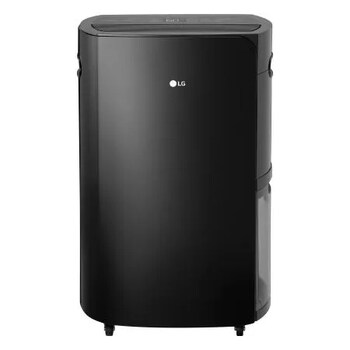
Specifications for UD701KOG1 with owner checks for this product design. Use the matching manual for control sequences and replacement parts.
Specifications & model details
UD701KOG1: model-specific checks
Start with the source identity
LG UD701KOG1 is the exact code in this catalog record. This topic should be evaluated for that code and dehumidifiers category. The original source record is linked below; unrecorded settings, dates and compatibility remain unknown.
Match the unit’s electrical rating and cord to the location, and recognize visible damage that calls for service rather than owner testing.
Owner guide: Electrical requirements
Category & symptom guidance
Electrical requirements
4 minute read · Shared guidance for dehumidifiers
Read the unit’s electrical rating
Find the product label and note the voltage, frequency, current or power information shown for the appliance. Use the values on the exact unit and its manual when checking a receptacle or planning the installation. A retailer listing for a similar model is not a substitute because ratings can vary. If the label is missing or unreadable, ask the manufacturer to identify the requirements from the model and serial information.
The rating helps an owner compare the product with the available electrical supply, but it does not authorize opening the appliance or testing a circuit. If you are unsure whether a room’s receptacle is appropriate, consult a qualified electrician or the manufacturer’s instructions.
Photograph the electrical label and record its stated ratings.
Compare the label with the exact manual and the intended installation location.
Use the supplied cord as intended
Inspect the supplied cord and plug before first use. Route the cord so it is not pinched by furniture, trapped beneath the appliance, stretched tight, or placed where people may trip over it. Keep it arranged as the manual shows, and use only the cord supplied or a manufacturer-approved replacement. Do not cut, splice, or modify the cord.
Check that the cord reaches the intended receptacle without an extension cord or adapter unless the manufacturer explicitly permits that arrangement. The outline’s conservative planning approach is to avoid extensions and adapters. If the location cannot be reached with the supplied cord, choose another placement or ask the manufacturer what approved options exist.
Trace the cord path from the unit to the receptacle before positioning the appliance.
Keep the plug accessible and the cord free of tension, pinching, and foot traffic.
Check the receptacle instructions
Use a grounded wall receptacle only when the exact product guide specifies that requirement, and follow all other stated supply instructions. Do not assume that a receptacle is suitable because another appliance plugs into it. A qualified electrician can assess a questionable receptacle or the building’s wiring without requiring you to probe live parts.
Avoid adapters that defeat grounding and do not use a receptacle that appears loose, cracked, discolored, or otherwise damaged. If a plug does not fit normally or the outlet behaves unusually, stop using that location and arrange professional evaluation. Do not use an improvised electrical test to decide whether a damaged receptacle is safe.
Read the exact manual’s receptacle and grounding instructions.
Ask a qualified electrician to assess a visibly damaged or uncertain receptacle.
Recognize cord or outlet damage
Look for cuts, exposed conductors, melted or scorched areas, bent plug blades, or a plug that feels unusually loose in the receptacle. These visible observations are enough to stop use; you do not need to measure voltage or current. A burning smell, smoke, sparking, or unusual heat at the plug or outlet also calls for immediate disconnection if it can be done safely and professional help.
Do not tape over damaged insulation, bend plug blades back into place, or keep operating the appliance to see whether the symptom returns. The cord and receptacle carry the appliance’s supply, and visible damage needs proper assessment. Contact the manufacturer for appliance-cord service guidance and an electrician for building wiring concerns.
Stop operation when you see or smell signs of electrical damage.
Arrange qualified service for the damaged appliance cord or receptacle.
Plan the location around power access
Choose a dry, accessible location that meets the appliance’s placement instructions and lets the supplied cord reach without strain. Keep the plug connection away from a route where collected water could spill or where a hose leak could reach it. Do not position the appliance so the cord must pass through a doorway that can pinch it or across a path where it can be snagged.
If the only available outlet requires an extension, an adapter, or an unsafe cord route, reconsider the location before operating the dehumidifier. An electrician can advise whether a suitable receptacle can be provided. Keep the product label and model information available so any electrical question can be answered for the correct unit.
Match the room layout, water path, and supplied-cord reach before installation.
Resolve an unsuitable outlet location with a different placement or qualified electrical advice.
What to do with what you find
The label’s electrical ratings and manual instructions match the intended supply and receptacle.
The basic owner-facing compatibility information is available for setup planning.
Use the supplied cord as directed and keep it routed without strain or damage.
The supplied cord cannot reach without an extension or adapter.
The proposed placement does not meet the conservative cord-use plan or may conflict with product instructions.
Choose a different location or ask the manufacturer and a qualified electrician about approved options.
The cord, plug, or receptacle is scorched, cracked, loose, or unusually hot.
Visible damage may present an electrical hazard and is not an owner troubleshooting condition.
Stop using the unit and arrange manufacturer service or electrician evaluation as appropriate.
Have these details ready
Photo of appliance electrical rating label
Exact model manual electrical instructions
Visible condition of plug, cord, and receptacle
Common questions
Can I use an extension cord if the outlet is far away?
Avoid it unless the exact manufacturer instructions explicitly permit it. Prefer a suitable location or qualified electrical advice.
Should I test the outlet with a meter?
No live probing is needed for owner checks. Have a qualified electrician assess an uncertain or damaged receptacle.
General background sources
These sources support the shared guide. Exact model specifications and matched family procedures have their own sources above.