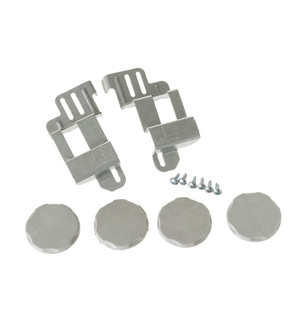
Specifications for GE24STACK with owner checks for this product design. Use the matching manual for control sequences and replacement parts.
Specifications & model details
GE24STACK: model-specific checks
Start with the source identity
GE GE24STACK is the exact code in this catalog record. This topic should be evaluated for that code and washers category. The original source record is linked below; unrecorded settings, dates and compatibility remain unknown.
Work out whether the washer skipped spin, is still balancing the load, or cannot spin because water remains. Start with the load and visible setup before treating it as a machine fault.
Owner guide: Not spinning
Category & symptom guidance
Not spinning
4 minute read · Shared guidance for washing machines
First identify what the cycle did
A washer that finishes with wet clothes may have skipped high-speed spin, reduced spin to handle an uneven load, or stopped before draining. Note whether water is still visible, whether the cycle ended normally, and whether the load is clumped on one side. Those clues separate a balance issue from a drain problem or an interrupted cycle.
Do not compare a high-efficiency washer’s water level with an older conventional washer. Low water during wash is normal on many high-efficiency designs and says little about whether final spin worked. Focus on the water left in garments and the tub after the cycle.
Redistribute an uneven load
Pause the cycle and wait until the basket or drum has stopped before reaching inside. Untangle sheets, towels, or garments that have wound together, then spread items around the basket on a top-loader or distribute them evenly in a front-loader. A single bulky item can shift the load off balance even when the washer is not full.
For a top-load washer with an agitator, keep bulky pieces from wrapping tightly around the center post. In an impeller design, distribute articles around the wash plate rather than stacking everything to one side. For a front-load washer, avoid packing the drum tightly; a very small load can also gather at one spot. Restart or continue using the cycle controls provided for that machine.
Check selection and remaining water
Look at the selected cycle and any spin modifier. Delicate or hand-wash programs may use a slower spin, and some controls let the owner reduce or omit spin. If there is standing water, select a drain or spin-only option only if that control is labeled for the purpose on your washer. A blocked household drain, kinked drain hose, or installation issue can prevent the washer from reaching spin.
On the GE PTWN6250M example, the owner manual identifies Drain & Spin as a way to drain the tub and spin water out. That is specific to that model’s controls; use the corresponding labeled function on another washer rather than assuming the same cycle names or button sequence.
Judge the result after a balanced retry
If a balanced, ordinary load completes with clothes still unusually wet and no water in the tub, compare the result across a second suitable load. A repeatable failure across different load sizes makes load distribution less likely. If the washer repeatedly pauses, rocks hard, or cannot reach spin, stop using it and arrange service rather than running repeated high-speed attempts.
If only one bulky item causes the symptom, use the garment’s care instructions and a cycle intended for that item. Waterproof or water-resistant items can behave differently and may require a dedicated cycle on some models; verify the exact cycle list before washing them.
Check for installation restraints after a move
If the washer was recently installed or moved, consider whether shipping restraints were removed as directed for that exact model. A restraint left in place can keep the tub from moving as intended and cause severe vibration or poor spin behavior. Do not pull or dismantle anything based on a generic description: restraint locations and removal steps depend on the washer design.
Compare the installation checklist for the model and look only at the visible rear area if it is safely accessible. If you cannot tell whether required shipping material remains, or the washer is heavy or difficult to reach, stop and have the installer or service provider check it. Do not run repeated spin attempts to see whether the symptom clears. This check is especially relevant when trouble began immediately after delivery, relocation, or a reinstall; a symptom that predates the move needs the ordinary load, drain, and cycle checks first.
What to do with what you find
Water remains in the tub after the cycle.
The washer may be unable to drain, so spin may not have begun.
Use the washer’s labeled drain/spin function if available; otherwise investigate the drain path.
A tangled or one-sided load is present.
The washer may be reducing or withholding spin to manage imbalance.
Redistribute the load and retry with an appropriate cycle.
Balanced loads repeatedly finish very wet without standing water.
A recurring spin fault is more likely than a one-off load issue.
Stop repeated attempts and request service with the cycle and load details.
Have these details ready
Whether water remains after the cycle
Cycle and spin setting used
Load type and whether it was tangled or one-sided
Whether a balanced retry changes the result
Common questions
Why did the washer leave clothes wet when the tub looks empty?
A reduced spin, spin setting, load imbalance, or interrupted cycle can leave clothes wet even after water drains. Check the cycle’s spin selection and compare with a balanced load.
Should I run spin again with a heavy blanket?
Only if the care label and the washer’s instructions allow that item and the load can remain balanced. A single bulky item can trigger imbalance, so use an appropriate cycle or laundering method.
General background sources
These sources support the shared guide. Exact model specifications and matched family procedures have their own sources above.
Explicit product_first_distribution_date in exact OEM primary SKU record; not a manufacturing year or import date. Primary source: https://www.geappliances.com/appliance/GE-Washer-Dryer-24-Stack-Bracket-Kit-GE24STACK