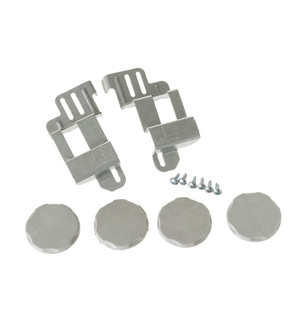
Specifications for GE24STACK with owner checks for this product design. Use the matching manual for control sequences and replacement parts.
Specifications & model details
GE24STACK: model-specific checks
Start with the source identity
GE GE24STACK is the exact code in this catalog record. This topic should be evaluated for that code and washers category. The original source record is linked below; unrecorded settings, dates and compatibility remain unknown.
Check whether the washer is paused, still completing a cycle, or leaving standing water. Begin with accessible hose and household drain conditions; internal pump work is not an owner task.
Owner guide: Not draining
Category & symptom guidance
Not draining
4 minute read · Shared guidance for washing machines
Confirm what remains in the washer
Look through the lid or door to see whether water is standing in the tub or drum, or whether only clothes are wet. Note whether the cycle stopped before the drain stage, whether a code appeared, and whether you hear a drain sound. Wet clothes without standing water can indicate a spin issue rather than a drain failure.
If water is present, do not force the door or reach into moving parts. Use the normal pause or cancel control as described for the washer. A front-loader may retain water behind a locked door; follow its model-specific emergency or drain instructions rather than prying the door open.
Inspect the visible drain route
With the washer stopped, check the visible drain hose for a kink, crushing, or a section trapped behind the appliance. Look where the hose enters the standpipe or laundry tub for displacement or overflow. Do not pull the machine forward if that could strain water or power connections; correct only an obvious accessible obstruction or dislodged hose.
Drain height, hose insertion, and air gap requirements vary. The GE PTWN6250M installation sheet gives a model-specific standpipe height range, while the LG WM4000H*A instructions specify a different hose arrangement. Use the exact installation directions for your washer rather than copying either set of dimensions.
Check household drainage and cycle selection
If the laundry sink or nearby drain is also slow, the household drain may be contributing. If the standpipe overflows only when the washer pumps out, stop the cycle and have the drain path assessed; a washer fault cannot be assumed from that symptom alone.
Check that the selected program includes draining and has not been paused. Some models provide a labeled drain or spin-only cycle. On the GE PTWN6250M, the owner guide identifies Drain & Spin for removing water from the tub. Use that named example only for the model; on another washer, use its own labeled function.
Set a boundary for troubleshooting
If the visible hose is clear and correctly placed but the washer repeatedly leaves water, the issue may be at the pump, filter, or internal drain path. Use an owner-accessible filter only if the exact manual explains how to access it and how to manage retained water. Never remove a panel or put hands into a pump opening without explicit owner instructions.
Stop using the washer if water leaks beneath the cabinet, the drain hose repeatedly jumps free, or a fault message returns after the manual’s owner step. Give support the amount of remaining water, cycle stage, and any pump sound or display message.
Look for a siphoning or discharge setup clue
A washer can appear unable to drain if water flows out while it is filling, or if discharged water returns or spills at the household drain. Watch from a safe distance during the next supervised cycle: note whether the tub level rises, stays unusually low, or water appears around the standpipe or laundry tub. Stop the cycle if water spills or the hose shifts.
Drain hose placement and standpipe requirements are model-specific. If the appliance was recently installed or the symptom began after a move, compare the visible hose arrangement with the exact installation instructions, including how securely the hose is held and how it enters the drain. Do not seal the standpipe or push the hose deeper based on guesswork; incorrect placement can cause siphoning or overflow. Ask an installer or plumber to correct an uncertain drain setup.
What to do with what you find
Only clothes are wet and no water remains in the tub.
The washer may have a spin or balance issue rather than a drain failure.
Use the not-spinning checks and inspect the load and selected spin setting.
Drain hose is visibly kinked or displaced.
The external drain route may be obstructing or spilling the discharge.
Correct the accessible routing according to the model’s installation guide.
Standing water returns despite a clear visible hose and proper household drain.
An internal drain issue may need service or documented owner-filter cleaning.
Follow only exact-model owner instructions or request diagnosis.
Have these details ready
Standing water or only wet clothing
Cycle stage and display message
Visible drain hose routing and household drain behavior
Whether a labeled drain cycle changes the result
Common questions
Can I open the pump filter to drain the water?
Only if the exact washer’s owner manual describes that owner task and the steps for managing retained water. Filter locations and procedures differ.
The laundry sink is draining slowly too. Is the washer pump broken?
Not necessarily. A slow household drain or standpipe can cause discharge problems. Have the shared drain path assessed before concluding the appliance has failed.
General background sources
These sources support the shared guide. Exact model specifications and matched family procedures have their own sources above.
Explicit product_first_distribution_date in exact OEM primary SKU record; not a manufacturing year or import date. Primary source: https://www.geappliances.com/appliance/GE-Washer-Dryer-24-Stack-Bracket-Kit-GE24STACK