What is recorded for GTS21KCXBB
GE GTS21KCXBB — Volts/Hertz/Amps: 120v; 60Hz; 15A.
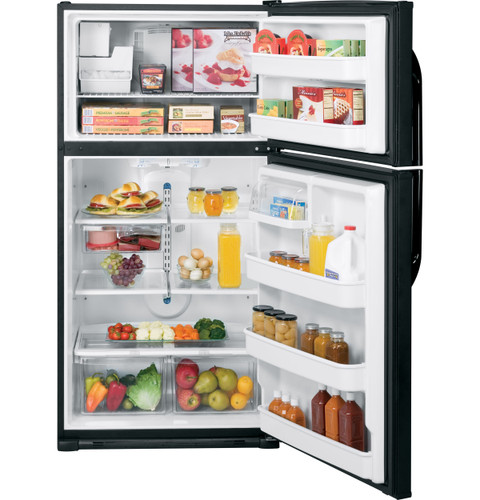
GE GTS21KCXBB
Refrigerator · US market · 40 owner topics
Guidance for GE refrigerators. Check the feature and control descriptions against your model.
Specifications & model details
GE GTS21KCXBB — Volts/Hertz/Amps: 120v; 60Hz; 15A.
Compare the refrigerator’s own electrical rating with the receptacle and the information your installer or electrician can verify. The nameplate describes the appliance; it does not certify the wiring in your home.
Category & symptom guidance
Find the appliance rating information on its nameplate or in the documentation for its exact model. Record the values and any connection instructions as printed; do not infer a required supply from another refrigerator’s label or a general online example. The rating is the appliance’s stated electrical information, not a measurement of what reaches the outlet.
Check that the model number on the documentation matches the refrigerator you are installing. If a label is hard to find or unreadable, ask the manufacturer or retailer where that model’s rating appears. Keep a photo of the label with delivery paperwork so you can share the exact information with the installer without moving the appliance again.
Look at the receptacle face and note any legible markings. You can also note its shape and location, but those details alone do not establish that the circuit meets the refrigerator’s requirements. Do not remove the cover, insert probes, open a panel, or use a live test to settle a mismatch.
A plug that appears to fit is not proof that the supply is suitable. If the outlet is unmarked, damaged, loose, discolored, or differs from the connection instructions, pause before plugging in. Give the nameplate and outlet observations to the installer or a qualified electrician and ask them to verify the supply using appropriate professional methods.
Put the appliance’s stated requirements next to the outlet information and installation instructions. A clear match is useful planning evidence, but it does not prove the household circuit is correctly wired, dedicated where required, or in suitable condition. Those property-level questions belong to the installer or electrician.
If the nameplate and outlet descriptions appear inconsistent, do not choose whichever source seems more plausible. Confirm the exact model and have the responsible professional check the planned connection. Avoid converting a value or guessing from a plug shape; the supplied source material does not establish universal electrical values for all refrigerators.
Do not use an outlet or cord that is visibly damaged, cracked, scorched, or loose. If you notice unusual warmth, a burning odor, sparking, or discoloration around the connection, stop using it if you can do so without touching a hot or damaged part, and contact an electrician. If there is smoke or fire, move away and contact emergency services.
These observations indicate a possible electrical hazard; they do not identify the cause. Do not repeatedly plug and unplug the refrigerator to see whether the symptom returns, and do not open the receptacle. Tell the professional what you observed and when, including whether the appliance was connected.
Before delivery, ask who is responsible for confirming that the receptacle and circuit suit the model, and whether any property work must happen first. Share the label photo, manual, and outlet observations. Ask the installer to explain any discrepancy and to identify who should correct it; delivery crews may have limits on electrical work.
If the refrigerator has already arrived and the supply is uncertain, leave the connection unresolved and contact the retailer, manufacturer, or electrician. The Department of Energy kitchen appliance guide is general planning information, not a source for model-specific installation requirements or household utility values. Use the exact model documentation for appliance instructions.
The information is aligned for planning, but it does not verify circuit condition or wiring.
There is not enough reliable information to conclude the supply is suitable.
The connection may be unsafe, and visual inspection cannot establish the cause.
No. Fit alone does not establish circuit condition or compliance with the model’s instructions. Have the installer or electrician verify the connection.
This article does not recommend live testing. Use the nameplate and visible markings for discussion, and refer supply verification to a qualified professional.
These sources support the shared guide. Exact model specifications and matched family procedures have their own sources above.
Owner guidance by Specs & Parts, drafted with GPT-6 Luna. Sources and scope.
Recorded model facts
| Specification | Recorded value | Evidence |
|---|---|---|
| Volts/Hertz/Amps | 120v; 60Hz; 15A | ManufacturerGE — GTS21KCXBB Exact-model manufacturer resource; specification fields Exact SKU GTS21KCXBB; manufacturer specification label: Volts/Hertz/Amps. Observed Oct 27, 2026 |
| Annual energy use | 515 kWh/year | ArchiveCalifornia Energy Commission — Refrigerators archive cec-refrigerators.xlsx; sheet Table; row 25574 Regulatory archive observation; test standard and measurement context follow the original record. Observed Oct 27, 2026 |