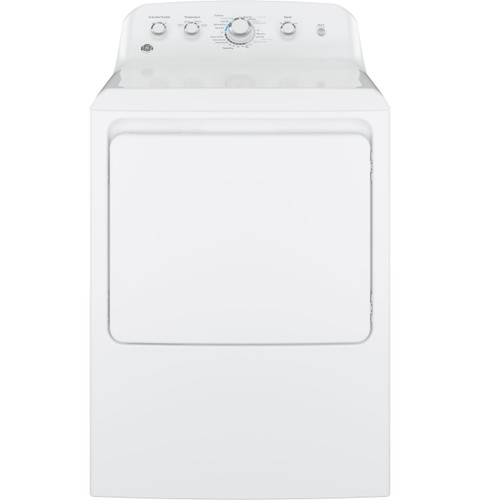
Before seasonal or prolonged storage, unplug the GTD42 only if its installation instructions permit safe access, clear lint from the filter and visible exhaust opening, and keep the surrounding area free of dust and combustible materials as its manual directs. The manual emphasizes lint management around the exhaust opening. If the dryer has been stored in a damp area or its vent path is concealed, have the installation checked before resuming regular use.
GE GTD42EASJWW is the exact code in this catalog record. This topic should be evaluated for that code and dryers category. The original source record is linked below; unrecorded settings, dates and compatibility remain unknown.
Prepare a dryer for a move, an extended idle period, or a change in season while protecting the drum, airflow path, and utility connections.
Owner guide: Storage & seasonal care
Category & symptom guidance
Storage & seasonal care
4 minute read · Shared guidance for clothes dryers
Before a long idle period
Run a normal load to leave the drum dry, then remove lint from the screen and wipe visible moisture from the drum and door area. Leave the drum empty. If the dryer has a condensate tank, empty it; follow the model's instructions for any remaining water in a condenser or heat-pump system. Do not pour antifreeze, deodorizer, or cleaning chemicals into the appliance unless the exact model instructions direct it.
A vented dryer should be left with its exhaust route clear and connected as designed. Avoid covering the outdoor outlet or pushing the appliance so tightly into a closet that its duct is crushed. For a condenser or heat-pump model, keep its air openings clear and do not store items against intake or exhaust grilles.
Clean the lint screen and leave it installed.
Empty a water container where fitted and leave the drum dry.
Keep all designed airflow openings clear during storage.
If the dryer will be moved
Disconnecting or reconnecting the appliance involves different risks for gas and electric dryers. Have the utility connections handled by someone competent to work on the specific installation; do not pull a gas dryer forward while its gas line remains under tension. An electric dryer also has a high-voltage connection. Use the appliance instructions for approved transport preparation and secure the drum or accessories only where directed.
Before the move, photograph the model label, connection arrangement, and duct route. Keep removable accessories and any shipping hardware together. The owner's manual for the exact model governs whether a shipping brace is needed and how the dryer should be positioned. Do not assume that a past model's transport instructions apply.
Seasonal change in a vented installation
In colder or wetter weather, inspect the outdoor exhaust termination for leaves, lint, snow, or other blockage and make sure its moving flap can open freely. Check that the flexible duct behind the machine is not crushed after cleaning or repositioning. Long duct runs and restrictive routing can impede airflow; a vent indicator or longer drying time warrants attention to the entire route, not just the screen.
Do not add a screen, fine mesh, or improvised cover over the outdoor termination. It can catch lint and obstruct exhaust. Keep the termination arranged for the dryer and local installation requirements. If it is on a roof, high wall, or otherwise unsafe to reach, arrange an accessible inspection rather than climbing or dismantling the outlet.
Seasonal care for moisture-collecting designs
Condenser and heat-pump dryers do not use the same outdoor exhaust care as a vented dryer. Their owner routine may include emptying a tank, cleaning a door filter, or maintaining an accessible exchanger. Review the exact design's instructions before storage, because some systems retain water and some components are not intended for user removal.
If a stored appliance has been in a cold or damp place, allow it to return to the conditions specified by its instructions before operation. Look for moisture around the control area, drum, and plug, and verify that required air passages are unobstructed. Do not energize an appliance with visible water at electrical parts or a damaged cord.
Resume use with a short inspection
Before the first load after storage, confirm the appliance is stable, the door closes normally, and the lint screen is present and seated. For a vented dryer, check the accessible duct and outside outlet; for a tank-equipped design, confirm the tank is correctly installed or the drain hose is routed as specified. Run a small ordinary load and observe for unusual vibration, exhaust restriction, or an alert.
If the dryer was disconnected, relocated, or switched between gas and electric service, do not use it until the connections and configuration have been confirmed for that exact unit. A matching appearance or a familiar plug does not establish correct installation. Keep the model label and any changed installation details available if support is needed.
What to do with what you find
The dryer sat unused and the drum is dry, but the lint screen or tank is dirty or full.
A normal owner-care step is due before the next load.
Clean the screen, empty the tank if fitted, and confirm all parts are seated.
The dryer was moved or a utility connection was changed.
Installation correctness cannot be inferred from the previous setup.
Have the connection and vent configuration confirmed before operation.
Have these details ready
Model number and gas/electric designation.
Whether the unit is vented, condenser, or heat pump.
Details of storage conditions, disconnection, or relocation.
Common questions
Should I close or cover the vent outlet during winter?
Do not add a restrictive cover or fine screen. Keep the termination clear and arrange an inspection if it is inaccessible.
Do all dryers need the same storage preparation?
No. A vented dryer has an outdoor duct; condenser and heat-pump units can retain collected water and have different filters. Use the exact model instructions for owner-accessible preparation.
General background sources
These sources support the shared guide. Exact model specifications and matched family procedures have their own sources above.