Appliance & electronics support
Find your model numberAbout our sources
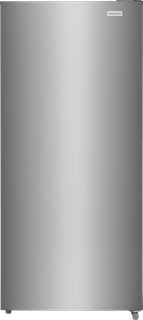
Frigidaire FFUV2126AV freezer — manufacturer product photo
Photo: FFUV2126AV. Shared source photo. Photo source
Public catalog

Frigidaire FFUV2126AV

Poor performance

Freezer · US market · 41 owner topics

Frigidaire upright freezers

Guidance for Frigidaire freezers. Check the feature and control descriptions against your model.

Frigidaire upright freezers

Use Frigidaire’s 24-hour cooling checks before service

Frigidaire’s freezer troubleshooting applies to upright and chest freezers and sets a useful boundary: after installation, an outage or reset, it says the cabinet needs 24 hours to stabilize. During that period, check power, room conditions, door closure and airflow, but avoid repeated set-point changes. The recommended freezer setting is 0°F in its general cooling article.

The checklist also says not to install a unit where room temperature drops below 55°F, and gives a specific electrical supply description. These are support-article recommendations; the exact installation guide remains the final authority for a model’s circuit and climate requirements.

Verify power and the outlet

Check the interior or control lights to establish that the freezer has power. Frigidaire’s support guide specifies an individual, properly grounded 115- or 120-volt branch circuit with a 3-prong receptacle, protected by a 15- or 20-amp breaker or time-delay fuse. Check for a tripped GFCI if used. Do not use an extension cord. Confirm the exact installation manual before changing an outlet or circuit.

The support page gives freezer operation from -6°F to 6°F and a suggested setting of 0°F. These values are general Frigidaire guidance; check the exact manual if its temperature display, storage requirements or installation setup differ. Use a thermometer to confirm the cabinet, not just the setting shown on a control.

Check the room and door

Frigidaire does not recommend installing a freezer where ambient temperature falls below 55°F. Make sure stored items do not prevent the upright door from closing, and inspect the gasket for a gap. Its guidance suggests a dollar-bill seal check: close the door on the bill and tug gently; some resistance should be felt. Clean the gasket with warm soapy water.

Frigidaire’s outlet instructions specify a dedicated grounded 115/120-volt branch circuit and a 3-prong receptacle, with a 15- or 20-amp breaker or time-delay fuse. Do not use an extension cord. If a GFCI outlet has tripped, reset it according to its instructions and see whether the freezer powers up.

Clear shelves and allow recovery

Keep food away from airflow vents and leave space around stored items. Frigidaire warns that overloading can restrict circulation. After correcting a blocked vent, installation, power interruption or set point, allow 24 hours for temperature stabilization. Use a thermometer and keep the door closed during the test. The same article gives the freezer operating range as -6°F to 6°F and suggested setting as 0°F.

The bill check is a simple seal screen, not a measurement of gasket compression: close the door on a dollar bill and tug. Some resistance should be present. Repeat at several positions around the perimeter. Clean a dirty gasket with warm soapy water; if a section has a gap, consult support rather than trying to stretch it.

Use noise as one observation, not a diagnosis

Frigidaire lists compressor hum, fans and refrigerant gurgling among signs that the appliance is attempting to cool. If it has run for 24 hours and still is not cooling, its support path recommends service. Report the temperature trend, lighting, sound, room temperature and whether the door seal passes the bill check; do not conclude that an individual component has failed from sound alone.

Frigidaire says service is appropriate if the freezer has run for 24 hours and still is not cool. Before that call, clear blocked vents and reduce overcrowding while keeping the door closed. Tell support the actual freezer temperature, ambient room temperature, time since power-up and whether the unit makes fan/compressor sounds.

Specifications & model details

FFUV2126AV: model-specific checks

Choose the recorded defrost branch

Frigidaire FFUV2126AV is listed with Automatic defrost. Use the branch for the listed defrost system. Note whether frost is confined to a door edge, covers stored packages, or returns on an interior surface. Door closure, moisture entry and a defrost-system problem produce different patterns.

Use the upright-freezer layout

Frigidaire FFUV2126AV is recorded as upright. Check the door swing, shelf or drawer seating, and packages projecting into the seal. For uneven cooling, keep the source-listed defrost design in view: airflow checks apply to a fan-cooled layout, while a manual-defrost layout has its own unloading and defrost procedure.

Recorded model facts

Model details relevant to this topic

SpecificationRecorded valueEvidence
Total capacity21.1 cu ft
Certification
ENERGY STAR — Freezers

freezers.csv; row 254; ENERGY STAR ID 4514507

Certification dataset declaration; check manufacturer installation documents for fit and clearances.

Observed Oct 31, 2026
Connected functionalityNo
Certification
ENERGY STAR — Freezers

freezers.csv; row 254; ENERGY STAR ID 4514507

Certification dataset declaration; check manufacturer installation documents for fit and clearances.

Observed Oct 31, 2026
Ice makerNo
Certification
ENERGY STAR — Freezers

freezers.csv; row 254; ENERGY STAR ID 4514507

Certification dataset declaration; check manufacturer installation documents for fit and clearances.

Observed Oct 31, 2026
Through-the-door dispenserNo
Certification
ENERGY STAR — Freezers

freezers.csv; row 254; ENERGY STAR ID 4514507

Certification dataset declaration; check manufacturer installation documents for fit and clearances.

Observed Oct 31, 2026
Built-inNo
Certification
ENERGY STAR — Freezers

freezers.csv; row 254; ENERGY STAR ID 4514507

Certification dataset declaration; check manufacturer installation documents for fit and clearances.

Observed Oct 31, 2026
CompactNo
Certification
ENERGY STAR — Freezers

freezers.csv; row 254; ENERGY STAR ID 4514507

Certification dataset declaration; check manufacturer installation documents for fit and clearances.

Observed Oct 31, 2026
Defrost typeAutomatic
Certification
ENERGY STAR — Freezers

freezers.csv; row 254; ENERGY STAR ID 4514507

Certification dataset declaration; check manufacturer installation documents for fit and clearances.

Observed Oct 31, 2026
Product typeUpright Freezer
Certification
ENERGY STAR — Freezers

freezers.csv; row 254; ENERGY STAR ID 4514507

Certification dataset declaration; check manufacturer installation documents for fit and clearances.

Observed Oct 31, 2026
More background: Poor performance

Category & symptom guidance

Poor performance

Measure the stored temperature

Begin with an appliance thermometer, not the dial position or a guess based on how often the compressor runs. Put the thermometer between frozen packages near the center and allow the reading to settle; GE specifies at least three minutes for its described method. The food-safety target is 0°F or below. If the temperature is above target, continue with the checks below while keeping the door closed. (GE: https://products.geappliances.com/appliance/gea-support-search-content?contentId=19480; FoodSafety.gov: https://www.foodsafety.gov/keep-food-safe/food-safety-in-disaster-or-emergency)

A numbered control generally does not display a precise temperature. GE explains that its numbered controls affect compressor run time, and its stated operating range applies to the GE guidance, not all brands. Verify the manual’s control direction and recommended setting for the exact model. Change a setting only as directed, then allow time for the cabinet and stored food to respond before deciding whether performance improved. (https://products.geappliances.com/appliance/gea-support-search-content?contentId=16994)

Review loading and access

Check whether recently added food was warm, the cabinet is heavily loaded, or packages obstruct the lid or door from closing. Large warm loads can raise the temperature while the freezer works to cool them. Follow the manual’s loading guidance and let new food freeze before judging steady performance. During this period, reduce openings and avoid packing items so tightly that cold air cannot circulate as the model requires.

Inspect the door or lid gasket along its full length for debris, folds, or visible gaps, then close it and confirm it seats evenly. Clean the gasket using the owner manual’s method; avoid solvents or sharp tools that could damage the seal. Also check that the cabinet is level and installed as specified for its model. Clearances and ventilation requirements differ, so do not substitute a generic measurement.

Match frost checks to the design

Determine whether the appliance is a chest or upright and whether it is manual-defrost or frost-free before interpreting frost. Heavy frost on a manual-defrost cabinet can reduce usable space and affect operation; follow the manual’s stated threshold and procedure. GE’s cited guidance uses roughly one-quarter to one-half inch for manual-defrost models, but the exact owner instructions govern and the range does not apply to automatic-defrost freezers. (GE chest: https://products.geappliances.com/appliance/gea-support-search-content?contentId=19299; upright: https://products.geappliances.com/appliance/gea-support-search-content?contentId=19298)

Do not assume every freezer has a drain hose, plug, or drip pan. GE describes different chest and upright arrangements, and older uprights may be manual-defrost while current GE upright guidance describes automatic defrost. Check the model manual before defrosting or searching for a drain. For frost-free models, repeated frost buildup or persistent temperature problems warrants model-specific troubleshooting or service rather than an improvised manual defrost. (https://products.geappliances.com/appliance/gea-support-search-content?contentId=19367)

Consider room conditions and recovery

Compare the room conditions with the model’s installation and operating guidance. An unusually warm or cold location, blocked ventilation, or direct heat can affect how a freezer runs, but acceptable conditions vary by design. Use the owner manual for placement requirements and clearances. For one documented Danby upright, clearances are stated for that exact model; those figures must not be transferred to another freezer. (Danby DUFM085A2BSLDD: https://cdnns.danby.com/4973611/DUFM085A2BSLDD_EFSOM_20170328.pdf)

After correcting a door gap, loading issue, setting, or placement problem, monitor the temperature over time with the thermometer and keep notes on readings. A single warm reading after a long opening or new load may reflect recovery, while a persistent rise after conditions stabilize needs further attention. The manual may specify recovery expectations or control behavior; avoid applying another model’s dial position or timing as a universal benchmark.

Protect food and choose next steps

If food has partly thawed, use FoodSafety.gov’s power-outage chart and temperature criteria. Its guidance says food can generally be refrozen if it still has ice crystals or is 40°F or colder; never taste food to decide whether it is safe. A closed full freezer may hold temperature about 48 hours and a half-full one about 24 hours, but these estimates depend on conditions. (https://www.foodsafety.gov/food-safety-charts/food-safety-during-power-outage)

If temperature remains above 0°F after the basic checks and a reasonable recovery period, contact the manufacturer or a qualified technician with the model number, thermometer readings, recent loading or outage history, and any alarm indications. Alarm thresholds and reset behavior are model-specific; do not borrow a sequence from a different panel. GE directs unresolved operating problems to service, and the observed symptom alone does not prove an internal component has failed. (https://products.geappliances.com/appliance/gea-support-search-content?contentId=16778)

General background sources

These sources support the shared guide. Exact model specifications and matched family procedures have their own sources above.

  1. products.geappliances.com/appliance/gea-support-search-content?contentId=19480
  2. products.geappliances.com/appliance/gea-support-search-content?contentId=16994
  3. products.geappliances.com/appliance/gea-support-search-content?contentId=16778
  4. www.foodsafety.gov/keep-food-safe/food-safety-in-disaster-or-emergency
  5. www.energystar.gov/products/freezers

Owner guidance by Specs & Parts, drafted with GPT-6 Luna. Sources and scope.

Sources for FFUV2126AV

ENERGY STAR — Freezers Observed Oct 31, 2026
Suggest a correction