Appliance & electronics support
Find your model numberAbout our sources
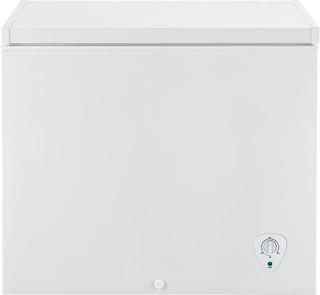
Frigidaire FFFC07M4NW freezer — manufacturer product photo
Photo: FFFC07M4NW. Photo source
Historical record

Frigidaire FFFC07M4NW

Error codes & indicators

Freezer · US market · 41 owner topics

Frigidaire chest freezers

Guidance for Frigidaire freezers. Check the feature and control descriptions against your model.

Frigidaire chest freezers

Silence a temperature buzzer without losing the temperature check

Frigidaire says some freezer models sound a Temp Alarm when cabinet temperature rises above 20°F. The article does not say that all Frigidaire freezers have this alarm, and it describes silencing it only until temperature drops below that threshold. A buzzer after loading, a door left open or a power interruption should therefore trigger a temperature check, not an assumption that the alarm circuit itself failed.

The owner check is straightforward: verify the lid closes and seals, silence the equipped Temp Alarm if its control matches the manual, then leave the lid shut while the freezer cools. The support article also asks owners to check that the freezer is level and the door closes freely.

Confirm the alarm applies to this model

Look for a Temp Alarm control or indicator in the control panel and verify it in the model’s Use and Care guide. Frigidaire phrases the 20°F threshold as applying to some freezer models. If your model does not have the described alarm, do not try an unrelated control sequence from another Frigidaire freezer.

The cited 20°F buzzer applies only to “some freezer models.” Confirm the model has the Temp Alarm control and that its guide describes this threshold. A chest freezer without that feature may have a separate power/alarm indicator, so do not use a guessed combination to silence it.

Check the lid before silencing

Close the lid and inspect whether a package, basket or frost buildup is preventing full closure. Check the gasket around the rim for debris or a gap. Frigidaire recommends checking level, free closure and a proper seal because warm air entering the cabinet can keep the temperature elevated. Do not press the lid down against an obstructed basket; reposition the contents.

Frigidaire specifically recommends checking that the freezer is level and that the door closes freely with a proper seal. Check all four corners for level support if the cabinet rocks, then verify the lid is not caught on packaging. A level problem that prevents closure can keep the temperature alarm active.

Mute temporarily, then leave the lid closed

On models with the described Temp Alarm, turn the alarm off while the cabinet is above 20°F; Frigidaire says it can be silenced until temperature falls below 20°F. The alarm’s sound is not a cooling control. Keep the lid shut and monitor the actual cabinet temperature; opening it to check repeatedly prolongs warm-air entry.

The support guidance says to turn the Temp Alarm off until the freezer is below 20°F. This only quiets the alert; it does not clear the temperature condition. Keep the lid shut and read a thermometer after recovery rather than reopening the cabinet to check repeatedly.

Escalate if temperature does not recover

Record the highest measured temperature, how long the lid was open, recent warm-food loading and whether power was interrupted. Frigidaire’s run-time guidance allows up to 24 hours for a freezer to stabilize after a power issue. If it remains warm after that period, use the exact model troubleshooting and service route rather than permanently disabling the alarm.

After a power event, the freezer-run-time page allows up to 24 hours to stabilize. If the temperature is not trending downward, verify power and the set point, then arrange service. Provide alarm state, highest temperature, outage length, room conditions and recent loading so support can distinguish a temporary warm cabinet from a persistent cooling issue.

If the alarm returns after its sound is muted, note the return time and actual temperature. A recurring high-temperature signal after the full recovery interval is a service symptom, even if the indicator can again be silenced.

Specifications & model details

FFFC07M4NW: model-specific checks

Choose the recorded defrost branch

Frigidaire FFFC07M4NW is listed with Manual defrost. Use the manual-defrost branch below: plan cold storage for the food before melting accumulated ice, protect the floor, and use the documented drain arrangement. Keep sharp tools and direct heat away from the liner and refrigerant path.

Use the chest-freezer layout

Frigidaire FFFC07M4NW is recorded as a chest freezer. Check the lid’s full opening arc and whether stored packages hold it up. For moisture or frost, inspect the horizontal rim and lid seal; for moving or defrosting, establish where this unit’s drain discharges before water is released. Keep baskets and heavy packages arranged so the lid closes freely.

Recorded model facts

Model details relevant to this topic

SpecificationRecorded valueEvidence
Freezer capacity7.2 cu ft
Archive
California Energy Commission — Refrigerators archive

cec-refrigerators.xlsx; sheet Table; row 9543

Regulatory archive observation; test standard and measurement context follow the original record.

Observed Oct 27, 2026
Total capacity7.2 cu ft
Archive
California Energy Commission — Refrigerators archive

cec-refrigerators.xlsx; sheet Table; row 9543

Regulatory archive observation; test standard and measurement context follow the original record.

Observed Oct 27, 2026
Anti-sweat heater switch declared in archiveFalse
Archive
California Energy Commission — Refrigerators archive

cec-refrigerators.xlsx; sheet Table; row 9543

Regulatory archive observation; test standard and measurement context follow the original record.

Observed Oct 27, 2026
Defrost typeManual
Archive
California Energy Commission — Refrigerators archive

cec-refrigerators.xlsx; sheet Table; row 9543

Regulatory archive observation; test standard and measurement context follow the original record.

Observed Oct 27, 2026
Refrigerator configurationChest Freezer
Archive
California Energy Commission — Refrigerators archive

cec-refrigerators.xlsx; sheet Table; row 9543

Regulatory archive observation; test standard and measurement context follow the original record.

Observed Oct 27, 2026
More background: Error codes & indicators

Category & symptom guidance

Error codes & indicators

Identify the indicator first

Record the full model number and note whether the freezer is a chest or upright, manual-defrost or frost-free, and equipped with a display or front control panel. Locate the indicator legend in that exact owner’s manual before interpreting a light, beep, or code. Similar symbols can have different meanings across product lines, and many freezers have no digital fault-code system at all. [GE freezer support](https://www.geappliances.com/ge/service-and-support/refrigerators-freezers.htm)

Write down the exact letters or numbers, which lights are on, when the warning began, and whether the door was open or power recently failed. Photograph the panel if practical. Do not translate a code using a chart for another brand or assume a flashing light names a failed component. Manufacturer support can use the model and observation to direct next steps. [Danby support](https://www.danby.com/support/)

Check simple causes safely

Check that the freezer has power, the plug is seated, and the control is not set to OFF. Close the lid or door fully and look for a package preventing the seal from meeting the cabinet. On an upright, consult the manual before moving items near interior vents. If the breaker trips repeatedly, the cord is damaged, or there is a burning smell, stop using the appliance and seek qualified service. [GE troubleshooting](https://products.geappliances.com/appliance/gea-support-search-content?contentId=16778)

For a temperature warning, use a freezer thermometer to check conditions and note the reading over time. A warning can follow an open door, recent loading, or interrupted power; those circumstances do not prove a fault. Keep the door closed while the freezer recovers and protect food. FoodSafety.gov provides outage-specific handling guidance, including disposition rules; use those rules separately from the appliance indicator’s meaning. [FoodSafety.gov](https://www.foodsafety.gov/food-safety-charts/food-safety-during-power-outage)

Read alarms in their model context

Some upright freezers use a high-temperature alarm, while some panel-equipped models also signal an open door. GE documents thresholds and reset behavior for particular upright models; those timings and meanings do not apply to every GE unit, chest freezer, or other brand. Check the manual’s indicator section and note whether the alert stops when the door closes or the temperature recovers. [GE upright alarm guidance](https://products.geappliances.com/appliance/gea-support-search-content?contentId=37106)

Acknowledge or silence an alarm only using the control described in the manual. Silencing a buzzer may not clear the underlying condition, and a warning can return if the freezer remains warm. Avoid repeated resets, which may erase useful clues without correcting the cause. If the indicator persists despite a closed door and normal measured temperature, contact maker support with the exact model and the recorded behavior. [GE upright alarm guidance](https://products.geappliances.com/appliance/gea-support-search-content?contentId=37106)

Treat lights and power indicators carefully

A power light, if fitted, usually indicates a particular electrical condition described by that model’s manual; it is not a temperature measurement. A dark lamp could reflect a failed bulb or absent power depending on the design, while a lit lamp does not establish that cooling is adequate. Compare the light’s behavior with the control legend and verify temperature independently using a thermometer. [GE chest manual](https://images.salsify.com/image/upload/s--Q-mezUVf--/9371f6afb4d1876f36326e93186bf095a1166e6d.pdf)

Do not use a test switch or alarm-test procedure unless the exact model has that control and the manual explains it. GE describes a short alarm test for certain controls, but the presence, duration, and expected response are model-specific. If a test produces no sound or an unexpected indication, record what happened and consult the maker rather than assuming an alarm component has failed. [GE temperature and control guidance](https://products.geappliances.com/appliance/gea-support-search-content?contentId=16994)

Decide when to request service

Seek service when a code returns, a temperature alarm remains after basic checks, cooling is inadequate, or an electrical warning accompanies abnormal operation. Provide the full model and serial, exact display, indicator pattern, thermometer readings, and recent power or door events. The support team can match advice to the unit’s documentation; a code or symptom by itself is not enough to identify a failed sensor, control, or sealed-system part. [GE appliance support](https://www.geappliances.com/ge/service-and-support/refrigerators-freezers.htm)

Until the cause is resolved, minimize openings and make food decisions using verified temperature and outage guidance, not the alarm alone. If the freezer is warm, the food safety chart explains how to assess exposure and what to discard; never taste food as a test. Follow service instructions for any reset or shutdown, and do not remove panels or attempt electrical repairs yourself. [FoodSafety.gov](https://www.foodsafety.gov/food-safety-charts/food-safety-during-power-outage)

General background sources

These sources support the shared guide. Exact model specifications and matched family procedures have their own sources above.

  1. products.geappliances.com/appliance/gea-support-search-content?contentId=37106
  2. www.geappliances.com/ge/service-and-support/refrigerators-freezers.htm
  3. www.danby.com/support/

Owner guidance by Specs & Parts, drafted with GPT-6 Luna. Sources and scope.

Sources for FFFC07M4NW

Suggest a correction