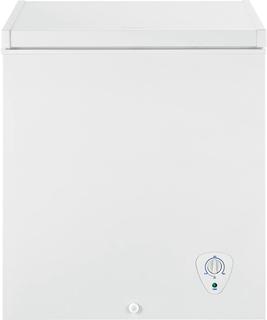
Guidance for Frigidaire freezers. Check the feature and control descriptions against your model.
Specifications & model details
FFFC05M4NW: model-specific checks
Plan with this model’s measurements
For Frigidaire FFFC05M4NW, the source gives width 29 in (736.6 mm), height 33 in (838.2 mm), depth 23 in (584.2 mm). Measure the narrowest doorway, turning space and final opening using those same directions. These are product measurements; add the separately specified hose, ventilation, door/lid, handle and service space. The reported width × depth occupies about 4.63 square feet before those allowances.
Frigidaire FFFC05M4NW is recorded as a chest freezer. Check the lid’s full opening arc and whether stored packages hold it up. For moisture or frost, inspect the horizontal rim and lid seal; for moving or defrosting, establish where this unit’s drain discharges before water is released. Keep baskets and heavy packages arranged so the lid closes freely.
Plan a clear route, protect the freezer, and use the exact manual for handling and restart instructions.
Owner guide: Delivery & moving
Category & symptom guidance
Delivery & moving
4 minute read · Shared guidance for freezers
Plan the route and delivery
Before delivery, measure the freezer and the route from the entrance to its final position, including doorways, stairs, turns, and any narrow landing. Confirm delivery access and who will move the appliance at each point. Clear obstacles and protect floors and nearby walls. Check the exact model’s manual for installation and handling requirements; dimensions, weight, and instructions vary, so do not rely on another freezer’s specifications.
Choose a final location that can support the appliance and allow the clearances and ventilation stated in its manual. Do not apply a clearance from another model: for example, Danby’s DUFM085A2BSLDD upright guide gives clearances for that specific unit only. Before plugging in, inspect the exterior and cord for visible shipping damage. If the appliance or cord is damaged, contact the seller or manufacturer for guidance.
Secure and protect the appliance
Remove loose food, baskets, shelves, or other removable parts if the manual directs, and secure the door or lid for transport without damaging the gasket or finish. Keep the freezer upright when possible and use suitable moving equipment and enough people for its size and route. Avoid lifting by a handle, door, hinge, or cord unless the manufacturer explicitly identifies that point for lifting.
If the freezer must be tilted to pass an obstacle, use the exact manual’s guidance for angle, duration, and settling time before power is restored. The provided Danby chest manual tells owners of its listed DCF models to wait three to five minutes before restarting after a power interruption; that instruction is specific to those models and is not a general settling rule. If the manual is unavailable, contact the maker with the full model number.
Handle chest and upright designs
A chest freezer has a top-opening lid, while an upright has a front door; their hinges, balance, and access differ. Keep a chest lid supported when open and do not let it slam. On an upright, protect the door and hinge side from impact, and avoid loading the open door with weight. Use the manual to locate approved handholds and removable parts before moving either style.
Defrost type is a separate question from cabinet orientation. Manual-defrost models may need water removed before transport; frost-free models can have different defrost-water paths. If the freezer needs defrosting, follow its own directions and dry the interior before moving. GE’s guidance confirms that chest and upright defrost and drain arrangements differ, and older uprights may be manual or self-defrost. Do not assume a drain or automatic defrost based only on shape.
Position and reconnect
Set the freezer down carefully in its final location and check that it is stable and level as its manual requires. Leave the specified ventilation space, keep the cord away from heat or pinch points, and avoid using an extension cord unless the manual permits it. Do not energize a wet or visibly damaged appliance. If the freezer was tilted, follow the maker’s required waiting period before connecting power.
After reconnecting, confirm the control is set for operation and the door or lid closes fully. Allow the appliance to cool according to its instructions before loading food; do not assume a fixed recovery time across models. Check temperature with an appliance thermometer and keep the door closed while cooling. Food safety guidance recommends a freezer temperature of 0°F or below, but that target does not specify an appliance’s startup schedule.
If the move reveals a problem
If the freezer does not run after relocation, check that the outlet has power, the plug is fully seated, and the control is not set to off, using the manual for the exact model. A light or display does not prove the cooling system is operating. Record any visible damage, unusual sounds, or water and contact the manufacturer or a qualified service provider if basic checks do not resolve the issue.
Keep perishable food in safe cold storage during the move and minimize how long the freezer remains open or unplugged. FoodSafety.gov says a closed full freezer can keep food cold for about 48 hours and a half-full freezer about 24 hours during an outage; actual conditions matter. Check food with a thermometer and use the agency’s disposition guidance. Never taste food to decide whether it is safe.
General background sources
These sources support the shared guide. Exact model specifications and matched family procedures have their own sources above.